Green Bond Investment 2026: High Yields & Risk Assessment

Green Bond Investment 2026: Navigating High-Yield Opportunities and Risk Assessment
The global financial landscape is undergoing a profound transformation, driven by an increasing awareness of environmental challenges and a collective commitment to sustainability. At the forefront of this shift is the burgeoning market for green bond investment. As we progress further into 2026, these innovative financial instruments are no longer a niche product but a mainstream asset class attracting significant attention from institutional and individual investors alike. Their unique proposition—combining financial returns with verifiable environmental impact—makes them a compelling addition to any forward-thinking portfolio.
This comprehensive guide delves into the intricate world of green bond investment in 2026. We will explore the factors driving their popularity, identify the high-yield opportunities they present, and, crucially, provide a robust framework for risk assessment. Understanding the nuances of this market is paramount for investors looking to capitalize on sustainable growth while mitigating potential pitfalls. Whether you are a seasoned investor or new to the realm of sustainable finance, this article aims to equip you with the knowledge and insights needed to navigate the dynamic green bond market effectively.
The Rise of Green Bond Investment: A 2026 Perspective
The journey of green bonds from a nascent concept to a multi-trillion-dollar market has been nothing short of remarkable. Initiated by the European Investment Bank (EIB) in 2007, the market has expanded exponentially, fueled by global climate agreements, evolving regulatory frameworks, and a growing investor appetite for Environmental, Social, and Governance (ESG) aligned assets. In 2026, this trajectory shows no signs of slowing down.
Several key drivers are propelling the growth of green bond investment:
- Global Climate Imperatives: Nations worldwide are intensifying their efforts to meet climate targets, such as those outlined in the Paris Agreement. This necessitates massive investments in renewable energy, sustainable infrastructure, and climate adaptation projects, creating a persistent demand for green financing mechanisms.
- Regulatory Tailwinds: Governments and financial regulators are increasingly implementing policies that favor sustainable finance. Tax incentives, disclosure requirements, and green finance taxonomies are making green bonds more attractive to both issuers and investors. For instance, the EU Taxonomy for sustainable activities continues to set a global benchmark, influencing standards and encouraging greater transparency in the green bond market.
- Investor Demand for ESG Integration: A new generation of investors, alongside existing institutional players, is prioritizing ESG factors in their investment decisions. They seek not only financial returns but also demonstrable positive impact. Green bonds offer a clear and measurable way to achieve this dual objective, making them a cornerstone of many ESG portfolios.
- Corporate Sustainability Strategies: Companies are recognizing the strategic importance of sustainability. Issuing green bonds allows them to align their financing activities with their broader sustainability goals, enhance their brand reputation, and attract a wider pool of investors. This also helps them meet stakeholder expectations and demonstrate commitment to corporate social responsibility.
By 2026, the market has matured significantly, offering a broader range of issuers—from sovereign entities and municipalities to corporations across various sectors. This diversification provides investors with more options and opportunities for portfolio construction within the green bond investment sphere.
Understanding Green Bonds: What Are They and How Do They Work?
At its core, a green bond is a fixed-income instrument designed to raise capital specifically for projects with environmental benefits. While structurally similar to conventional bonds—offering regular interest payments and repayment of principal at maturity—the defining characteristic of a green bond is the designated use of proceeds. These proceeds must be exclusively allocated to eligible green projects.
Key components of a green bond include:
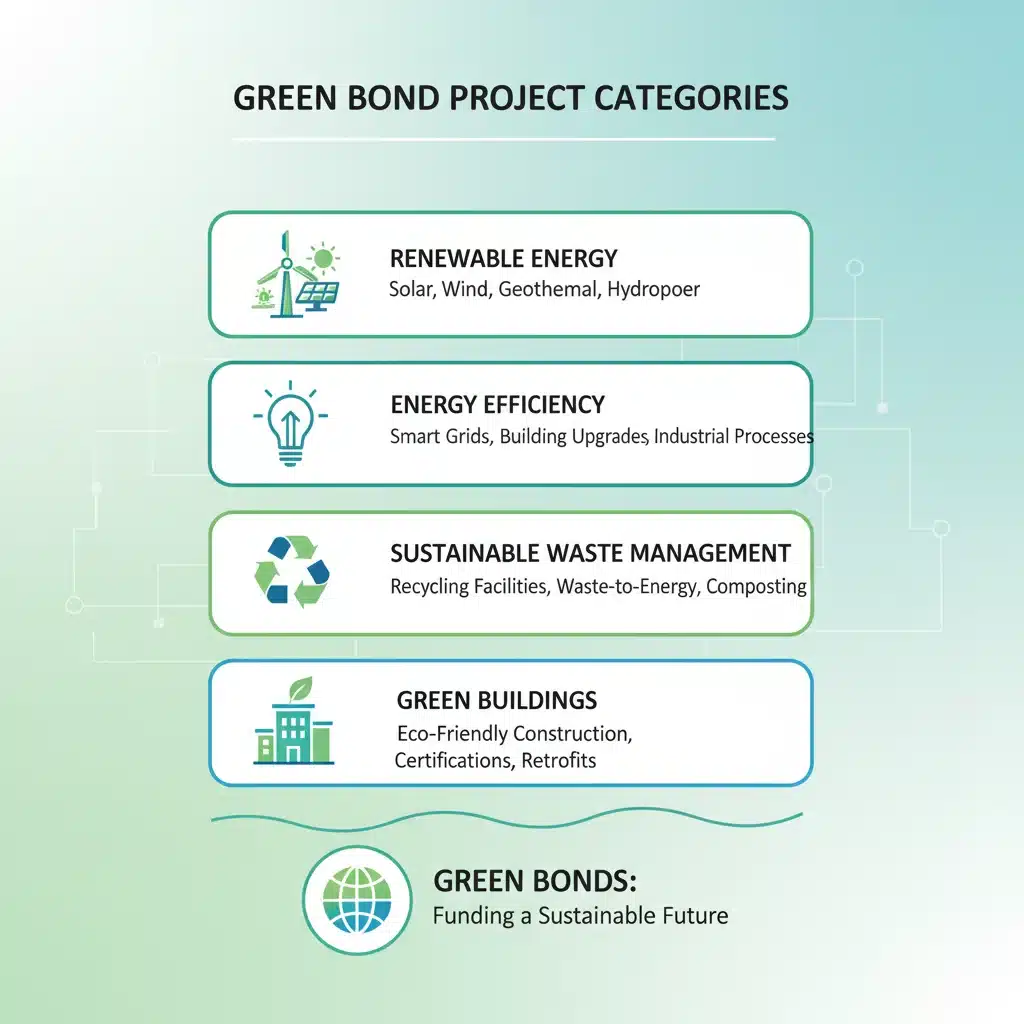
- Use of Proceeds: This is the most critical aspect. Funds raised must finance or refinance new or existing projects that have a positive environmental impact. Common categories include renewable energy (solar, wind, hydropower), energy efficiency (green buildings, smart grids), pollution prevention and control, sustainable waste management, sustainable land use, biodiversity conservation, and clean transportation.
- Process for Project Evaluation and Selection: Issuers must clearly outline the criteria by which projects are deemed ‘green’ and the process for selecting them. This often involves adherence to recognized standards and taxonomies.
- Management of Proceeds: Funds from green bonds are typically tracked in a separate sub-account or portfolio to ensure they are used solely for eligible green projects. This transparency is crucial for investor confidence.
- Reporting: Issuers are committed to providing regular, detailed reports on the environmental impact of the projects funded by the green bonds. This includes quantitative metrics (e.g., tons of CO2 reduced, MWh of clean energy generated) and qualitative descriptions of the projects’ progress.
The Green Bond Principles (GBP), published by the International Capital Market Association (ICMA), serve as the leading voluntary process guidelines for green bond issuance. Adherence to these principles enhances market integrity and investor trust, making them an essential reference point for any green bond investment strategy.
Identifying High-Yield Opportunities in Green Bond Investment for 2026
While green bonds are often associated with stability and lower risk, the 2026 market presents several avenues for high-yield opportunities, particularly for investors willing to undertake thorough due diligence and embrace a slightly elevated risk profile. High yields in the green bond space can arise from various factors, including issuer type, market conditions, and specific project characteristics.
Emerging Markets Green Bonds
One of the most promising areas for higher yields in green bond investment is in emerging markets. Countries in Asia, Latin America, and Africa are increasingly issuing green bonds to finance their transitions to sustainable economies. These bonds often come with higher coupon rates to compensate for perceived higher sovereign or corporate risk, as well as currency fluctuations. However, the environmental impact potential in these regions is often immense, offering a dual benefit.
- Case Study Potential: Look for bonds issued by state-owned enterprises or development banks in rapidly industrializing nations, particularly those focused on large-scale renewable energy infrastructure or sustainable agriculture projects.
- Considerations: While yields can be attractive, it’s crucial to assess political stability, regulatory frameworks, and currency risk. Engaging with local expertise or funds specializing in emerging market green bonds can be beneficial.
Corporate Green Bonds from Growth Sectors
Within developed markets, high-yield opportunities can be found among corporate green bonds, especially those issued by companies in high-growth, innovative sectors related to sustainability. These might include:
- Green Technology Startups/SMEs: Smaller, innovative companies developing cutting-edge green technologies (e.g., advanced battery storage, carbon capture, sustainable materials) may issue bonds to fund their expansion. These often carry higher risk but also higher potential returns if the technology proves successful.
- Sustainable Infrastructure Developers: Companies specializing in next-generation sustainable infrastructure (e.g., smart city solutions, advanced recycling facilities, offshore wind farms) can offer attractive yields, reflecting the capital-intensive nature and longer development cycles of their projects.
- Transition Bonds: A sub-category gaining traction are ‘transition bonds,’ which finance a company’s journey towards a greener business model, even if their current operations are carbon-intensive. These can offer higher yields as the market assesses the issuer’s commitment and ability to execute the transition effectively.
Sub-Sovereign and Municipal Green Bonds
While often seen as lower risk, certain municipal or sub-sovereign green bonds, particularly those from smaller entities or those financing ambitious, large-scale projects, can offer yields slightly above their conventional counterparts. These are often tied to specific local initiatives like public transport electrification or water management projects.
To identify these high-yield opportunities, investors should:
- Conduct Thorough Sector Analysis: Understand which sustainable sectors are poised for significant growth and demand for capital.
- Utilize Green Bond Indices: Many financial providers offer green bond indices that can help identify top performers and sector trends.
- Engage with Specialized Funds: Green bond funds managed by experts can provide diversified exposure to high-yield opportunities while managing associated risks.
Comprehensive Risk Assessment in Green Bond Investment
While the allure of high yields in green bond investment is strong, a thorough risk assessment is non-negotiable. Green bonds carry many of the same risks as conventional bonds, along with some unique considerations related to their green characteristics.
Standard Bond Risks
- Interest Rate Risk: As with any fixed-income instrument, changes in prevailing interest rates can affect the value of green bonds. Rising rates typically lead to falling bond prices.
- Credit Risk: This is the risk that the issuer will default on its principal or interest payments. It is crucial to assess the creditworthiness of the issuer, regardless of the ‘green’ label. Sovereign bonds generally carry lower credit risk than corporate bonds.
- Liquidity Risk: While the green bond market is growing, some smaller or less frequently traded issues might have lower liquidity, making them harder to sell quickly without impacting price.
- Inflation Risk: The purchasing power of future bond payments can be eroded by inflation, especially for long-term bonds with fixed interest payments.
Specific Green Bond Risks (‘Greenwashing’ and Impact Risk)
Beyond traditional bond risks, green bond investment carries specific concerns:
- Greenwashing Risk: This is perhaps the most significant concern. Greenwashing occurs when an issuer exaggerates or misrepresents the environmental benefits of a project or its overall sustainability efforts. Investors must ensure that the ‘green’ claims are credible and backed by transparent reporting and robust verification processes.
- Impact Risk: The risk that the funded projects do not achieve their stated environmental objectives. For example, a renewable energy project might face delays, underperform expectations, or not deliver the projected emissions reductions. While this doesn’t typically affect the bond’s financial performance (unless it impacts the issuer’s overall financial health), it does undermine the investor’s impact objective.
- Project Execution Risk: Green projects, especially large-scale infrastructure developments, can be complex and face execution risks such as cost overruns, delays, or regulatory hurdles. These can indirectly affect the issuer’s financial stability.
- Lack of Standardization: While the Green Bond Principles provide guidance, a universally binding standard for what constitutes ‘green’ is still evolving. This can lead to variations in reporting and eligibility criteria across different bonds and issuers, making direct comparisons challenging.
Mitigating Risks in Green Bond Investment
To effectively manage these risks, investors should adopt a multi-faceted approach:
- Due Diligence on Issuer: Always perform thorough credit analysis on the issuer, just as you would for a conventional bond. Examine financial health, debt-to-equity ratios, and management quality.
- Verify Green Credentials:
- External Review/Certification: Look for bonds that have undergone an independent external review or certification by reputable organizations (e.g., Sustainalytics, Vigeo Eiris, CICERO Shades of Green). These reviews provide assurance that the bond adheres to recognized green bond principles and that the projects are genuinely environmentally beneficial.
- Alignment with Standards: Check if the bond aligns with established frameworks like the ICMA Green Bond Principles, the Climate Bonds Standard, or regional taxonomies (e.g., EU Taxonomy).
- Scrutinize Use of Proceeds and Reporting:
- Specificity of Projects: Ensure the use of proceeds is clearly defined and allocated to specific, verifiable green projects, not just vague ‘green initiatives.’
- Transparency in Reporting: Evaluate the quality and frequency of impact reporting. Are quantifiable metrics provided? Is there a clear methodology for measuring impact?
- Diversification: Diversify across different issuers, sectors, geographies, and project types to reduce concentration risk.
- Engage with Green Bond Experts: Consider consulting financial advisors specializing in sustainable investing or investing in green bond funds that have dedicated research teams to assess green credentials.

The Role of Impact Measurement and Reporting
A distinctive feature of green bond investment, and a key differentiator from conventional bonds, is the emphasis on impact measurement and reporting. For many investors, the environmental impact is as important as the financial return. Therefore, understanding how this impact is measured and communicated is critical.
Key Aspects of Impact Reporting:
- Environmental Metrics: Issuers should report on concrete environmental metrics, such as:
- Greenhouse gas (GHG) emissions avoided or reduced (in tons of CO2 equivalent).
- Renewable energy generated (in MWh).
- Water saved or treated (in cubic meters).
- Waste diverted from landfills (in tons).
- Number of green buildings certified.
- Methodology and Baseline: Clarity on the methodology used for impact calculation and the baseline against which impacts are measured is crucial for credibility.
- Frequency and Accessibility: Reports should be issued regularly (e.g., annually) and be easily accessible to investors, often on the issuer’s website or through financial data providers.
- External Assurance: Some issuers go a step further by seeking external assurance for their impact reports, adding another layer of credibility.
Effective impact reporting not only assures investors of the bond’s green credentials but also contributes to the broader transparency and integrity of the green bond market. It allows investors to track the real-world difference their capital is making, fulfilling the dual mandate of financial return and environmental stewardship.
Integrating Green Bonds into Your Investment Portfolio
For investors looking to build a resilient and impactful portfolio in 2026, green bond investment offers significant advantages. Their inclusion can enhance diversification, improve ESG alignment, and potentially provide attractive risk-adjusted returns.
Benefits of Integration:
- Diversification: Green bonds can diversify a fixed-income portfolio, offering exposure to different sectors and geographies that might not be heavily represented in conventional bond markets.
- Enhanced ESG Profile: Investing in green bonds directly contributes to improving a portfolio’s overall ESG score and demonstrates a commitment to sustainable practices.
- Resilience to Climate Risks: Companies and entities issuing green bonds are often those actively addressing climate change, making them potentially more resilient to future climate-related regulations, physical risks, and market shifts.
- Stable Returns: Many green bonds are issued by highly-rated entities, offering stable and predictable income streams akin to conventional bonds, but with the added environmental benefit.
Practical Steps for Integration:
- Define Your Investment Goals: Clarify your financial return expectations and your desired environmental impact. Are you seeking maximum yield, capital preservation, or a balance of both?
- Allocate Appropriately: Determine what percentage of your fixed-income allocation you wish to dedicate to green bonds. This will depend on your risk tolerance and sustainability objectives.
- Choose Your Investment Vehicle:
- Direct Investment: For sophisticated investors, direct purchase of individual green bonds allows for precise selection based on issuer, project type, and specific impact.
- Green Bond ETFs/Mutual Funds: For broader diversification and professional management, green bond exchange-traded funds (ETFs) or mutual funds are excellent options. These funds typically invest in a diversified portfolio of green bonds, offering ease of access and risk spreading.
- Monitor and Review: Regularly review the performance of your green bond investments, both financially and in terms of their reported environmental impact. Stay informed about market developments, new regulations, and changes in issuer sustainability practices.
The Future Outlook for Green Bond Investment Beyond 2026
The trajectory for green bond investment remains overwhelmingly positive. Looking beyond 2026, several trends are likely to shape the market:
- Continued Growth and Diversification: The market size is expected to continue its rapid expansion, with more diverse issuers and innovative green finance instruments emerging.
- Harmonization of Standards: Efforts to standardize green bond definitions, reporting, and verification across different regions will likely intensify, improving market efficiency and reducing greenwashing risk. This will make green bond investment even more attractive and transparent.
- Increased Focus on Social and Sustainability Bonds: While this article focuses on green bonds, the broader sustainable bond market, including social bonds (financing projects with positive social outcomes) and sustainability bonds (combining green and social objectives), will also see significant growth.
- Technological Advancements: Blockchain and other distributed ledger technologies could enhance transparency and traceability in the use of proceeds and impact reporting, further strengthening investor confidence in green bond investment.
- Integration with Mainstream Finance: Green bonds will become even more deeply integrated into mainstream financial products and services, making them accessible to a wider range of investors.
The imperative to address climate change and foster sustainable development is only growing stronger. As a direct conduit for financing this transition, green bond investment is poised to play an increasingly central role in global finance. Investors who understand its potential, navigate its complexities, and commit to rigorous due diligence will be well-positioned to achieve both financial success and contribute meaningfully to a sustainable future.
Conclusion
Green bond investment in 2026 offers a compelling proposition for investors seeking to align their financial goals with environmental stewardship. The market’s robust growth, driven by global climate imperatives, regulatory support, and burgeoning investor demand for ESG integration, presents numerous high-yield opportunities.
However, realizing these opportunities requires a diligent approach to risk assessment, encompassing not only traditional financial risks but also the unique challenges of greenwashing and impact verification. By prioritizing external reviews, scrutinizing impact reporting, and diversifying portfolios, investors can confidently navigate this dynamic landscape.
As the world continues its urgent transition towards a sustainable economy, green bonds will remain a vital instrument, funnelling capital into projects that make a tangible difference. For those ready to engage, green bond investment is not just about financial returns; it’s about investing in a more sustainable and prosperous future for all.