EV Charging Station Benefits: 2025 Rebates & Lower Utility Bills
Installing an electric vehicle charging station in 2025 provides significant financial advantages through available rebates and the ability to reduce household utility bills by up to 15%.
Embracing electric vehicles (EVs) is more than just a trend; it’s a strategic move towards a sustainable and financially savvy future. Understanding the myriad of EV charging station benefits, especially in 2025, is crucial for homeowners and businesses alike looking to maximize rebates and significantly reduce utility bills.
Understanding the 2025 EV Charging Landscape
The year 2025 marks a pivotal moment for electric vehicle adoption, with both federal and state governments in the United States intensifying their efforts to support EV infrastructure. This includes a robust framework of incentives designed to make owning and operating an EV, and crucially, installing a home charging station, more appealing and affordable.
These incentives are not just about environmental stewardship; they are a clear economic driver. For consumers, this translates into tangible financial benefits that can offset the initial investment in charging equipment and installation. Navigating this landscape requires a keen understanding of what’s available and how to access it, ensuring you don’t leave money on the table.
Federal Tax Credits and Their Impact
At the federal level, tax credits for EV charging equipment are a cornerstone of financial support. While specifics can evolve, the general intent remains to encourage widespread adoption. These credits can often cover a substantial portion of the cost of purchasing and installing a qualified home charging station, making the upgrade far more accessible.
- Tax Credit Availability: Review IRS publications for the most current information regarding eligibility and maximum credit amounts for residential clean energy property.
- Equipment Requirements: Ensure your chosen charging station (Level 2 or DC Fast Charger) meets the federal criteria for efficiency and safety.
- Installation Costs: Often, not just the equipment but also the labor costs associated with installation are eligible for these credits.
Understanding these federal provisions is the first step in unlocking significant savings. It’s advisable to consult with a tax professional to ensure full compliance and maximize your claim.
State and Local Incentives
Beyond federal programs, many states, municipalities, and even local utility companies offer their own distinct incentives. These can range from additional tax credits and rebates to grants and special rate programs for EV owners. These localized benefits are often designed to address specific regional energy goals and infrastructure needs.
- State-Specific Rebates: Many states have programs that directly rebate a portion of the charging station cost, often irrespective of federal tax credits.
- Utility Company Programs: Some utilities offer incentives for smart charging, off-peak charging, or even free Level 2 chargers for their customers.
- Permitting Fee Waivers: In certain areas, local governments may waive or reduce permitting fees for EV charging station installations as an added incentive.
These diverse programs mean that the cumulative savings can be quite substantial. Researching what’s available in your specific area is paramount to fully capitalizing on the financial advantages of installing an EV charging station in 2025.
Maximizing Your 2025 Rebates: A Strategic Approach
Securing the maximum available rebates for your EV charging station installation in 2025 requires more than just knowing they exist; it demands a strategic, well-informed approach. The landscape of incentives can be complex, with varying eligibility criteria, application processes, and deadlines. A proactive stance is key to navigating these opportunities successfully.
This section will guide you through the essential steps to ensure you claim every possible dollar, transforming your investment into a highly cost-effective upgrade for your home or business. Don’t underestimate the power of thorough preparation and timely action when it comes to rebate programs.
Researching and Identifying Eligible Programs
The first and most critical step is comprehensive research. Begin by identifying all federal, state, local, and utility-specific programs for which you might qualify. Websites like the Department of Energy’s Alternative Fuels Data Center (AFDC) are excellent starting points, offering a database of laws and incentives by state.
- Government Websites: Regularly check official websites for federal, state, and local energy departments or environmental protection agencies.
- Utility Provider Sites: Visit your electric utility’s website for specific programs tailored to their customers, which often include EV charging incentives.
- EV Dealer Information: Many EV dealerships are knowledgeable about current incentives and can provide valuable guidance.
Compile a list of potential programs, noting their requirements, deadlines, and the type of incentive offered (tax credit, rebate, grant).
Application Process and Documentation
Once you’ve identified eligible programs, meticulously review their application processes. Each program will have its own set of forms, documentation requirements, and submission methods. Missing a single detail could lead to delays or rejection of your application.
- Proof of Purchase: Keep all receipts and invoices for your EV charging equipment and installation services.
- Certification: Ensure your charging station is certified by recognized bodies (e.g., Energy Star, UL listed) as often required for eligibility.
- Installation Verification: Some programs may require proof of professional installation or a signed statement from a licensed electrician.
- Timelines: Be acutely aware of application deadlines. Many programs operate on a first-come, first-served basis or have specific windows for submission.
Organize all your documents carefully and consider submitting applications well in advance of deadlines. For tax credits, ensure you work with your tax advisor to properly claim them on your annual tax returns.
Reducing Utility Bills by 15%: Smart Charging Strategies
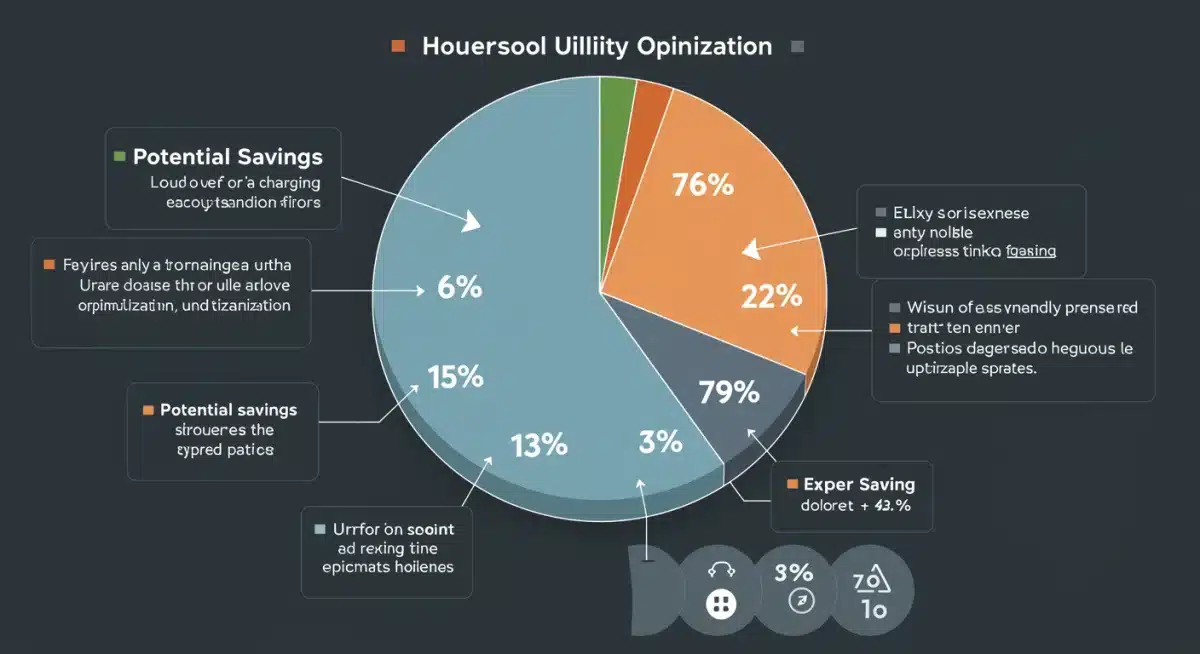
Beyond the upfront savings from rebates, one of the most compelling long-term EV charging station benefits is the potential to significantly reduce your monthly utility bills. With strategic charging practices, homeowners can realistically aim for a 15% reduction in their overall electricity costs. This isn’t just wishful thinking; it’s a measurable outcome achievable through smart energy management.
The key lies in understanding your electricity rate structure and leveraging technology to charge your EV when electricity is cheapest. This proactive approach transforms your EV from a simple transportation tool into an integral part of your home’s energy efficiency strategy.
Time-of-Use (TOU) Rates and Off-Peak Charging
Many utility companies offer Time-of-Use (TOU) rate plans, where the cost of electricity varies depending on the time of day. Electricity is typically more expensive during peak demand hours (e.g., late afternoon/early evening) and significantly cheaper during off-peak hours (e.g., overnight, early morning).
- Identify TOU Plans: Contact your utility provider to see if they offer TOU rates and if switching to one would be beneficial for your EV charging habits.
- Schedule Charging: Utilize your EV’s or charging station’s smart features to schedule charging sessions exclusively during off-peak hours.
- Monitor Usage: Track your electricity consumption to understand how your charging habits impact your bill and adjust as needed.
By shifting your charging to off-peak times, you can drastically reduce the cost per kilowatt-hour (kWh) for charging your vehicle, leading to substantial savings on your overall electricity bill.
Integrating with Renewable Energy Sources
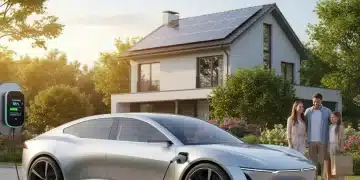
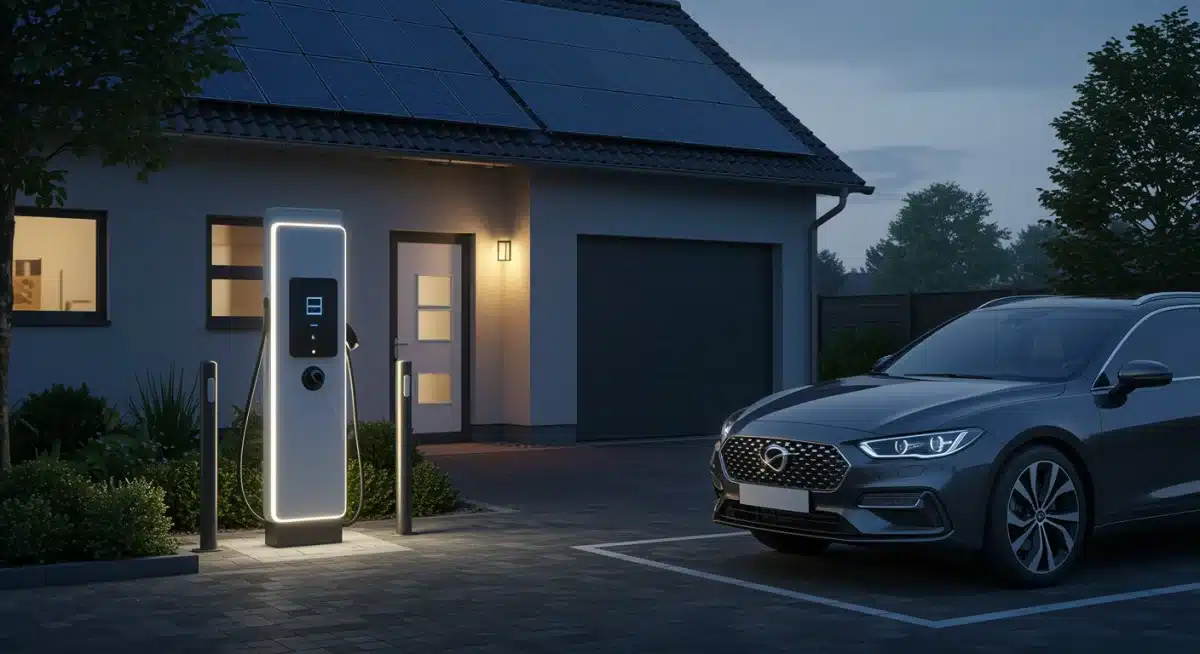
For homeowners with solar panels or other renewable energy systems, the synergy with an EV charging station offers unparalleled savings. Charging your EV directly with self-generated clean energy can virtually eliminate the cost of fuel for your vehicle, further enhancing the reduction in utility bills.
When your solar panels are generating excess electricity, you can use that power to charge your EV, effectively utilizing energy that might otherwise be sent back to the grid for minimal credit. This not only reduces your reliance on grid electricity but also maximizes the return on your renewable energy investment.
- Solar-Powered Charging: Install a smart charging station that can prioritize charging your EV when solar production is high.
- Energy Storage Integration: Consider coupling your solar system with a home battery storage solution to store excess solar energy for later EV charging, even after the sun sets.
- Grid Independence: Reduce your dependence on the grid for transportation fuel, leading to greater energy independence and predictable costs.
This integrated approach represents the pinnacle of energy efficiency for EV owners, creating a virtuous cycle of sustainable transportation and home energy management. The savings achieved through this integration can be a significant factor in reaching and even exceeding the 15% utility bill reduction goal.
Long-Term Financial Advantages of EV Charging
While immediate rebates and short-term utility bill reductions are enticing, the EV charging station benefits extend far into the future, offering substantial long-term financial advantages. Investing in a home charging station is not merely a convenience; it’s a strategic financial decision that continues to pay dividends over the lifespan of your electric vehicle and beyond.
These persistent savings contribute to a healthier personal or business budget, making the transition to electric transportation an economically sound choice for years to come. Understanding these enduring benefits helps solidify the rationale for making the initial investment.
Increased Property Value and Attractiveness
As EV adoption accelerates, a home equipped with a dedicated EV charging station becomes an increasingly attractive asset. This amenity is no longer a niche feature but a desirable, and sometimes expected, component for modern homebuyers and renters. The presence of charging infrastructure can significantly boost your property’s market value.
- Modern Appeal: A charging station signals a modern, forward-thinking property, appealing to a growing demographic of environmentally conscious buyers.
- Convenience Factor: For EV owners, the ability to charge at home is a major convenience, making your property more desirable than those without.
- Future-Proofing: Installing a charging station now future-proofs your property against the inevitable shift towards electric transportation.
This added value is a tangible financial return, especially if you plan to sell your property in the coming years. It positions your home favorably in a competitive real estate market.
Reduced Maintenance and Fuel Costs
Beyond the electricity bill, owning an EV and charging it at home contributes to lower overall transportation costs. Electric vehicles generally require less maintenance than internal combustion engine (ICE) vehicles due to fewer moving parts. Furthermore, the cost of electricity per mile is often significantly lower than the cost of gasoline.
- Lower Fuel Costs: Electricity is typically cheaper per mile than gasoline, especially when charging during off-peak hours.
- Fewer Moving Parts: EVs have no oil changes, spark plugs, or complex exhaust systems, reducing routine maintenance expenses.
- Brake Regeneration: Electric vehicles use regenerative braking, which reduces wear on brake pads, extending their lifespan.
These combined savings on fuel and maintenance contribute to a much lower total cost of ownership for an EV, reinforcing the financial wisdom of installing a home charging station and fully embracing electric mobility.
Environmental and Societal Impact
While the financial incentives and utility savings are compelling, the EV charging station benefits extend far beyond personal economics. The broader environmental and societal impacts of widespread EV adoption and robust charging infrastructure are profound, contributing to cleaner air, reduced carbon emissions, and a more sustainable energy future for everyone.
These benefits underscore the importance of individual choices in driving collective positive change. Every charging station installed and every EV driven contributes to a healthier planet and more resilient communities.
Lowering Carbon Footprint
One of the most significant environmental benefits of electric vehicles is their potential to drastically reduce greenhouse gas emissions. When an EV is powered by electricity generated from renewable sources, its carbon footprint can be nearly zero. Even when charged using grid electricity, EVs generally produce fewer emissions than gasoline cars, especially as grids become cleaner.
- Reduced Tailpipe Emissions: EVs produce zero tailpipe emissions, directly improving local air quality.
- Grid Decarbonization: As the electricity grid transitions to more renewable energy sources, the environmental benefit of EVs grows.
- Energy Independence: Less reliance on fossil fuels for transportation reduces geopolitical risks and promotes energy security.
By enabling convenient home charging, charging stations facilitate this shift away from fossil fuels, empowering individuals to make a tangible difference in combating climate change.
Supporting Grid Stability and Innovation
Modern EV charging stations, particularly smart chargers, can play a crucial role in supporting the stability and efficiency of the electrical grid. Features like demand response and vehicle-to-grid (V2G) technology allow EVs to interact intelligently with the grid, optimizing energy usage and even feeding power back during peak demand.
- Demand Response: Smart chargers can pause or reduce charging during grid stress, helping to prevent blackouts and lower peak demand.
- Vehicle-to-Grid (V2G) Capabilities: In the future, V2G technology could allow EVs to send stored energy back to the grid, acting as mobile power banks.
- Infrastructure Development: The growth of EV charging infrastructure drives innovation in smart grid technologies and renewable energy integration.
This dynamic interaction between EVs and the grid represents a significant step forward in energy management, transforming vehicles from mere consumers of energy into active participants in a smarter, more resilient power system. The societal benefits of such innovation are immense, paving the way for a more sustainable and efficient energy future.
Choosing the Right EV Charging Station
To fully realize the EV charging station benefits, selecting the appropriate equipment is paramount. The market offers a variety of charging solutions, each with its own capabilities, installation requirements, and cost implications. Making an informed decision ensures that your investment aligns with your specific needs, vehicle type, and home electrical infrastructure.
The right choice not only optimizes your charging experience but also maximizes the efficiency of your energy consumption and the potential for long-term savings. This section will help you navigate the options available.
Level 1 vs. Level 2 Chargers
The primary distinction in home charging lies between Level 1 and Level 2 chargers. Understanding their differences is key to choosing what’s best for you.
- Level 1 Charging: Uses a standard 120V outlet and provides about 2-5 miles of range per hour. It’s slow but requires no special installation. Ideal for plug-in hybrids or those with minimal daily driving needs.
- Level 2 Charging: Uses a 240V outlet (like a clothes dryer) and delivers 20-60 miles of range per hour. This is the most common and recommended home charging solution for pure EVs, offering a full charge overnight. Requires professional installation.
For most EV owners seeking convenience and efficiency, a Level 2 charger is the preferred option, enabling faster charging and better integration with smart charging features.
Smart Features and Connectivity
Modern EV charging stations come equipped with a host of smart features that enhance convenience, efficiency, and cost savings. These features are instrumental in maximizing the benefits of your charging setup.
- Wi-Fi Connectivity: Allows remote monitoring and control via a smartphone app, enabling scheduled charging, real-time status updates, and energy usage tracking.
- Load Management: Prevents circuit overloads by balancing the power draw between your EV charger and other household appliances.
- Integration with Home Energy Management Systems: Some chargers can integrate with smart home platforms, optimizing charging based on solar production or grid conditions.
- Reporting and Analytics: Provides data on charging sessions, energy consumption, and costs, helping you fine-tune your charging strategy.
Investing in a smart charger is highly recommended, as these features are crucial for taking advantage of TOU rates, integrating with renewable energy, and ultimately reducing your utility bills by the targeted 15% or more.
Installation and Safety Considerations
Once you’ve chosen your EV charging station, proper installation is critical for safety, efficiency, and compliance with local codes. While some might consider DIY options, professional installation is almost always recommended, especially for Level 2 chargers which involve significant electrical work. Ensuring your setup is safe and up to code is non-negotiable.
A correctly installed charging station not only provides peace of mind but also ensures that you can fully leverage all the financial and practical benefits without any unforeseen issues. Cutting corners on installation can lead to hazards and negate potential savings.
Professional Installation is Key
For Level 2 charging stations, which require dedicated 240V circuits, professional installation by a licensed electrician is essential. They will assess your home’s electrical panel capacity, ensure proper wiring, and install the necessary circuit breakers.
- Electrical Panel Assessment: An electrician will determine if your current electrical panel can support the additional load of an EV charger or if an upgrade is needed.
- Permitting and Inspections: They will handle necessary permits and ensure the installation passes local electrical inspections.
- Code Compliance: Professional installers are familiar with National Electrical Code (NEC) requirements and local building codes, ensuring a safe and compliant setup.
Attempting a DIY installation for a Level 2 charger without proper expertise can be dangerous, potentially leading to electrical fires, damage to your vehicle, or voiding warranties.
Safety Features and Best Practices
Modern EV charging stations are designed with numerous safety features, but users also play a role in maintaining a safe charging environment. Adhering to best practices is crucial.
- GFCI Protection: Ensure your charging circuit includes Ground Fault Circuit Interrupter (GFCI) protection to prevent electric shock.
- Weather Protection: If installing outdoors, choose a weather-rated charger and ensure it’s protected from direct exposure to extreme elements.
- Cable Management: Keep charging cables neatly coiled and off the ground to prevent tripping hazards and cable damage.
- Regular Inspections: Periodically inspect your charging station and cable for any signs of wear or damage.
By combining professional installation with diligent adherence to safety best practices, you can enjoy all the conveniences and savings of your EV charging station with complete peace of mind. This attention to detail safeguards your investment and ensures a reliable and secure charging experience for years to come.
| Key Benefit | Brief Description |
|---|---|
| 2025 Rebates & Tax Credits | Access federal and state incentives to significantly reduce the upfront cost of purchasing and installing an EV charging station. |
| Utility Bill Reduction | Implement smart charging strategies, like off-peak charging, to lower electricity costs by up to 15%. |
| Increased Property Value | A home EV charging station enhances property appeal and market value for modern, eco-conscious buyers. |
| Environmental Impact | Contribute to cleaner air and a reduced carbon footprint by fueling transportation with electricity. |
Frequently Asked Questions About EV Charging Stations
In 2025, various rebates and tax credits are available at federal, state, and local levels, along with utility company programs. These can significantly offset the cost of purchasing and installing a qualified EV charging station. It’s crucial to research specific programs in your area for eligibility and application details.
By utilizing smart charging strategies, such as charging during off-peak hours on a Time-of-Use (TOU) electricity plan, you can purchase electricity at significantly lower rates. Integrating with home solar power further amplifies savings, potentially reducing your overall utility expenses by 15% or more.
For Level 2 EV charging stations, professional installation by a licensed electrician is highly recommended and often required. This ensures safety, compliance with electrical codes, and optimal performance. They will assess your electrical panel and ensure proper wiring for the higher voltage.
Yes, installing an EV charging station can increase your property’s value and attractiveness. As electric vehicles become more common, a dedicated home charging solution is a highly desirable amenity for potential homebuyers and renters, signaling a modern and future-ready property.
Home EV charging contributes to a lower carbon footprint by enabling the use of electricity for transportation, especially when sourced from renewables. It reduces reliance on fossil fuels, improves local air quality by eliminating tailpipe emissions, and supports a cleaner, more sustainable energy ecosystem.
Conclusion
The decision to install an electric vehicle charging station in 2025 is more than just a nod to technological advancement; it’s a sound financial and environmental investment. With a clear path to maximizing federal and state rebates, coupled with strategic charging practices that can slash utility bills by up to 15%, the economic case is compelling. Beyond the immediate savings, the long-term benefits of increased property value and a reduced carbon footprint solidify the wisdom of this choice. Embracing EV charging is a powerful step towards a more sustainable and economically efficient future for individuals and communities alike.