Clean Energy Education: 2025 Policy Shifts & Federal Initiatives
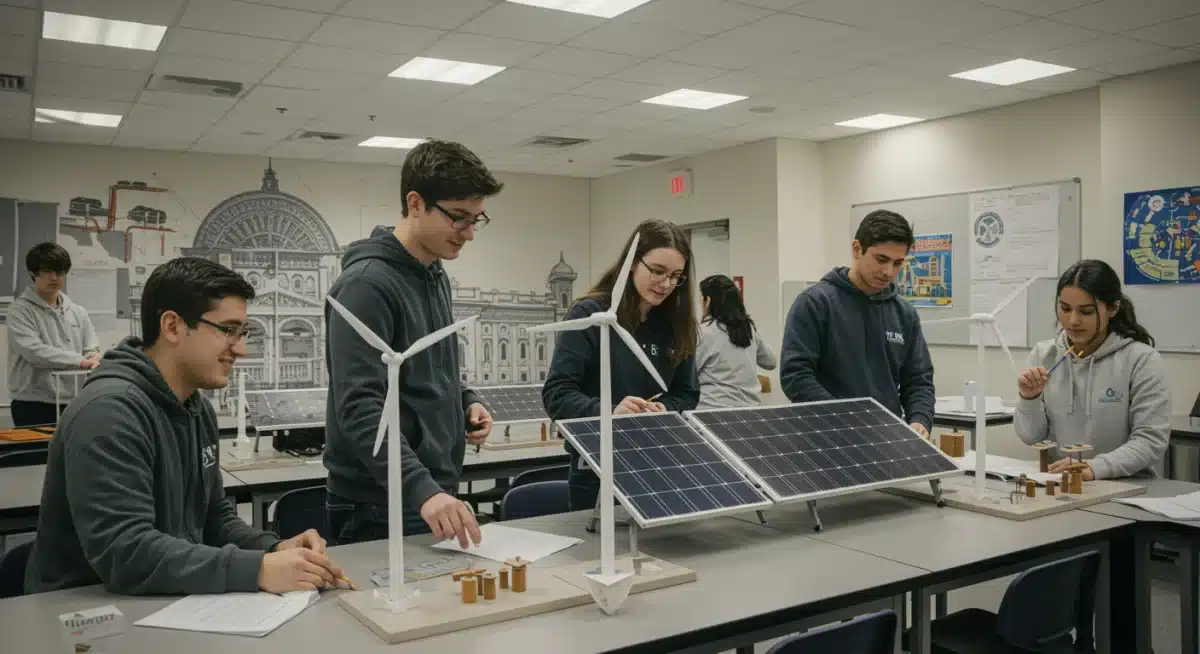
Understanding the 3 key policy shifts in clean energy education for 2025 is paramount for navigating new federal initiatives, funding, and workforce development strategies shaping the sector’s future.
For those invested in the future of our planet and economy, clean energy education policy is a topic of immense importance. As 2025 approaches, significant federal initiatives are poised to reshape how we train and educate the next generation of clean energy professionals. These shifts are not just bureaucratic adjustments; they represent a fundamental commitment to a sustainable future, influencing everything from curriculum design to job market readiness. Delving into these changes offers a critical look at the opportunities and challenges ahead.
The Broad Landscape of Clean Energy Education in 2025
The clean energy sector is expanding rapidly, creating an urgent demand for a skilled workforce. This growth necessitates robust educational frameworks capable of preparing individuals for diverse roles, from research and development to installation and maintenance. In 2025, the federal government is placing a renewed emphasis on fostering these capabilities through strategic policy shifts designed to accelerate innovation and ensure equitable access to opportunities.
These policy changes reflect a deeper understanding of the interconnectedness between education, economic growth, and environmental sustainability. By investing in clean energy education, the aim is not only to meet present workforce demands but also to cultivate a resilient and adaptable talent pool for the challenges of tomorrow. This involves a holistic approach that considers various educational levels and pathways.
Shifting Priorities in Federal Funding
Federal funding for clean energy education is undergoing a significant reorientation. Historically, funding might have been disbursed across various, sometimes disparate, programs. The 2025 policy shifts aim to consolidate and strategically direct funds towards initiatives that demonstrate clear pathways to workforce readiness and technological advancement. This means a greater emphasis on performance metrics and outcomes.
- Increased grants for vocational schools and community colleges specializing in renewable energy technologies.
- New funding streams for university research programs focused on next-generation clean energy solutions.
- Incentives for private sector partnerships that offer apprenticeships and on-the-job training.
- Support for developing standardized curricula and certifications across states.
The allocation of these funds is designed to create a more cohesive and impactful educational ecosystem. It’s about ensuring that every dollar spent contributes directly to building a skilled workforce that can drive the clean energy transition forward. This strategic funding approach is expected to streamline processes and maximize the return on investment in human capital.
Ultimately, these shifts in funding priorities will empower educational institutions to innovate, expand their offerings, and better align their programs with the evolving needs of the clean energy industry. The goal is to build a robust pipeline of talent, ensuring that the United States remains at the forefront of clean energy innovation and implementation.
Policy Shift 1: Enhanced STEM Integration and Vocational Training
One of the most significant policy shifts for 2025 is the intensified focus on integrating Science, Technology, Engineering, and Mathematics (STEM) principles directly into vocational training programs for clean energy. This isn’t merely about adding more science classes; it’s about creating curricula where theoretical knowledge is immediately applicable to practical, hands-on skills required in the field. This approach bridges the traditional gap between academic learning and technical proficiency.
The federal government recognizes that a truly effective clean energy workforce needs both a deep understanding of scientific principles and the practical ability to implement and maintain complex systems. This policy aims to cultivate a generation of technicians and engineers who are not only skilled laborers but also critical thinkers capable of problem-solving and adapting to new technologies. The emphasis is on building a comprehensive skill set.
Curriculum Modernization and Standardization
A core component of this shift involves modernizing existing curricula and developing new, standardized programs. This ensures a consistent quality of education across different institutions and prepares students with skills that are universally recognized and valued by employers. Federal agencies are collaborating with industry leaders to define these standards.
- Development of national competency frameworks for various clean energy roles.
- Creation of open-source educational modules and resources for educators.
- Funding for professional development programs for teachers and instructors in clean energy.
- Pilot programs for integrated STEM-vocational curricula in high schools and community colleges.
These initiatives are crucial for ensuring that the education provided is both relevant and rigorous. By standardizing curricula, employers can have greater confidence in the qualifications of graduates, leading to smoother transitions from education to employment. This also helps in addressing regional disparities in educational quality and access to resources.
The integration of STEM into vocational training represents a strategic investment in the intellectual capital necessary for a thriving clean energy economy. It moves beyond basic technical skills to foster a deeper understanding of the underlying principles, preparing graduates for long-term career success and adaptability in a rapidly changing industry.
Policy Shift 2: Increased Federal Investment in Research and Development Partnerships
The second major policy shift centers on a significant increase in federal investment towards research and development (R&D) partnerships, specifically those linking academic institutions with private industry. This initiative is designed to accelerate the development and commercialization of new clean energy technologies while simultaneously providing students with cutting-edge research opportunities. It’s a dual-benefit approach, fostering innovation and experiential learning.
This policy acknowledges that breakthroughs in clean energy often stem from collaborative efforts that combine academic rigor with industry-specific challenges and resources. By incentivizing these partnerships, the government aims to create a dynamic ecosystem where theoretical research can quickly translate into practical applications, driving economic growth and technological leadership. This collaborative model is seen as essential for maintaining a competitive edge.
Catalyzing Innovation through Collaboration
Federal funding will be channeled through grants and incentives to facilitate these partnerships. The focus will be on projects that demonstrate clear potential for impact, both in terms of technological advancement and workforce development. This includes supporting joint research labs, shared equipment, and student internship programs embedded within industry settings.
- Direct grants for university-industry consortia focused on specific clean energy challenges.
- Tax incentives for companies that invest in R&D with academic partners.
- Establishment of regional clean energy innovation hubs.
- Funding for postdoctoral fellowships and graduate student research in collaborative projects.
These partnerships offer invaluable real-world experience for students, exposing them to the latest technologies and industry practices before they even graduate. This not only enhances their skill sets but also builds critical professional networks, making them more attractive to employers upon entering the job market. The synergy created by these collaborations is expected to be a powerful engine for progress.
The strategic investment in R&D partnerships underscores a commitment to fostering a culture of innovation within the clean energy sector. It recognizes that sustained progress requires continuous development of new technologies and approaches, and that education plays a pivotal role in nurturing the minds that will lead these efforts.

Policy Shift 3: Expanding Access and Equity in Clean Energy Education
The third crucial policy shift addresses the critical need for expanding access and promoting equity within clean energy education. Recognizing that the benefits of a growing clean energy economy must be shared broadly, federal initiatives in 2025 are designed to dismantle barriers to entry for underrepresented communities and ensure that diverse populations have the opportunity to participate in this burgeoning sector. This shift is about social justice as much as economic development.
Historically, certain communities have faced disproportionate challenges in accessing quality education and high-growth job opportunities. The new policies aim to correct these imbalances by implementing targeted programs and support mechanisms. This includes initiatives that reach into underserved rural and urban areas, providing resources and pathways that were previously unavailable. Equity is not just a buzzword; it’s a foundational principle.
Targeted Programs and Community Outreach
Federal funding will be specifically allocated to programs that focus on outreach, mentorship, and financial aid for students from low-income backgrounds, minority groups, and rural areas. This includes supporting initiatives at Historically Black Colleges and Universities (HBCUs), Tribal Colleges and Universities (TCUs), and other Minority Serving Institutions (MSIs).
- Scholarship programs specifically for students from underserved communities pursuing clean energy degrees or certifications.
- Funding for community-based organizations to offer pre-apprenticeship and readiness programs.
- Development of accessible online learning platforms and remote training opportunities.
- Grants for K-12 STEM programs in economically disadvantaged school districts with a clean energy focus.
These targeted efforts are vital for building a truly inclusive clean energy workforce. By ensuring that talent from all backgrounds has the chance to contribute, the sector gains a wider range of perspectives, experiences, and innovations. This diversity is not just a moral imperative but also a strategic advantage, leading to more robust and creative solutions.
Ultimately, expanding access and equity is about creating a clean energy future that works for everyone. It’s about empowering individuals and communities, reducing economic disparities, and building a workforce that truly reflects the rich diversity of the nation. This policy shift is a cornerstone of a sustainable and just transition.
Funding Mechanisms and Incentives for Educational Institutions
To support these ambitious policy shifts, the federal government is introducing various funding mechanisms and incentives specifically tailored for educational institutions. These are designed to encourage rapid adoption of new curricula, foster research collaborations, and expand outreach efforts, ensuring that schools have the resources needed to implement the changes effectively. It’s a comprehensive financial strategy.
Understanding these mechanisms is crucial for academic administrators and program developers seeking to align their offerings with federal priorities. The funding is not merely a one-time injection but a sustained commitment, reflecting the long-term vision for clean energy workforce development. Institutions that strategically leverage these funds will be at the forefront of this educational revolution.
Navigating Federal Grants and Programs
Educational institutions will find opportunities through competitive grants, cooperative agreements, and direct funding programs. These will often require detailed proposals outlining how the institution plans to meet specific federal objectives, such as increasing student enrollment in clean energy programs or establishing industry partnerships. Expertise in grant writing and program management will be more important than ever.
- Department of Energy (DOE) grants for clean energy technology development and education.
- National Science Foundation (NSF) funding for STEM education and workforce development.
- Environmental Protection Agency (EPA) grants for environmental education and training.
- Department of Labor (DOL) initiatives for apprenticeship programs and career pathways.
Beyond direct funding, incentives like tax credits for private sector contributions to educational programs and streamlined regulatory processes for innovative curricula will also play a role. These incentives are designed to create a more favorable environment for investment in clean energy education from all sectors. The aim is to create a virtuous cycle of funding and innovation.
The availability of these diverse funding streams underscores the federal government’s serious commitment to transforming clean energy education. Institutions that proactively seek out and secure these resources will be better positioned to adapt to the new policy landscape and provide their students with unparalleled opportunities in a growing field.
Impact on Workforce Development and Job Creation
The policy shifts in clean energy education for 2025 are expected to have a profound impact on workforce development and job creation across the United States. By strategically investing in education and training, the federal government aims to ensure a steady supply of skilled professionals ready to fill the increasing demand in the clean energy sector. This is a direct link between policy and economic opportunity.
These initiatives are not just about training; they are about creating sustainable career pathways and fostering economic resilience in communities nationwide. The ripple effect of a well-trained clean energy workforce extends beyond the sector itself, stimulating local economies and driving innovation in related industries. It’s a catalyst for broader economic transformation.
Emerging Job Roles and Skill Demands
As the clean energy landscape evolves, so too do the types of jobs available and the skills required to perform them. The 2025 policies are designed to anticipate these changes, ensuring that educational programs are nimble enough to adapt and prepare students for emerging roles. This forward-looking approach is critical for long-term career success.
- Increased demand for solar panel installers, wind turbine technicians, and battery storage specialists.
- Growth in roles for energy efficiency auditors and smart grid engineers.
- New opportunities in green building construction and sustainable infrastructure development.
- Expanding need for data analysts specializing in energy consumption and renewable resource management.
The emphasis on STEM integration and R&D partnerships means that graduates will possess a more sophisticated skill set, combining technical expertise with critical thinking and problem-solving abilities. This makes them highly adaptable and valuable in a rapidly changing industry. The goal is to produce not just workers, but innovators.
Ultimately, these policy shifts are an investment in the American workforce, empowering individuals with the skills needed to thrive in the clean energy economy. They promise a future with more jobs, better-paying careers, and a stronger, more sustainable economic foundation for the nation. The impact will be felt from local communities to the national stage.
| Key Policy Shift | Brief Description |
|---|---|
| Enhanced STEM Integration | Integrating STEM principles into vocational training for practical, hands-on clean energy skills and problem-solving. |
| Increased R&D Partnerships | Boosting federal investment in academic-industry collaborations to accelerate clean energy tech development and provide student experience. |
| Expanding Access & Equity | Targeted programs and funding to remove barriers and ensure diverse communities participate in clean energy education and jobs. |
| Strategic Funding Allocation | Reorienting federal funds towards high-impact initiatives with clear pathways to workforce readiness and technological advancement. |
Frequently Asked Questions About Clean Energy Education Policy
The primary goals include strengthening the clean energy workforce, fostering innovation through R&D, and ensuring equitable access to educational and career opportunities. These policies aim to meet industry demands and accelerate the nation’s transition to a sustainable energy future.
Vocational schools and community colleges are expected to receive increased federal funding and support for modernizing curricula. There will be a greater emphasis on integrating STEM principles and developing standardized training programs to meet industry demands for skilled technicians.
Federal initiatives are significantly boosting investment in R&D partnerships between academia and industry. This aims to accelerate the development of new clean energy technologies and provide students with valuable, hands-on research experience, driving both innovation and workforce development.
The new policies prioritize expanding access for underrepresented communities through targeted programs, scholarships, and outreach initiatives. The goal is to dismantle barriers and ensure that diverse populations, including those in rural and urban underserved areas, can participate in the growing clean energy sector.
Students will be prepared for a wide range of roles including solar panel installers, wind turbine technicians, energy efficiency auditors, smart grid engineers, green building specialists, and data analysts in energy management, among others in the expanding clean energy sector.
Conclusion
The year 2025 marks a pivotal moment for clean energy education, driven by strategic federal policy shifts. These initiatives, focusing on enhanced STEM integration, increased R&D partnerships, and expanded access and equity, are designed to cultivate a robust and diverse workforce capable of leading the nation’s clean energy transition. By understanding and adapting to these changes, educational institutions, industry stakeholders, and aspiring professionals can collectively contribute to a sustainable and prosperous future. The commitment to these policies underscores a recognition that investing in education today is investing in the energy security and economic vitality of tomorrow.