Clean Energy Sector Sees 15% Growth in Q1 2025: Market Trends
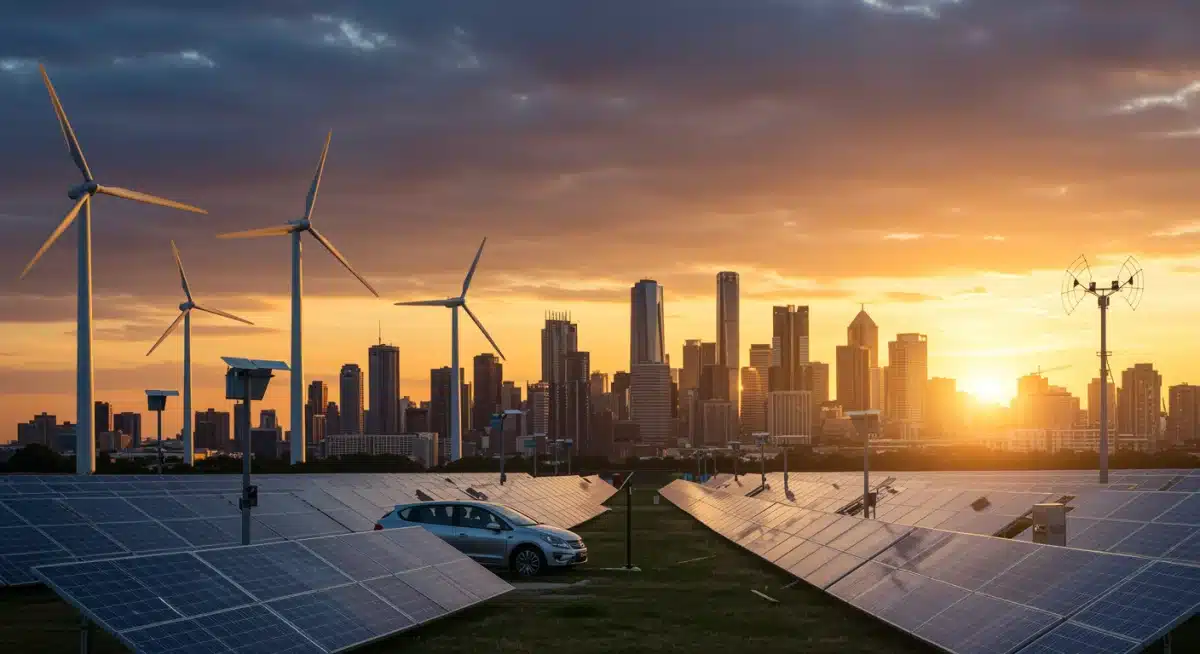
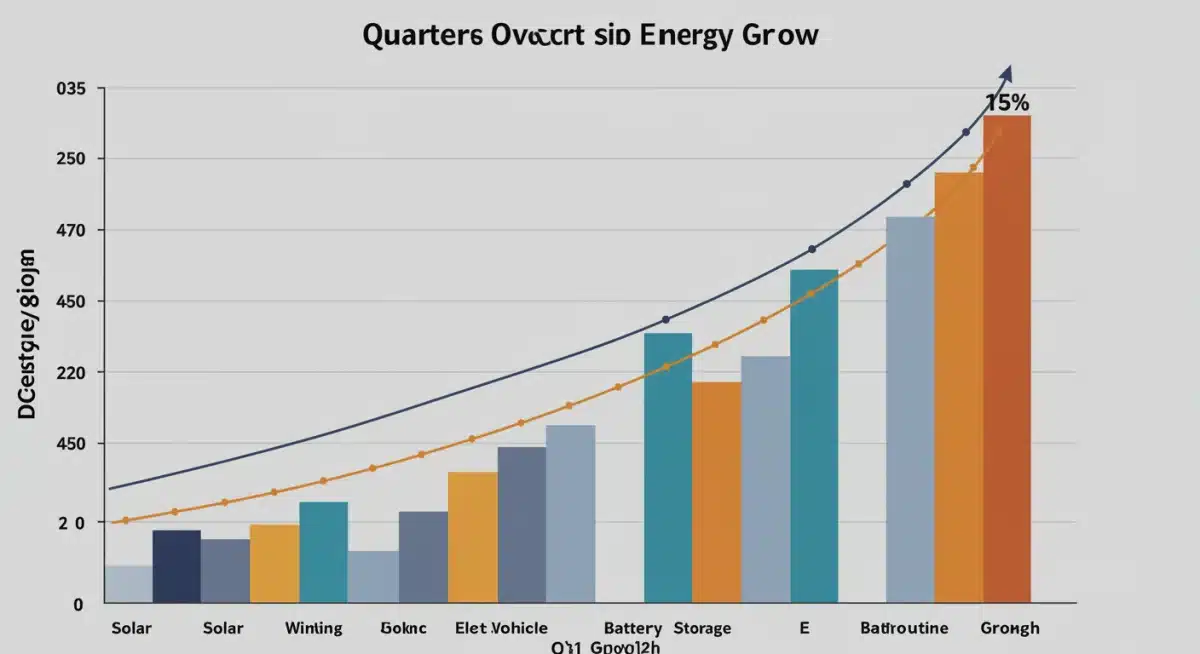
The clean energy sector achieved a significant 15% growth in Q1 2025, driven by technological advancements, supportive governmental policies, and increasing investor confidence globally.
The global energy landscape is undergoing a profound transformation, and a recent report confirms this shift. The clean energy sector sees 15% growth in Q1 2025: latest market trends report released, indicating a robust expansion that is reshaping economic and environmental futures. This significant surge highlights not only the increasing adoption of sustainable practices but also the strategic investments and policy support fueling this dynamic industry.
Understanding the Q1 2025 Clean Energy Surge
The first quarter of 2025 has brought exciting news for environmental advocates and investors alike. A comprehensive market trends report has revealed an impressive 15% growth in the clean energy sector, a testament to its increasing maturity and indispensable role in the global economy. This growth is not merely a statistical anomaly but a reflection of concerted efforts across various fronts, from technological innovation to policy frameworks designed to accelerate the transition away from fossil fuels.
This surge is particularly notable given the complexities of global markets. Factors such as geopolitical shifts, supply chain resilience, and evolving consumer demands have all played a part. The underlying strength of the clean energy sector, however, has allowed it to not only weather these challenges but to thrive, demonstrating its fundamental stability and long-term potential.
Key Drivers Behind the Expansion
Several critical elements have converged to create this powerful growth trajectory. Understanding these drivers is essential for appreciating the full scope of the clean energy revolution.
- Technological Advancements: Continuous innovation in solar panel efficiency, wind turbine design, and battery storage solutions has significantly reduced costs and increased performance.
- Supportive Government Policies: Incentives, tax credits, and regulatory frameworks from governments worldwide are making clean energy projects more financially attractive.
- Increased Corporate Investment: A growing number of corporations are committing to net-zero targets, driving substantial investment into renewable energy projects and sustainable technologies.
- Rising Consumer Demand: Public awareness and demand for sustainable options are pushing industries to adopt cleaner energy sources and products.
The robust performance of the clean energy sector in Q1 2025 underscores a pivotal moment in the transition to a sustainable future. It signals a clear path forward for economic development that aligns with environmental stewardship, paving the way for further innovation and expansion.
Solar Power: A Bright Spot in Renewable Energy
Solar energy continues to be a dominant force within the clean energy landscape, and Q1 2025 has only solidified its position. The market trends report highlights significant advancements and deployments in solar photovoltaic (PV) technology, contributing substantially to the overall sector’s 15% growth. Both utility-scale projects and distributed generation, such as rooftop solar installations, have seen remarkable uptake, driven by decreasing costs and improved efficiency.
Innovation in solar technology extends beyond panel efficiency. Advances in inverter technology, energy management systems, and grid integration solutions are making solar power more reliable and easier to incorporate into existing energy infrastructures. This holistic approach to development ensures that solar energy is not just an alternative, but a cornerstone of future energy grids.
Geographic Hotbeds of Solar Development
While solar adoption is global, certain regions have emerged as leaders, showcasing rapid deployment and significant investment.
- United States: Strong federal and state incentives, alongside corporate sustainability initiatives, have propelled the US market forward.
- Europe: Ambitious decarbonization targets and energy security concerns continue to drive substantial solar capacity additions across the continent.
- Asia-Pacific: Countries like China and India remain at the forefront of solar manufacturing and deployment, with massive projects coming online regularly.
The accessibility and scalability of solar power make it an attractive option for diverse applications, from powering remote communities to supplementing large industrial operations. The growth observed in Q1 2025 reinforces solar’s role as a versatile and powerful contributor to the clean energy mix, promising continued expansion in the years to come.
Wind Energy: Harnessing the Power of Air
Alongside solar, wind energy has proven to be another critical pillar of the clean energy sector’s impressive Q1 2025 performance. The market report reveals that both onshore and offshore wind farms have seen considerable investment and expansion, contributing significantly to the 15% growth figure. Technological advancements in turbine design, including larger rotor diameters and taller towers, are enabling wind farms to capture more energy efficiently, even in lower wind speed areas.
Offshore wind, in particular, is experiencing a boom. The consistent and stronger winds found at sea, coupled with decreasing installation costs and innovative floating turbine technologies, are making offshore projects increasingly viable and attractive. These large-scale developments are crucial for providing stable, high-capacity renewable energy to dense population centers.
Innovations Driving Wind Energy Forward
The continuous evolution of wind technology is central to its sustained growth and increasing competitiveness.
- Larger and More Efficient Turbines: Modern turbines are designed to maximize energy capture and operate reliably in diverse environmental conditions.
- Advanced Grid Integration: Improved forecasting and control systems allow wind power to be seamlessly integrated into national grids, enhancing energy security.
- Floating Offshore Wind: This emerging technology opens up vast new areas for wind farm development in deeper waters, expanding the potential for renewable energy generation.
The expansion of wind energy in Q1 2025 highlights its vital role in diversifying the clean energy portfolio. Its ability to generate power at scale, combined with ongoing technological improvements, positions wind as a cornerstone for achieving ambitious renewable energy targets globally, further solidifying the sector’s positive trajectory.
Electric Vehicles and Battery Storage: The Electrification Revolution
Beyond traditional power generation, the clean energy growth in Q1 2025 is significantly bolstered by the rapid expansion of electric vehicles (EVs) and advanced battery storage solutions. These interconnected technologies are fundamental to decarbonizing transportation and ensuring the stability and reliability of renewable energy grids. The market report indicates a substantial uptick in EV sales and charging infrastructure development, alongside massive investments in battery manufacturing and deployment.
Battery storage is no longer just for small-scale applications; utility-scale battery projects are becoming commonplace, providing critical grid services such as frequency regulation and peak shaving. This integration helps to mitigate the intermittency of solar and wind power, ensuring a consistent and reliable energy supply. The synergy between EVs and battery storage creates a powerful feedback loop, driving innovation and adoption in both sectors.
The Interplay of EVs and Storage
The relationship between electric vehicles and battery storage is symbiotic, each benefiting from advancements in the other.
- Enhanced Grid Stability: Large battery installations smooth out fluctuations from renewable sources, making the grid more resilient.
- EV Charging Infrastructure: The widespread deployment of fast-charging stations is crucial for accelerating EV adoption, often powered by renewable energy.
- Vehicle-to-Grid (V2G) Technology: EVs can potentially feed energy back into the grid during peak demand, transforming them into mobile energy storage units.
The electrification revolution, driven by EVs and advanced battery storage, represents a transformative shift in how we consume and manage energy. The strong growth observed in Q1 2025 underscores the critical role these technologies play in achieving comprehensive decarbonization and building a smarter, more sustainable energy future.
Policy & Investment: Fueling the Future of Clean Energy
The impressive 15% growth of the clean energy sector in Q1 2025 would not be possible without a confluence of supportive government policies and significant private and public investments. Governments worldwide are increasingly recognizing the economic and environmental imperatives of transitioning to clean energy, implementing robust frameworks that incentivize development and deployment. These policies often include tax credits, grants, renewable energy mandates, and streamlined permitting processes.
Investment flows into the clean energy sector have reached unprecedented levels. Venture capital, private equity, and institutional investors are channeling billions into renewable energy projects, green technologies, and sustainable infrastructure. This financial backing is crucial for scaling up proven technologies and bringing nascent innovations to market, ensuring a continuous pipeline of growth and progress.
Crucial Policy and Investment Strategies
Effective strategies are key to sustaining and accelerating the clean energy transition.
- Long-term Policy Certainty: Stable and predictable policy environments encourage long-term investment and project development.
- Green Bonds and Sustainable Finance: The proliferation of green financial instruments attracts capital specifically earmarked for environmentally friendly projects.
- International Collaboration: Cross-border initiatives and agreements facilitate technology transfer and joint ventures, speeding up global deployment.
The symbiotic relationship between policy and investment is a powerful engine for clean energy growth. The Q1 2025 report clearly demonstrates that when policy support and financial backing align, the clean energy sector can achieve remarkable expansion, paving the way for a more sustainable and prosperous future.
Challenges and Opportunities in a Growing Market
While the 15% growth in the clean energy sector for Q1 2025 is a resounding success, it is important to acknowledge that the path forward is not without its complexities. Rapid expansion often brings challenges related to infrastructure, supply chains, and workforce development. However, these challenges also present significant opportunities for innovation, efficiency improvements, and the creation of new economic value.
Grid modernization, for instance, is a substantial undertaking. Integrating a higher proportion of intermittent renewable energy sources requires smart grid technologies, advanced energy management systems, and significant upgrades to transmission and distribution networks. Addressing these needs will unlock further growth and enhance the reliability of clean energy systems, transforming potential hurdles into catalysts for progress.
Navigating the Road Ahead
Overcoming challenges will require strategic foresight and collaborative action from all stakeholders.
- Supply Chain Resilience: Diversifying manufacturing bases and improving logistics are crucial for stable component availability.
- Workforce Development: Investing in training programs and educational initiatives to meet the growing demand for skilled clean energy professionals.
- Regulatory Streamlining: Simplifying permitting processes and reducing bureaucratic hurdles can accelerate project deployment.
The clean energy sector’s impressive Q1 2025 performance highlights its resilience and adaptability. By proactively addressing emerging challenges and strategically leveraging new opportunities, the industry is poised for continued growth, ensuring its vital role in shaping a sustainable future for generations to come, creating both economic and environmental benefits.
| Key Point | Brief Description |
|---|---|
| 15% Growth Q1 2025 | The clean energy sector experienced significant expansion driven by various factors. |
| Solar & Wind Dominance | Key contributors to growth through technological improvements and widespread deployment. |
| EV & Battery Impact | Electric vehicles and advanced storage solutions are electrifying transport and stabilizing grids. |
| Policy & Investment | Government support and financial backing are crucial for sustained sector expansion. |
Frequently Asked Questions About Clean Energy Growth
The growth was primarily driven by significant technological advancements in solar and wind power, supportive government policies offering incentives and tax credits, and increased corporate and private investments in sustainable projects. Rising consumer demand for green energy also played a crucial role.
Solar photovoltaic (PV) installations, both utility-scale and rooftop, and wind energy projects, particularly offshore wind, were major contributors. Additionally, the rapid expansion of electric vehicle (EV) sales and advancements in battery storage technologies significantly boosted the sector’s overall performance.
Government policies are vital. They provide stability through long-term renewable energy mandates, financial incentives like tax credits and grants, and streamlined regulatory processes. These measures reduce investment risks and make clean energy projects more economically attractive, accelerating their deployment and market growth.
Battery storage is crucial for grid stability, addressing the intermittency of renewable sources like solar and wind. It stores excess energy during peak generation for use during high demand or low generation periods. This ensures a consistent power supply and enhances the reliability of clean energy systems.
Despite robust growth, challenges include the need for extensive grid modernization, ensuring resilient and diversified supply chains for components, and developing a skilled workforce to meet industry demands. Navigating regulatory complexities and securing consistent investment are also ongoing considerations for sustained expansion.
Conclusion
The report confirming that the clean energy sector saw an impressive 15% growth in Q1 2025 marks a significant milestone in the global energy transition. This expansion, fueled by innovation in solar and wind technologies, the rise of electric vehicles and advanced battery storage, and supportive policy frameworks, underscores the sector’s resilience and growing economic importance. While challenges remain, the opportunities for continued development and a sustainable future are immense. This positive trend not only contributes to environmental goals but also drives economic prosperity, positioning clean energy as a cornerstone of the future global economy.