Maximize Clean Energy Depreciation in 2025: Tax Strategies
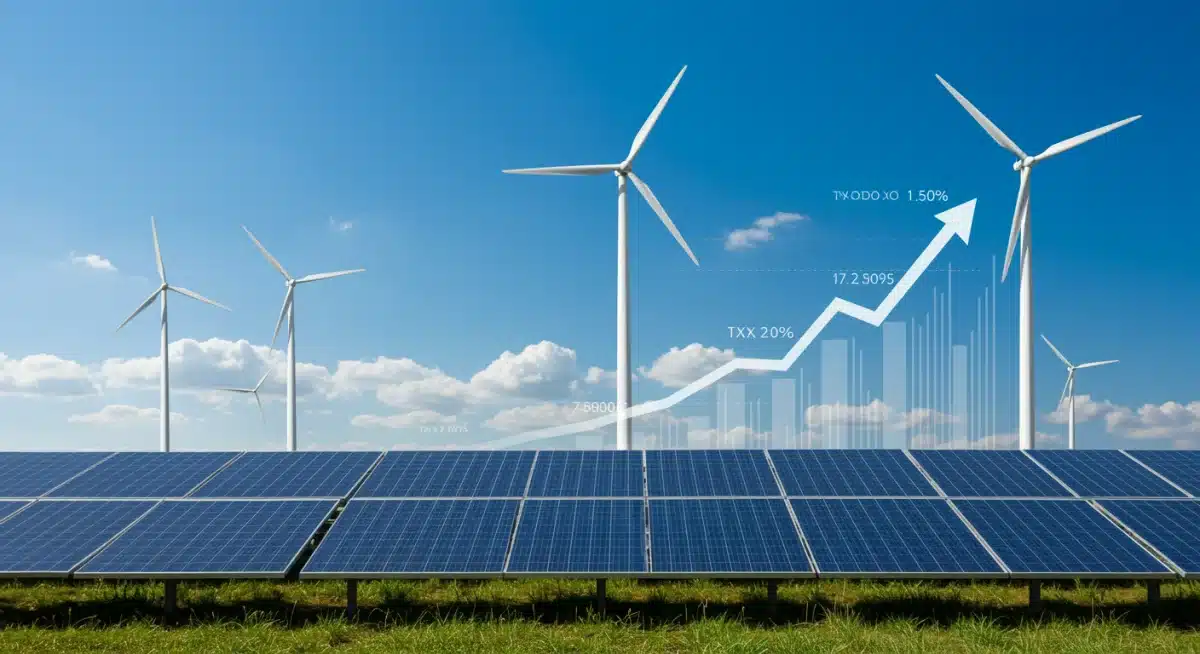
Maximizing clean energy depreciation benefits in 2025 is essential for businesses to optimize tax strategies and accelerate financial returns through practical solutions.
As the clean energy sector continues its rapid expansion, understanding and leveraging tax incentives becomes paramount for businesses and investors. Maximizing depreciation benefits for clean energy assets in 2025 represents a significant opportunity for accelerated returns and substantial financial impact. This guide will delve into practical strategies to help you navigate the complexities and unlock the full potential of these valuable tax provisions.
Understanding Depreciation for Clean Energy Assets
Depreciation allows businesses to recover the cost of certain property over its useful life, providing a crucial tax deduction. For clean energy assets, this mechanism is particularly potent, designed to incentivize investment in renewable technologies. It reduces taxable income, thereby lowering a company’s tax liability and freeing up capital for further investment or operational needs.
The core concept revolves around recognizing that assets lose value over time due to wear and tear, obsolescence, or simply age. The IRS permits businesses to deduct a portion of an asset’s cost each year, reflecting this decline in value. For clean energy projects, the rules are often enhanced to encourage adoption, offering more aggressive depreciation schedules than traditional assets.
Types of Depreciation Methods
Various methods exist for calculating depreciation, each with its own implications for tax planning.
- Straight-Line Depreciation: This method spreads the cost of an asset evenly over its useful life, resulting in a consistent deduction each year. While simple, it offers less front-loaded tax benefit.
- Modified Accelerated Cost Recovery System (MACRS): MACRS is the primary depreciation system used in the United States for most tangible property. It allows for faster depreciation in the early years of an asset’s life, accelerating tax benefits.
- Bonus Depreciation: This powerful incentive allows businesses to deduct a significant percentage of an asset’s cost in the year it is placed in service, rather than depreciating it over many years. For 2025, understanding the bonus depreciation phase-down is critical.
Choosing the right depreciation method depends on the specific asset, its useful life, and the business’s financial strategy. For clean energy assets, the goal is often to maximize early-year deductions to improve cash flow and reduce immediate tax burdens. This strategic choice can make a substantial difference in the overall financial viability of a project.
The ability to depreciate clean energy assets effectively is a cornerstone of modern financial planning in the renewable sector. It’s not just about compliance; it’s about optimizing capital deployment and enhancing project returns. Businesses must stay informed about current regulations and forthcoming changes to fully capitalize on these opportunities.
Navigating Bonus Depreciation in 2025
Bonus depreciation has been a cornerstone of tax incentives for clean energy investments, allowing businesses to deduct a large portion of an asset’s cost in the year it’s placed in service. However, 2025 marks a critical year for this benefit, as it continues its phase-down. Understanding these changes is vital for strategic financial planning.
Originally, bonus depreciation allowed for a 100% deduction, significantly reducing the upfront cost of new equipment. This powerful incentive was instrumental in accelerating the adoption of clean energy technologies by making large capital expenditures more palatable. As the percentage decreases, businesses must adapt their investment timelines and financial projections accordingly to still capture meaningful savings.
Impact of the Phase-Down
The scheduled reduction in bonus depreciation directly affects the immediate tax savings available for new clean energy projects. For assets placed in service in 2025, the bonus depreciation percentage is set to be lower than in previous years, requiring careful calculation and foresight.
- Reduced Immediate Deductions: A lower percentage means less of the asset’s cost can be written off in the first year, shifting more deductions to later years through MACRS.
- Strategic Timing: Businesses might consider accelerating project completion or asset acquisition to qualify for higher bonus depreciation percentages if possible before further phase-downs.
- Cash Flow Implications: Less upfront deduction can impact immediate cash flow, making it crucial to re-evaluate project financing and return on investment calculations for 2025 and beyond.
While the bonus depreciation percentage decreases, it doesn’t disappear entirely. Businesses will still benefit from an accelerated deduction, just at a reduced rate. The key is to integrate this phase-down into comprehensive tax planning, ensuring that even with a lower bonus, other strategies are employed to maximize overall benefits. This includes a thorough understanding of MACRS schedules and other available credits.
Staying current with IRS guidance and potential legislative changes is also paramount. The landscape of tax incentives for clean energy is dynamic, and proactive engagement with tax advisors can help businesses navigate these shifts effectively, ensuring they capture every available benefit as bonus depreciation evolves.
Key Clean Energy Assets Eligible for Depreciation
Not all assets qualify for the same depreciation benefits, making it crucial to identify which clean energy investments offer the most significant tax advantages. The IRS specifies categories of property that are eligible, and clean energy assets often fall into favorable classifications due to their environmental benefits and economic importance. This eligibility determines the depreciation schedule and the extent of tax savings a business can realize.
Understanding the specific classification of your clean energy assets is the first step toward maximizing depreciation. Assets are typically categorized based on their useful life and function, influencing their MACRS recovery period. Projects like solar installations, wind farms, and certain battery storage systems are frequently granted shorter recovery periods, which translates to faster depreciation and more immediate tax benefits.
Common Eligible Assets
A wide array of clean energy technologies can qualify for accelerated depreciation, driving investment in sustainable infrastructure.
- Solar Energy Property: This includes solar panels, inverters, mounting equipment, and other components directly used to generate electricity from solar radiation.
- Wind Energy Property: Wind turbines, towers, and related balance-of-plant equipment fall under this category, facilitating the production of electricity from wind.
- Geothermal Property: Equipment that uses geothermal energy for heating, cooling, or electricity generation, such as geothermal heat pumps and power plants.
- Qualified Fuel Cell Property: Systems that convert fuel into electricity using an electrochemical process without combustion.
- Qualified Small Wind Energy Property: Smaller wind turbines used for residential or small commercial applications.
- Energy Storage Technologies: Battery storage systems, especially when integrated with renewable energy generation, are increasingly qualifying for favorable depreciation treatments.
It is important to note that the eligibility criteria often extend beyond the primary generation equipment to include ancillary components necessary for the system’s operation, such as electrical wiring, transformers, and even certain structural elements. Detailed record-keeping and proper classification are essential to substantiate these claims during tax filing. Consulting with a tax professional specializing in clean energy can ensure all eligible assets are correctly identified and depreciated.
The breadth of eligible assets underscores the government’s commitment to fostering clean energy development. By strategically investing in these qualifying technologies, businesses can not only contribute to a sustainable future but also realize substantial financial benefits through optimized depreciation schedules.
Strategic Planning for Accelerated Returns
Effective tax planning is not merely about compliance; it’s about leveraging every available tool to enhance financial performance. For clean energy investments, this means meticulously planning to accelerate returns through robust depreciation strategies. This proactive approach ensures that businesses capture the maximum possible tax benefits, improving cash flow and reducing the overall cost of capital for projects.
Strategic planning begins with a thorough understanding of a project’s financial lifecycle and the various tax implications at each stage. It involves forecasting future income, assessing potential tax liabilities, and then aligning depreciation methods and asset acquisitions to optimize these factors. The goal is to front-load deductions whenever possible, especially in the early years of a project when initial capital outlay is highest.
Optimizing Depreciation Schedules
To maximize accelerated returns, businesses should consider several key strategies when planning their clean energy investments.
- Cost Segregation Studies: For large projects, a cost segregation study can reclassify certain components of a clean energy system from real property to personal property, allowing for shorter depreciation recovery periods (e.g., 5 or 7 years instead of 20 or 39 years). This significantly accelerates deductions.
- Timing of Placed-in-Service Date: The year an asset is placed in service dictates the depreciation rules that apply. Strategic timing can ensure assets qualify for the most favorable bonus depreciation percentages or other incentives.
- Maximizing Section 179 Deductions: While distinct from bonus depreciation, Section 179 allows businesses to deduct the full purchase price of qualifying equipment and software placed in service during the tax year, up to certain limits. This can be particularly beneficial for smaller clean energy investments.
Beyond these specific deductions, integrating depreciation planning with other clean energy incentives, such as investment tax credits (ITCs) or production tax credits (PTCs), is crucial. The interplay between these benefits can create a powerful financial synergy, drastically reducing the net cost of clean energy projects. A holistic view, encompassing all available tax provisions, will yield the most significant accelerated returns.
Engaging with experienced financial and tax advisors early in the project development phase can provide invaluable insights. Their expertise can help identify optimal strategies, navigate complex regulations, and ensure that all opportunities for accelerated returns are fully exploited, ultimately enhancing the financial viability and attractiveness of clean energy investments.
Impact on Financial Statements and Cash Flow
The strategic use of depreciation benefits for clean energy assets extends far beyond mere tax reduction; it profoundly impacts a company’s financial statements and, critically, its cash flow. Understanding these ripple effects is essential for investors, stakeholders, and internal financial management. Accelerated depreciation can significantly alter reported profits, balance sheet values, and the availability of funds for operations or reinvestment.
On the income statement, higher depreciation expenses in early years lead to lower reported net income. While this might seem counterintuitive to maximizing profits, it’s a deliberate strategy to reduce taxable income. The immediate tax savings generated translate directly into improved cash flow, as less capital is diverted to tax payments. This cash can then be reinvested into the business, used to pay down debt, or distributed to shareholders, accelerating overall financial growth.
Key Financial Impacts
The strategic deployment of depreciation has several tangible effects on a business’s financial health.
- Enhanced Cash Flow: By reducing taxable income and thus tax payments, accelerated depreciation frees up cash. This improved liquidity is vital for funding ongoing operations, new projects, or managing debt.
- Lower Effective Tax Rate: Significant deductions can lead to a lower effective tax rate for the business, making it more attractive to investors and potentially boosting valuation.
- Balance Sheet Adjustments: Assets are carried on the balance sheet at their net book value (cost minus accumulated depreciation). Accelerated depreciation reduces this value more quickly, reflecting a more rapid recovery of the asset’s cost.
- Improved Return on Investment (ROI): By reducing the net cost of an asset through tax savings, depreciation effectively increases the ROI of clean energy projects, making them more financially appealing.
It’s important for businesses to communicate these financial impacts transparently to stakeholders. While lower reported net income due to accelerated depreciation might initially concern some, explaining the corresponding increase in cash flow and overall tax efficiency can highlight the strategic benefits. The long-term financial health and sustainability of clean energy projects are often bolstered by these aggressive tax planning measures.
Ultimately, the judicious application of depreciation benefits positions clean energy investments as more financially attractive and viable. It provides a tangible mechanism for companies to recover their capital investments faster, thereby reducing risk and accelerating the generation of positive financial returns over the life of the project.
Ensuring Compliance and Avoiding Pitfalls
While the allure of significant tax savings from clean energy depreciation is strong, navigating the complex web of IRS regulations requires meticulous attention to detail. Ensuring compliance is not just about avoiding penalties; it’s about safeguarding the integrity of your financial strategies and maintaining trust with tax authorities. Missteps can lead to audits, disallowed deductions, and costly recalculations, undermining the very benefits you aimed to achieve.
The regulatory landscape surrounding clean energy tax incentives is frequently updated, with new guidance and interpretations emerging regularly. Businesses must stay informed about these changes, as what was permissible last year might have different implications in 2025. Proactive engagement with tax codes and professional advice is the best defense against potential pitfalls.
Common Pitfalls and Best Practices
Awareness of potential issues and adherence to best practices can help businesses maximize benefits while staying compliant.
- Incorrect Asset Classification: Misclassifying an asset can lead to incorrect depreciation schedules and disallowed deductions. Detailed due diligence on asset eligibility is crucial.
- Inadequate Documentation: The IRS requires thorough documentation to support all deductions. This includes purchase invoices, placed-in-service dates, engineering reports, and cost segregation studies.
- Ignoring Recapture Rules: If an asset is sold or disposed of before the end of its depreciable life, a portion of the previously deducted depreciation may be subject to recapture as ordinary income. Understanding these rules is vital for exit strategies.
- Failing to Account for Legislative Changes: Tax laws, especially those related to energy incentives, can change. Businesses must monitor legislative developments to adapt their strategies in real-time.
Engaging a qualified tax professional or firm specializing in clean energy taxation is perhaps the most critical step in ensuring compliance. These experts possess the knowledge to interpret complex regulations, perform cost segregation studies correctly, and represent your interests effectively in the event of an audit. Their guidance can transform potential liabilities into secured benefits, providing peace of mind and financial security.
By prioritizing compliance and adopting best practices, businesses can confidently leverage clean energy depreciation benefits. This proactive approach minimizes risks, optimizes tax savings, and solidifies the financial foundation of sustainable investments, allowing companies to focus on their core mission of driving the clean energy transition.
Future Outlook for Clean Energy Depreciation
The landscape of clean energy depreciation is not static; it is continually shaped by legislative priorities, technological advancements, and economic objectives. Looking beyond 2025, it is crucial for businesses to consider the potential future trajectories of these tax benefits. While some incentives, like bonus depreciation, are phasing down, there is a strong bipartisan interest in supporting renewable energy, suggesting that new or modified incentives may emerge.
Forecasts indicate a sustained commitment to decarbonization and energy independence, which will likely continue to drive policies favorable to clean energy investments. This could manifest as extensions of existing credits, introduction of new types of depreciation allowances, or the refinement of current regulations to better address emerging technologies like advanced energy storage or green hydrogen production. Staying ahead of these potential shifts offers a competitive advantage.
Potential Policy Directions
- New Legislative Initiatives: Future legislation could introduce new tax credits, grants, or direct pay options that complement or enhance depreciation benefits.
- Extension of Existing Provisions: While bonus depreciation is phasing down, there could be legislative efforts to extend or modify it, especially if economic conditions warrant further stimulus for capital investment.
- Focus on Specific Technologies: Future incentives might be more narrowly tailored to promote particular clean energy technologies deemed critical for national energy goals, such as grid modernization or carbon capture.
- State-Level Incentives: Beyond federal policies, state and local governments are increasingly offering their own tax incentives and depreciation allowances for clean energy projects, creating additional layers of benefit.
Businesses should actively monitor policy discussions and engage with industry associations to stay informed about potential changes. Participating in public comments or advocacy efforts can also help shape future legislation in a way that benefits the clean energy sector. Proactive engagement ensures that businesses are not just reacting to policy changes but are prepared to capitalize on them as they unfold.
The long-term outlook for clean energy depreciation remains generally positive, driven by the imperative for sustainable development and energy transition. By understanding the current framework and anticipating future policy directions, businesses can strategically position themselves to continue maximizing tax benefits and accelerate their returns from clean energy investments for years to come.
| Key Point | Brief Description |
|---|---|
| Bonus Depreciation Phase-Down | The percentage of bonus depreciation for clean energy assets continues to decrease in 2025, requiring revised financial planning. |
| Eligible Asset Identification | Properly identifying and classifying clean energy assets (solar, wind, storage) is crucial for maximizing depreciation benefits. |
| Strategic Cost Segregation | Utilizing cost segregation studies can reclassify assets for faster depreciation, significantly accelerating tax deductions. |
| Cash Flow Enhancement | Accelerated depreciation directly improves cash flow by reducing immediate tax liabilities, allowing for reinvestment. |
Frequently Asked Questions About Clean Energy Depreciation
The primary benefit is the ability to recover the cost of clean energy assets over time through tax deductions. This reduces taxable income, lowers tax liability, and improves cash flow, making investments in renewable energy more financially attractive.
In 2025, bonus depreciation continues its phase-down, meaning a lower percentage of an asset’s cost can be deducted in the first year. Businesses must adjust their financial planning to account for these reduced immediate deductions and explore other strategies.
Commonly eligible assets include solar energy property, wind energy property, geothermal property, qualified fuel cell property, and energy storage technologies. Proper classification is essential to ensure maximum benefits are claimed.
Cost segregation is a tax planning strategy that reclassifies components of a clean energy system from real property to personal property. This allows for shorter depreciation recovery periods, significantly accelerating tax deductions and improving cash flow.
Ensuring compliance involves accurate asset classification, thorough documentation, understanding recapture rules, and staying informed about legislative changes. Engaging a qualified tax professional specializing in clean energy is highly recommended to navigate complexities.
Conclusion
The strategic pursuit of maximizing depreciation benefits for clean energy assets in 2025 is a critical endeavor for any business looking to enhance its financial standing and accelerate returns in the burgeoning renewable energy sector. By diligently understanding the nuances of depreciation methods, navigating the evolving landscape of bonus depreciation, identifying eligible assets, and implementing robust strategic planning, companies can unlock substantial tax savings and bolster their cash flow. Adhering to compliance best practices and anticipating future policy shifts will ensure sustained financial advantages, making clean energy investments not only environmentally responsible but also economically astute. Proactive engagement with these strategies will undoubtedly pave the way for a more profitable and sustainable future.