
2025 Federal Guidelines for Clean Energy Workforce Training: Educator’s Guide
The 2025 federal guidelines for clean energy workforce training represent a pivotal shift, emphasizing skill development and program alignment to meet the escalating demands of the green economy, requiring immediate attention from educational institutions.
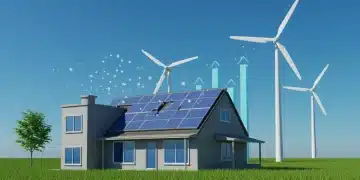
Clean Energy Production Tax Credit 2025: Small Business Guide
Small businesses can significantly benefit from the 2025 Clean Energy Production Tax Credit, offering incentives up to $25/MWh for generating clean electricity, fostering sustainability, and enhancing financial returns.
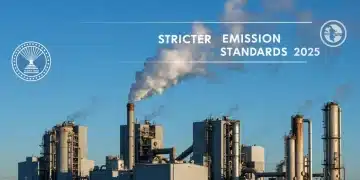
EPA’s Stricter Emissions Standards Effective January 2025
The Environmental Protection Agency (EPA) is set to implement stricter emissions standards beginning January 2025, a significant policy shift aimed at reducing pollution and promoting cleaner technologies nationwide.
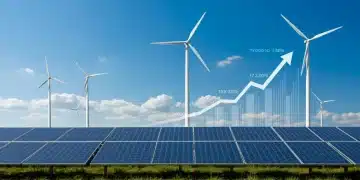
Maximize Clean Energy Depreciation in 2025: Tax Strategies
Effectively maximizing clean energy depreciation benefits in 2025 is crucial for businesses aiming to optimize tax strategies and accelerate financial returns through practical solutions.

Clean Energy STEM Education: 4 Pillars for 2025 Program Success
Effective Clean Energy STEM Education in 2025 hinges on four critical pillars: dynamic curriculum, experiential learning, robust industry collaboration, and policy-responsive program design, preparing students for a rapidly evolving green economy.

Unlock Federal Benefits: Over $2,000 for Home Energy Efficiency
Homeowners can secure over $2,000 in federal benefits this year by investing in energy-efficient upgrades, significantly reducing utility costs and supporting a greener environment through various tax credits and rebate programs.

2026 EV Charging Credit: Get 30% Back on Stations
The 2026 Alternative Fuel Vehicle Refueling Property Credit provides a substantial 30% tax credit for installing eligible EV charging stations, making sustainable transportation more accessible and affordable for individuals and businesses across the United States.
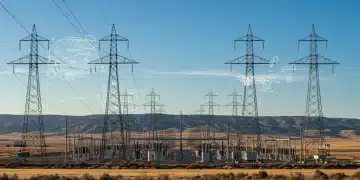
FERC’s New Guidelines for Interstate Transmission Projects: 20+ States Affected by Mid-2026
The Federal Energy Regulatory Commission (FERC) has issued new guidelines for interstate transmission projects, set to impact over 20 states by mid-2026. These regulations aim to accelerate grid modernization and facilitate the integration of renewable energy sources across the United States.
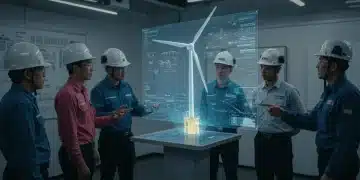
Upskilling for Offshore Wind Energy: 2026 Training Modules
The burgeoning offshore wind energy sector in the US demands a skilled workforce. This article details 2026's critical training modules and upskilling opportunities, preparing professionals for high-demand roles and contributing to a sustainable future.
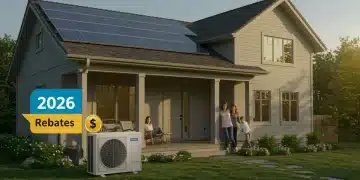
2026 Home Energy Rebates: $1,600 Heat Pump Savings
Discover how to navigate the 2026 home energy rebate programs to secure up to $1,600 for heat pump installations, maximizing your savings and enhancing home efficiency.
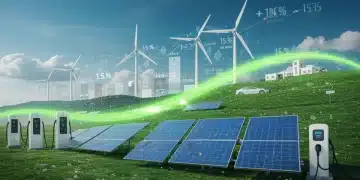
2026 Tax Credits: Boost Clean Energy Returns by 15% with IRS 45Y & 45Z
The 2026 clean energy tax credits, specifically IRS Sections 45Y and 45Z, offer significant financial incentives designed to boost returns on renewable energy projects and clean hydrogen production, potentially increasing profitability by 15% for eligible investments.
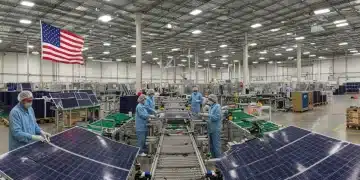
U.S. Solar Manufacturing Surges 15%, Exceeding 2025 Projections
A recent report reveals a substantial 15% increase in U.S. solar manufacturing capacity within the past six months, outperforming 2025 projections. This significant surge underscores the nation's accelerating commitment to renewable energy and domestic production.