2026 EV Charging Credit: Get 30% Back on Stations
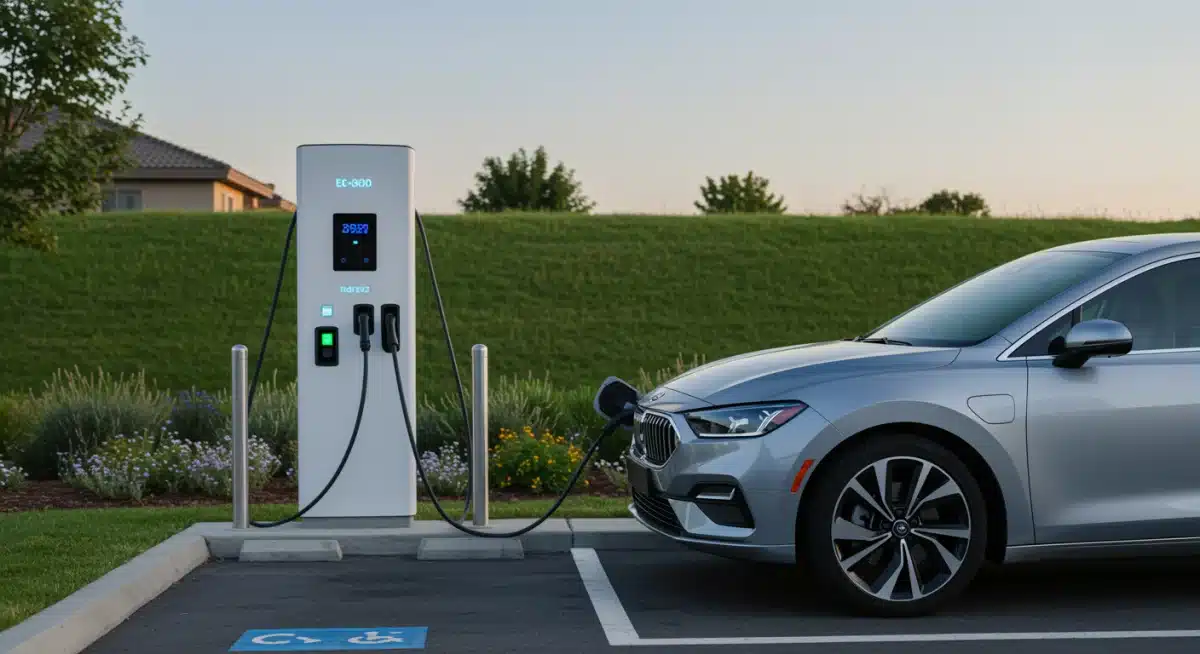
The 2026 Alternative Fuel Vehicle Refueling Property Credit offers a significant 30% tax credit for the installation of eligible electric vehicle charging stations, encouraging the expansion of sustainable transportation infrastructure across the United States.
Are you considering installing an electric vehicle (EV) charging station at your home or business? The opportunity to save significantly is here with the
2026 Alternative Fuel Vehicle Refueling Property Credit: Get 30% Back on Charging Stations.
This federal tax credit presents a compelling incentive for adopting cleaner transportation infrastructure, making it an ideal time to invest in EV charging solutions.
understanding the 2026 alternative fuel vehicle refueling property credit
The Alternative Fuel Vehicle Refueling Property Credit, often referred to simply as the EV charging credit, is a crucial federal incentive designed to accelerate the adoption of electric vehicles by supporting the build-out of necessary charging infrastructure. For 2026, this credit continues to offer substantial financial relief, making it more feasible for individuals and businesses to install charging stations. Understanding the specifics of this credit can help you maximize its benefits and contribute to a greener future.
This credit isn’t just about reducing costs; it’s a strategic move by the government to foster a robust EV ecosystem. By offsetting a significant portion of installation expenses, it removes a major barrier for many potential EV owners and commercial entities looking to provide charging services. The incentive applies to a broad range of refueling properties, with EV charging stations being a primary focus due to the rapid growth of the electric vehicle market.
who is eligible for the credit?
Eligibility for the 2026 EV charging credit extends to a variety of taxpayers. Both individuals and businesses can claim the credit, provided they meet specific criteria. For individuals, the charging station must be installed at their primary residence. Businesses, on the other hand, can claim the credit for property installed at any location used in their trade or business.
- Individuals: Must install qualified refueling property at their main home.
- Businesses: Can claim the credit for property used in a trade or business, or for income-producing activity.
- Non-taxable entities: Generally not eligible, as the credit is applied against federal income tax liability.
It’s vital to ensure that the property is placed in service within the tax year for which the credit is claimed. This means the charging station must be fully installed and operational by the end of the year. Keeping meticulous records of all expenses related to the purchase and installation of the charging equipment will be essential when filing for the credit.
In essence, the 2026 Alternative Fuel Vehicle Refueling Property Credit serves as a powerful tool for promoting sustainable transportation. Its broad applicability ensures that a wide array of stakeholders can participate in and benefit from the transition to electric vehicles, reinforcing the nation’s commitment to clean energy. This credit helps to democratize access to EV infrastructure, paving the way for wider adoption.
qualifying property and eligible expenses
To successfully claim the 2026 Alternative Fuel Vehicle Refueling Property Credit, it’s crucial to understand what constitutes “qualifying property” and which expenses are eligible for the 30% credit. Not all charging stations or associated costs will qualify, so careful consideration of the specifications is necessary. This section will delve into the details, ensuring you can make informed decisions about your investment.
Generally, the credit applies to property used for recharging electric vehicles or for dispensing other alternative fuels, such as hydrogen, natural gas, or propane. However, the most widespread application for most taxpayers will be for electric vehicle charging equipment. The equipment must meet certain safety and quality standards to be considered eligible for the credit.
what types of charging stations qualify?
The credit typically covers Level 2 (240-volt) and DC fast charging (Level 3) stations. Basic Level 1 (120-volt) chargers, which usually come with the vehicle, are generally not considered qualifying property unless they are part of a larger, more sophisticated installation. The key is that the property must be primarily used for refueling alternative fuel vehicles.
- Level 2 Chargers: Commonly installed in homes and workplaces, providing faster charging than standard outlets.
- DC Fast Chargers: High-power chargers typically found in public and commercial settings, offering rapid charging capabilities.
- Smart Charging Technology: Equipment with smart features, such as load management and network connectivity, often qualifies.
It’s also important to note that the property must be new and not previously used. Second-hand equipment or property that has already been claimed for a previous credit will not be eligible. Always verify that the charging station you intend to purchase meets all federal guidelines to ensure it qualifies for the tax incentive. Consulting with a tax professional or the IRS guidelines is always recommended.
Beyond the charging unit itself, a range of expenses directly associated with the installation can also be included. This broadens the scope of the credit, making it even more attractive for those looking to install a comprehensive charging solution. Understanding these eligible costs can significantly increase your potential savings.
eligible installation costs
The 30% credit isn’t limited to just the purchase price of the charging equipment. It also extends to reasonable and necessary costs associated with the installation. This can include wiring, electrical panel upgrades, trenching, and labor costs for qualified professionals. The goal is to cover the full scope of bringing a functional charging station online.
- Electrical wiring and conduits: Necessary infrastructure to connect the charger to the power source.
- Permits and inspection fees: Costs associated with legal compliance and safety checks.
- Labor costs: Fees paid to electricians or contractors for the installation work.
- Upgrades to existing electrical systems: If required to support the new charging equipment.
It’s crucial to keep detailed records of all these expenses, including receipts, invoices, and contracts. These documents will serve as proof when you claim the credit and may be requested by the IRS. Proper documentation ensures a smooth and successful claim process, allowing you to fully realize the financial benefits of the 2026 Alternative Fuel Vehicle Refueling Property Credit.
maximizing your 30% back: credit limits and calculations
While the 30% back on your EV charging station installation is a fantastic incentive, understanding the credit limits and how to accurately calculate your potential savings is essential. The government places caps on the amount of credit you can receive, which vary depending on whether you are an individual or a business. Navigating these details ensures you maximize your benefit without any surprises.
The credit is non-refundable, meaning it can reduce your tax liability to zero, but you won’t get a refund of any excess credit beyond your tax owed. However, for certain entities, unused credits might be carried forward to future tax years, offering extended flexibility. This makes careful planning and understanding your tax situation paramount before making a significant investment.
credit limits for individuals and businesses
For individuals, the credit is typically capped at a specific dollar amount per property. In prior years, this has often been $1,000 for residential installations. Businesses, on the other hand, usually face a higher limit per property, often up to $30,000, or a percentage of the total cost, whichever is less. These limits are designed to provide significant support while also preventing abuse of the incentive.
- Individuals: Generally capped at $1,000 for qualified residential property.
- Businesses: May receive up to $30,000 per property, or a percentage of the cost, depending on the specific regulations for 2026.
- Multiple properties: Businesses installing multiple charging stations can claim the credit for each eligible property, up to the per-property limit.
It’s important to consult the official IRS guidance for the 2026 tax year as soon as it becomes available, as these limits can be subject to change. The information provided here is based on historical patterns and general expectations for such credits. Always refer to the most current regulations to ensure accuracy in your planning.
Calculating your potential credit involves more than just multiplying your expenses by 30%. You must consider the total eligible costs, apply the 30% rate, and then compare that figure against the applicable credit limit. This multi-step process ensures you arrive at the correct credit amount you can claim.
calculating your potential credit
Let’s consider an example for an individual. If you spend $3,500 on a qualifying Level 2 charging station and its installation at your home, the 30% credit would initially be $1,050. However, if the individual cap is $1,000, your actual credit would be limited to $1,000. For businesses, with a higher cap, the 30% calculation is more likely to be the determining factor for larger installations.

- Step 1: Tally all eligible expenses (equipment purchase + installation costs).
- Step 2: Multiply the total eligible expenses by 30%.
- Step 3: Compare this calculated amount to the applicable credit limit (e.g., $1,000 for individuals, $30,000 for businesses).
- Step 4: The lower of the two figures (calculated 30% or the credit limit) is your maximum credit.
This methodical approach ensures that you accurately determine the credit amount you are entitled to under the 2026 Alternative Fuel Vehicle Refueling Property Credit. Proper calculation is vital for accurate tax filing and for realizing the full financial benefit of your investment in EV infrastructure. Don’t leave money on the table due to miscalculation.
the application process: claiming your credit
Claiming the 2026 Alternative Fuel Vehicle Refueling Property Credit involves a specific process during tax season. It’s not an automatic benefit; you must actively report your qualifying expenses on your federal income tax return. Understanding the necessary forms and documentation will streamline this process and prevent potential delays or issues with your claim.
The IRS provides specific forms for reporting various tax credits, and the alternative fuel vehicle refueling property credit is no exception. Typically, this credit is claimed using Form 8911, “Alternative Fuel Vehicle Refueling Property Credit.” This form helps you detail your expenses and calculate the exact credit amount you are eligible for.
required forms and documentation
To claim the credit, you will need to complete Form 8911 and attach it to your federal income tax return (Form 1040 for individuals, or the appropriate business tax form). This form requires you to provide details about the property, its cost, and the date it was placed in service. Accuracy and completeness are paramount to avoid any issues with the IRS.
- Form 8911: The primary IRS form for claiming the Alternative Fuel Vehicle Refueling Property Credit.
- Purchase receipts: Detailed invoices for the charging station equipment.
- Installation invoices: Records from electricians or contractors for labor and materials.
- Proof of payment: Bank statements or credit card records for all related expenses.
It is highly advisable to keep all original receipts and documentation for at least three years after filing your tax return, as the IRS may request them for verification. Digital copies are also good to have as backups. Being organized with your paperwork will simplify the claiming process and provide peace of mind.
While the process might seem daunting, many tax software programs can guide you through completing Form 8911. However, for complex situations or if you have multiple properties, consulting a qualified tax professional is always a wise decision. They can ensure you meet all requirements and maximize your eligible credit.
when to claim the credit
The credit is claimed in the tax year the alternative fuel vehicle refueling property is “placed in service.” This generally means the year the charging station is fully installed and operational. If you install a charging station in late 2026, you would claim the credit when you file your 2026 tax return in early 2027.
- Tax year of installation: Claim the credit for the year the property becomes operational.
- Timely filing: Ensure your tax return and Form 8911 are submitted by the tax deadline.
- Amended returns: If you forget to claim the credit, you may be able to file an amended return (Form 1040-X) within three years.
Understanding the timing is crucial, especially if you are planning your installation around tax deadlines. By being proactive and organized, you can seamlessly integrate the claiming of this credit into your annual tax filing routine. This straightforward process ensures you receive the 30% back you are entitled to, supporting your investment in clean energy infrastructure.
long-term benefits of investing in ev charging infrastructure
Beyond the immediate financial advantage of the 2026 Alternative Fuel Vehicle Refueling Property Credit, investing in EV charging infrastructure offers a multitude of long-term benefits. These advantages extend from environmental impact to economic gains and enhanced property value, making it a strategic move for both homeowners and businesses looking ahead to a sustainable future.
The shift towards electric vehicles is not just a trend; it’s a fundamental change in transportation. By installing charging stations, you are not only preparing for this future but actively participating in its acceleration. This forward-thinking approach can yield significant returns, both tangible and intangible, over the lifespan of the charging equipment.
environmental impact and sustainability
One of the most evident long-term benefits is the positive environmental impact. By facilitating EV adoption, you contribute to a reduction in greenhouse gas emissions and air pollution. This directly supports local and national sustainability goals, improving air quality and mitigating climate change effects. For businesses, this also enhances their corporate social responsibility profile.
- Reduced carbon footprint: Directly supports lower emissions from transportation.
- Improved air quality: Fewer tailpipe emissions lead to healthier communities.
- Support for renewable energy: EVs can be charged with electricity from renewable sources, amplifying environmental benefits.
Embracing EV charging infrastructure aligns with a commitment to ecological stewardship, a value increasingly important to consumers and stakeholders. This commitment can attract environmentally conscious customers and employees, further solidifying your reputation as a responsible entity. The environmental dividends are substantial and far-reaching.
From an economic perspective, installing EV charging stations can lead to increased property value, potential revenue streams, and reduced operational costs in the long run. These financial incentives, coupled with the tax credit, paint a very attractive picture for investment.
economic advantages and property value
For homeowners, an EV charging station can be a significant selling point, appealing to the growing number of EV owners. It adds a modern amenity that increases the desirability and market value of the property. For businesses, providing charging can attract customers, especially those with EVs, who may choose your location over competitors. It can also serve as an amenity for employees, boosting morale and retention.
- Increased property value: An attractive feature for potential buyers in a burgeoning EV market.
- Customer attraction: Draws EV drivers who need convenient charging options.
- Employee retention: Provides a valuable perk for employees who own or plan to purchase EVs.
- Potential revenue generation: Businesses can charge for electricity, creating a new income stream.
Furthermore, businesses might see reduced fuel costs if they transition their fleet to EVs, and homeowners can benefit from lower per-mile fueling costs compared to gasoline. The 2026 Alternative Fuel Vehicle Refueling Property Credit is just the beginning of a long journey of benefits that come with embracing electric vehicle infrastructure, solidifying its place as a smart, future-proof investment.
comparing with other clean energy incentives in 2026
The 2026 Alternative Fuel Vehicle Refueling Property Credit is a powerful incentive, but it’s part of a broader landscape of clean energy benefits available in the United States. Understanding how this credit compares to other incentives can help individuals and businesses strategize their clean energy investments, ensuring they take full advantage of all available support programs. This holistic view is crucial for maximizing overall savings and impact.
Many federal, state, and local programs exist to encourage the adoption of renewable energy and sustainable practices. These can range from tax credits for solar panel installation to rebates for energy-efficient appliances. The key is to identify which incentives are stackable and which offer the most significant benefits for your specific circumstances.
federal vs. state and local incentives
While the 2026 EV charging credit is a federal program, many states and local municipalities offer their own incentives for EV charging infrastructure. These can include additional tax credits, rebates, grants, or even preferential parking for EVs. Combining federal and local incentives can significantly reduce the net cost of installing a charging station.
- Federal incentives: Provide a baseline level of support, applicable nationwide.
- State incentives: Vary widely by state, often including additional tax credits or rebates for EV charging.
- Local programs: May offer specific grants, permits waivers, or other benefits tailored to local needs.
It’s highly recommended to research your state’s energy office or local utility provider’s website for information on regional programs. Some utility companies, for instance, offer rebates for smart EV chargers or off-peak charging programs that can further reduce operational costs. A comprehensive search can uncover unexpected savings opportunities.
Beyond charging infrastructure, there are also incentives directly related to the purchase of the electric vehicles themselves. These can be equally important in the overall financial planning for transitioning to an EV lifestyle or fleet.
ev purchase credits and other related benefits
The federal government also offers tax credits for the purchase of new and used clean vehicles, which can be combined with the refueling property credit. These credits aim to make the vehicles themselves more affordable, complementing the infrastructure incentives. For example, the Clean Vehicle Tax Credit can provide up to $7,500 for new eligible EVs.
- Clean Vehicle Tax Credit: Federal credit for purchasing new or used eligible electric vehicles.
- Home energy efficiency credits: Other federal credits may apply if your installation involves broader electrical upgrades that improve overall home energy efficiency.
- Utility rebates: Many utility companies offer rebates for smart thermostats, energy audits, and other energy-saving measures, which can indirectly benefit EV owners.
By strategically combining the 2026 Alternative Fuel Vehicle Refueling Property Credit with other available incentives, taxpayers can achieve substantial savings. This integrated approach not only makes the initial investment in EV charging more palatable but also supports a holistic transition to a more sustainable and energy-efficient lifestyle or business operation. Always consult with a tax advisor to navigate the complexities of stacking these benefits effectively.
future outlook and what to expect beyond 2026
The 2026 Alternative Fuel Vehicle Refueling Property Credit is a current snapshot of government incentives, but the landscape of clean energy and EV adoption is constantly evolving. Looking beyond 2026, it’s important to consider the potential future of these credits and the broader trends shaping the electric vehicle market. This foresight can help individuals and businesses make long-term strategic decisions regarding their clean energy investments.
Government support for EVs and related infrastructure is driven by ambitious climate goals and a desire for energy independence. Therefore, while specific credit amounts and eligibility criteria may change, the general direction of support for clean transportation is likely to continue, adapting to market needs and technological advancements.
potential changes in tax credit legislation
Tax credits like the Alternative Fuel Vehicle Refueling Property Credit are often subject to periodic review and renewal by Congress. While the 2026 credit provides certainty for the near future, subsequent years may see modifications. These could include adjustments to the credit percentage, the maximum credit amount, or even expanded definitions of qualifying property.
- Annual reviews: Credits are often reviewed and renewed or modified on an annual or biennial basis.
- Credit amount adjustments: Percentage or dollar caps may change based on market conditions and policy goals.
- Eligibility expansions: Future legislation might broaden the scope of qualifying property or eligible entities.
Staying informed about legislative developments is crucial for anyone planning long-term investments in EV infrastructure. Industry associations, clean energy news outlets, and government resources like the IRS website are excellent sources for updates. Proactive monitoring can help you anticipate changes and adjust your plans accordingly.
The growth of the EV market itself will also play a significant role in shaping future incentives. As EVs become more mainstream and charging technology advances, the focus of government support may shift from foundational infrastructure to more specialized or innovative solutions.
the evolving ev market and infrastructure needs
As electric vehicles become more prevalent, the demand for charging infrastructure will continue to grow, but so will the sophistication of the solutions. We can expect to see increased integration of smart grid technologies, bidirectional charging (vehicle-to-grid), and more accessible public charging networks. Future incentives might target these advanced technologies or focus on underserved areas.
- Smart grid integration: Charging stations becoming integral parts of intelligent energy management systems.
- Vehicle-to-grid (V2G) technology: Incentives for systems that allow EVs to feed power back to the grid.
- Expansion into rural areas: Continued focus on building charging infrastructure in regions with limited access.
- Faster charging speeds: Development and deployment of ultra-fast charging solutions.
The trajectory beyond 2026 points towards a robust and integrated EV ecosystem. The 2026 Alternative Fuel Vehicle Refueling Property Credit is a vital step in this direction, laying the groundwork for a future where electric vehicles are the norm. By understanding both current benefits and future trends, you can position yourself to thrive in this exciting and rapidly evolving clean energy landscape.
| Key Point | Brief Description |
|---|---|
| Credit Amount | Receive 30% back on the cost of eligible EV charging equipment and installation. |
| Eligibility | Available to individuals for residential property and businesses for commercial use. |
| Credit Limits | Capped at $1,000 for individuals; up to $30,000 for businesses. |
| Claiming Process | File Form 8911 with your federal tax return in the year the property is placed in service. |
frequently asked questions about the 2026 ev charging credit
For individuals, the 2026 Alternative Fuel Vehicle Refueling Property Credit is typically capped at $1,000 for qualified residential installations. This means even if 30% of your costs exceed $1,000, your credit will be limited to that amount. It’s crucial to verify the latest IRS guidelines for any potential changes.
Yes, businesses can generally claim the 2026 Alternative Fuel Vehicle Refueling Property Credit for each eligible charging station installed. While there is an overall cap, often around $30,000 per property, businesses can leverage this incentive to build out extensive charging infrastructure across multiple locations or for several units at one site.
No, the 2026 Alternative Fuel Vehicle Refueling Property Credit generally applies only to new, qualified property that has not been previously used. This means purchasing a second-hand charging station or one that has already been claimed for a credit in a prior year would not be eligible for this specific tax incentive. Always ensure your equipment is new.
To claim the 2026 Alternative Fuel Vehicle Refueling Property Credit, you’ll need to submit IRS Form 8911 with your federal tax return. You should also retain detailed records including purchase receipts for the charging equipment, invoices for installation labor and materials, and proof of payment. These documents are vital for verification purposes.
Often, yes. The federal 2026 Alternative Fuel Vehicle Refueling Property Credit can frequently be combined with state, local, or utility company incentives. However, it’s essential to check the specific rules of each program, as some may have restrictions on stacking benefits. Consulting a tax professional is recommended for optimizing combined incentives.
conclusion
The 2026 Alternative Fuel Vehicle Refueling Property Credit offers a substantial opportunity for individuals and businesses to invest in electric vehicle charging infrastructure while enjoying significant financial relief. By providing 30% back on eligible expenses, this credit not only makes the transition to EV charging more affordable but also actively supports the nation’s broader clean energy goals. Understanding the eligibility criteria, credit limits, and application process is key to maximizing these benefits. As the EV market continues to expand, leveraging such incentives becomes increasingly important for fostering sustainable transportation and securing a greener future. Embrace this opportunity to contribute to a cleaner environment and realize tangible economic advantages.