DOE Announces $5 Billion Grants for Geothermal Projects Q1 2026
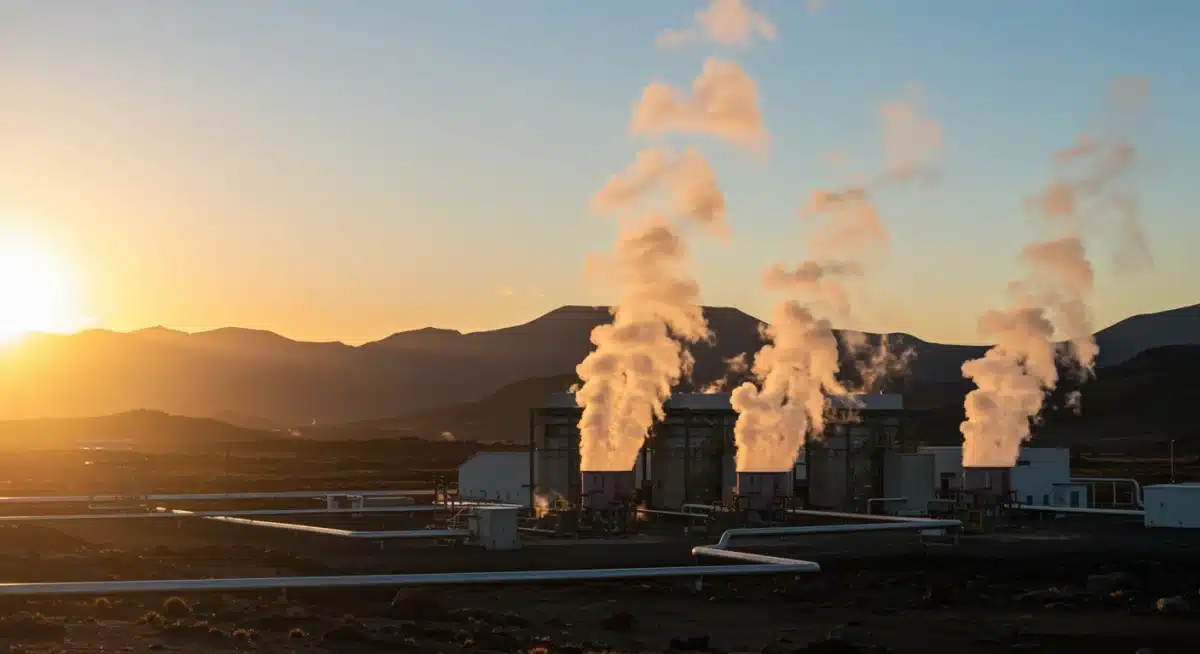
The U.S. Department of Energy (DOE) is set to launch $5 billion in new grants for advanced geothermal projects starting Q1 2026, accelerating the nation’s transition to a sustainable energy future.
The U.S. Department of Energy Announces $5 Billion in New Grants for Advanced Geothermal Projects Starting Q1 2026, a monumental step toward revolutionizing America’s energy landscape. This significant investment aims to unlock the vast, untapped potential of geothermal energy, propelling the nation closer to its ambitious clean energy goals and fostering innovation across the sector. What does this mean for the future of energy?
understanding the geothermal energy landscape
Geothermal energy, derived from the Earth’s internal heat, represents a powerful and often underestimated source of clean, renewable power. Unlike intermittent sources such as solar and wind, geothermal power plants can operate 24/7, providing a stable baseload electricity supply. This consistency makes it an invaluable component of a diversified energy portfolio, capable of bolstering grid reliability and reducing reliance on fossil fuels.
The potential for geothermal energy in the United States is immense. Estimates suggest that with advanced technologies, geothermal could supply a substantial portion of the nation’s electricity needs. However, traditional geothermal development has been constrained by geographical limitations, primarily requiring access to hot, permeable rock formations near the surface. The new DOE grants aim to overcome these barriers by supporting innovative approaches that can unlock geothermal resources in a much wider range of locations.
the basics of geothermal power generation
At its core, geothermal power relies on harnessing heat from beneath the Earth’s surface. This heat can be accessed in several ways, each with its own technological requirements and applications.
- Hydrothermal Systems: These are the most common type, utilizing naturally occurring hot water and steam reservoirs to drive turbines.
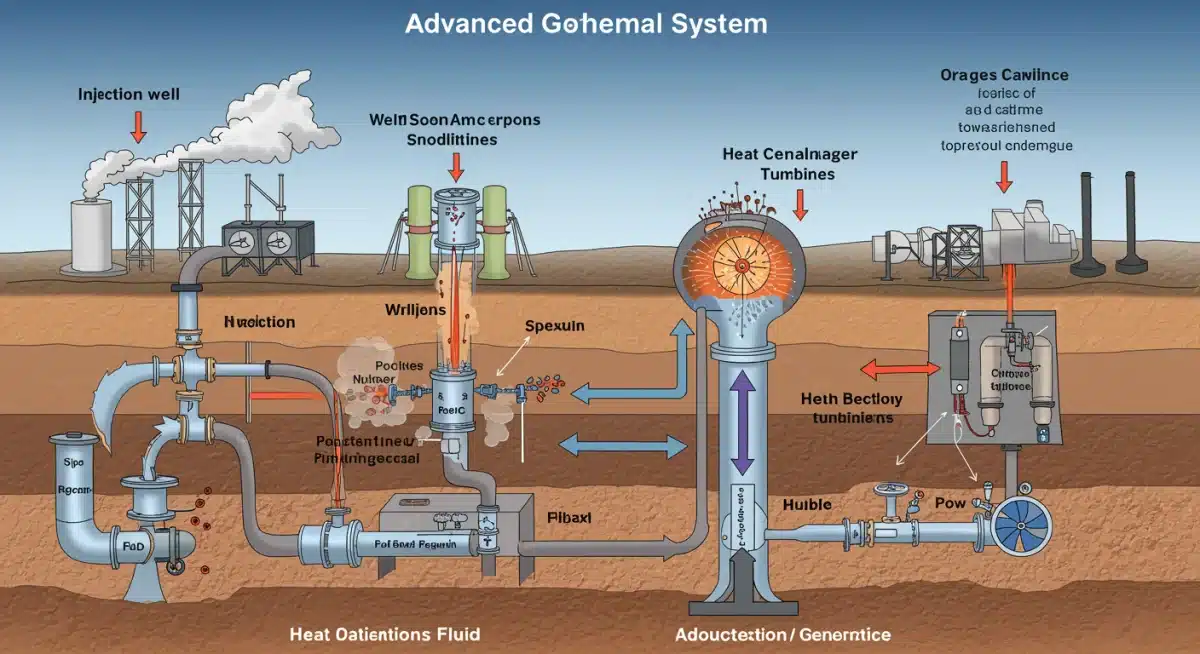
- Enhanced Geothermal Systems (EGS): EGS involves creating artificial reservoirs by injecting fluid into hot, dry rock to fracture it and allow heat extraction.
- Closed-Loop Systems: An emerging technology that circulates fluid through a closed loop deep underground, absorbing heat without direct contact with the rock.
The U.S. Department of Energy’s focus on advanced geothermal projects signifies a shift towards these more complex and widely applicable technologies. The $5 billion in grants will be crucial for developing and deploying the next generation of geothermal solutions, pushing the boundaries of what’s currently possible.
Understanding the fundamental principles of geothermal energy is key to appreciating the transformative impact these grants could have. By investing in research, development, and deployment, the DOE is not just funding projects; it’s investing in a future where clean, reliable energy is accessible to more communities across the United States. This strategic move aligns with broader national efforts to combat climate change and strengthen energy independence.
the significance of the $5 billion doe grants
The U.S. Department of Energy’s announcement of $5 billion in new grants for advanced geothermal projects starting Q1 2026 is far more than a financial allocation; it’s a strategic declaration of intent. This substantial investment underscores the federal government’s commitment to accelerating the clean energy transition and positions geothermal energy as a critical pillar in achieving national decarbonization goals. The allocation reflects a recognition of geothermal’s unique advantages, particularly its capacity for continuous, baseload power generation, which complements intermittent renewable sources like solar and wind.
This funding is anticipated to catalyze innovation, driving breakthroughs in drilling technologies, reservoir engineering, and power conversion systems. Historically, one of the primary hurdles for wider geothermal adoption has been the high upfront cost and geological uncertainties associated with exploration and drilling. The grants are designed to de-risk these initial stages, making geothermal projects more attractive to private investors and developers. By sharing the financial burden, the DOE aims to stimulate private sector engagement and accelerate the maturation of advanced geothermal technologies.
driving technological advancement
The grants are specifically targeted at advanced geothermal projects, meaning those that push beyond conventional hydrothermal systems. This includes a strong emphasis on Enhanced Geothermal Systems (EGS), which involve engineering subsurface reservoirs to extract heat from hot, dry rock. EGS has the potential to unlock vast geothermal resources across the nation, far beyond the geologically active regions where traditional hydrothermal plants are viable. The funding will support:
- Development of advanced drilling techniques, including directional drilling and plasma drilling, to access deeper and hotter rock formations more efficiently.
- Innovation in reservoir stimulation and fluid circulation methods to maximize heat extraction and minimize environmental impact.
- Research into novel materials and components capable of withstanding extreme geothermal environments.
The goal is to reduce the cost and improve the efficiency of these advanced systems, bringing them closer to commercial viability. The long-term vision is a future where geothermal power plants can be developed in a wider array of geological settings, significantly expanding the nation’s renewable energy capacity.
Furthermore, these grants are expected to foster a robust ecosystem of research institutions, technology developers, and project operators. Collaboration among these entities will be essential for translating cutting-edge scientific discoveries into deployable energy solutions. The $5 billion investment is a clear signal that the U.S. is serious about leading the world in geothermal innovation, creating jobs, and ensuring a resilient, sustainable energy future.
eligibility and application process for q1 2026
The impending launch of the U.S. Department of Energy’s $5 Billion in New Grants for Advanced Geothermal Projects Starting Q1 2026 has naturally generated significant interest within the clean energy sector. Understanding the eligibility criteria and the application process will be paramount for potential recipients looking to secure a portion of this transformative funding. The DOE typically designs its grant programs to be competitive, ensuring that funds are directed towards projects with the highest potential for impact, innovation, and successful implementation.
While specific details regarding the Q1 2026 application window are still being finalized, past DOE funding opportunities provide a strong indication of the likely requirements. Generally, eligible entities include private companies, academic institutions, national laboratories, state and local governments, and tribal organizations. The emphasis will undoubtedly be on projects that demonstrate a clear pathway to commercialization, significant technological advancement, and a tangible contribution to the nation’s clean energy goals. Applicants will need to present compelling proposals that outline their project’s technical merit, financial viability, environmental considerations, and potential for widespread adoption.
key eligibility considerations
Applicants for the advanced geothermal grants will likely face a rigorous review process. Key considerations often include:
- Technological Readiness Level (TRL): Projects typically need to be at a certain TRL, demonstrating that the technology has moved beyond basic research and into developmental or pilot phases.
- Project Team Expertise: The experience and qualifications of the project team, including engineers, geologists, and project managers, are critical.
- Environmental Impact: Proposals must address potential environmental impacts and outline mitigation strategies, aligning with sustainable development practices.
- Cost-Share Requirements: Many DOE grants require a cost-share from the applicant, demonstrating a financial commitment to the project’s success.
Prospective applicants should begin preparing their project concepts now, focusing on innovative approaches to geothermal energy that align with the DOE’s stated objectives for advanced systems. This includes exploring novel drilling techniques, enhanced reservoir stimulation, and efficient power conversion technologies. Early engagement with the DOE’s geothermal program offices can also provide valuable insights into specific priorities and expectations.
The $5 billion represents a pivotal opportunity for those at the forefront of geothermal innovation to bring their ground-breaking ideas to fruition, contributing significantly to a more sustainable energy future for the U.S.
economic and environmental impacts
The U.S. Department of Energy Announces $5 Billion in New Grants for Advanced Geothermal Projects Starting Q1 2026, an investment poised to deliver substantial economic and environmental benefits across the nation. Economically, this funding will stimulate job creation, foster technological innovation, and enhance energy independence. Environmentally, it will accelerate the transition away from fossil fuels, reduce greenhouse gas emissions, and contribute to a cleaner, healthier planet. The ripple effects of such a significant investment will be felt throughout various sectors, from manufacturing and engineering to research and development.
On the economic front, the development of advanced geothermal projects is inherently labor-intensive, requiring skilled workers in geology, drilling, engineering, construction, and operations. This will translate into thousands of high-paying jobs, revitalizing local economies and creating new opportunities for a diverse workforce. Furthermore, the push for advanced geothermal technologies will spur innovation in related industries, such as materials science, sensor technology, and artificial intelligence, leading to new businesses and export opportunities for American companies. Reduced reliance on imported energy sources will also strengthen national security and stabilize energy prices for consumers.
job creation and industry growth
The expansion of the geothermal sector, driven by these grants, is expected to lead to significant job growth. These jobs will not be limited to the geothermal sites themselves but will extend across the supply chain. Specific areas of growth include:
- Drilling and Well Construction: Specialized drilling rig operators, geologists, and engineers.
- Manufacturing: Production of turbines, heat exchangers, pumps, and other geothermal plant components.
- Research and Development: Scientists and engineers focused on improving geothermal technology and efficiency.
This growth will contribute to a robust domestic clean energy industry, positioning the U.S. as a global leader in geothermal technology. The grants will also encourage private sector investment, creating a virtuous cycle of innovation and expansion.
From an environmental perspective, advanced geothermal energy offers a near-zero emission power source. Unlike fossil fuels, geothermal plants do not burn fuel, thus avoiding the release of carbon dioxide, sulfur dioxide, and nitrogen oxides, which contribute to climate change and air pollution. The consistent nature of geothermal power also means it can serve as a reliable foundation for a grid increasingly powered by renewables, helping to integrate intermittent sources more effectively. This shift will aid the U.S. in meeting its climate targets, improving public health, and preserving natural ecosystems for future generations. The long-term environmental benefits make this investment a critical step towards a sustainable future.
challenges and future outlook for geothermal
While the U.S. Department of Energy Announces $5 Billion in New Grants for Advanced Geothermal Projects Starting Q1 2026, the path to widespread geothermal adoption is not without its challenges. Overcoming these hurdles will be crucial for fully realizing the potential of this powerful clean energy source. The primary obstacles include the high upfront capital costs associated with exploration and drilling, the geological uncertainties in locating viable resources, and the need for continued technological advancements to make geothermal economically competitive across diverse regions.
Drilling deep wells into the Earth’s crust is an expensive and time-consuming endeavor, and the success rate of finding commercially viable geothermal reservoirs can vary. The new DOE grants are specifically designed to mitigate some of these financial risks, but ongoing innovation in drilling techniques, such as plasma drilling or advanced directional drilling, is essential to reduce costs and increase efficiency. Furthermore, public perception and regulatory frameworks also play a role, requiring clear communication about the benefits and safety of geothermal technology. Addressing these challenges systematically will be key to unlocking geothermal’s full potential.
overcoming technological and economic barriers
The future outlook for geothermal energy is bright, provided that sustained investment and innovation continue. Key areas for improvement include:
- Drilling Cost Reduction: Developing cheaper, faster, and more reliable drilling technologies.
- Enhanced Reservoir Characterization: Improving seismic imaging and other subsurface mapping techniques to reduce exploration risks.
- Advanced Materials: Creating materials that can withstand the high temperatures and corrosive environments found deep underground.
- Scalability: Designing modular and scalable geothermal systems that can be deployed more rapidly and efficiently.
These technological advancements, coupled with supportive policy and regulatory environments, will enable geothermal energy to compete more effectively with other power generation sources. The DOE’s grants will be instrumental in funding the research and pilot projects necessary to achieve these breakthroughs.
The long-term outlook for geothermal energy is one of significant growth and expanded deployment. As the world increasingly seeks reliable, clean, and baseload power, geothermal’s unique attributes make it an indispensable part of the energy mix. With continued investment from initiatives like the DOE grants, and ongoing collaboration between government, industry, and academia, geothermal is poised to become a mainstream energy solution, contributing significantly to global decarbonization efforts and energy security. The next few decades will likely see geothermal power plants becoming a much more common sight, transforming the energy landscape.
case studies: successful geothermal initiatives
The momentum generated by the U.S. Department of Energy Announces $5 Billion in New Grants for Advanced Geothermal Projects Starting Q1 2026 is built upon a foundation of successful geothermal initiatives that have demonstrated the viability and potential of this renewable energy source. Examining these case studies provides valuable insights into best practices, technological advancements, and the collaborative efforts required to bring large-scale geothermal projects to fruition. These examples serve as powerful precedents, illustrating what can be achieved with strategic investment and innovative engineering.
One prominent example is ‘The Geysers’ in California, the largest complex of geothermal power plants in the world. Operating for decades, The Geysers has provided reliable, clean electricity to millions of homes, showcasing the long-term sustainability and operational efficiency of geothermal technology. While it relies on naturally occurring hydrothermal resources, its continuous operation and significant output underscore the baseload potential of geothermal. Lessons learned from its extensive operational history, particularly regarding reservoir management and steam field optimization, continue to inform new projects.
innovative projects leading the way
Beyond traditional hydrothermal systems, several innovative projects are pushing the boundaries of geothermal technology, offering glimpses into the future enabled by grants like the DOE’s $5 billion fund:
- Fervo Energy’s Project Red in Nevada: This project successfully demonstrated Enhanced Geothermal Systems (EGS) technology, achieving commercial flow rates and proving that geothermal can be developed in regions previously considered unsuitable.
- Utah FORGE (Frontier Observatory for Research in Geothermal Energy): A dedicated field laboratory funded by the DOE, FORGE is focused on developing and testing EGS technologies, providing critical data and insights for future commercial deployments.
- Iceland’s Geothermal Success: While outside the U.S., Iceland serves as a global leader, utilizing geothermal for nearly all its electricity and heating needs, demonstrating the scale and versatility of geothermal energy when fully embraced.
These projects, both within and outside the U.S., highlight the diverse applications and growing sophistication of geothermal technology. They demonstrate that with targeted research, development, and strategic funding, geothermal can move beyond niche applications to become a foundational element of national energy grids. The DOE’s new grants are expected to foster many more such success stories, accelerating the transition to a cleaner, more resilient energy future for the United States. By learning from these pioneers, future grant recipients can leverage proven strategies while innovating further.
the role of geothermal in america’s clean energy future
The U.S. Department of Energy Announces $5 Billion in New Grants for Advanced Geothermal Projects Starting Q1 2026, signaling a pivotal moment for America’s clean energy future. Geothermal energy is uniquely positioned to play a critical, complementary role alongside other renewable sources like solar and wind, primarily due to its inherent reliability and baseload capabilities. As the nation strives to decarbonize its electricity grid and achieve ambitious climate targets, integrating a consistent, always-on renewable power source becomes increasingly vital for grid stability and energy security. This makes geothermal an indispensable asset in the overall clean energy strategy.
The intermittency of solar and wind power, while valuable, necessitates backup generation or advanced energy storage solutions. Geothermal, however, can provide a steady supply of electricity regardless of weather conditions or time of day, acting as a natural complement that can smooth out fluctuations and ensure a constant power supply. This characteristic makes it an ideal candidate for powering critical infrastructure and supporting industrial processes that require uninterrupted energy. The DOE’s investment is a recognition of this strategic importance, aiming to scale up geothermal capacity and integrate it more deeply into the national energy infrastructure.
integrating into the national grid
Integrating advanced geothermal projects into the national grid involves several key aspects:
- Grid Modernization: Ensuring grid infrastructure can effectively transmit and distribute geothermal power from new development sites.
- Energy Storage Complement: While baseload, geothermal can also be paired with thermal energy storage to optimize output and respond to peak demand.
- Regional Development: Identifying and developing geothermal resources in diverse geographical regions to balance energy production across the country.
The grants will not only fund the development of new geothermal power plants but also support the necessary infrastructure upgrades and research into optimal grid integration strategies. This holistic approach ensures that the new geothermal capacity can be effectively utilized to support a resilient and decarbonized grid.
Looking ahead, geothermal energy is expected to contribute significantly to reducing greenhouse gas emissions, enhancing air quality, and creating a more robust and diversified energy portfolio for the United States. The DOE’s $5 billion commitment starting in Q1 2026 is a strong indicator of the federal government’s confidence in geothermal’s potential to be a cornerstone of America’s clean energy future, fostering innovation, economic growth, and environmental stewardship for generations to come. The long-term vision is a nation powered by a diverse mix of sustainable resources, with geothermal playing a central, stabilizing role.
| Key Point | Brief Description |
|---|---|
| DOE Grants Announced | U.S. Department of Energy commits $5 billion for advanced geothermal projects starting Q1 2026. |
| Focus on Advanced Geothermal | Funding targets Enhanced Geothermal Systems (EGS) and other innovative technologies. |
| Economic & Environmental Impact | Expected to create jobs, spur innovation, and significantly reduce carbon emissions. |
| Q1 2026 Launch | Application process for the grants is set to commence in the first quarter of 2026. |
frequently asked questions about geothermal grants
The DOE is launching a $5 billion grant program for advanced geothermal projects, starting in Q1 2026. This initiative aims to accelerate the development and deployment of innovative geothermal technologies, enhancing the nation’s clean energy portfolio and grid stability.
Eligibility typically extends to private companies, academic institutions, national laboratories, state/local governments, and tribal organizations. The focus will be on projects demonstrating high potential for technological advancement and commercial viability in advanced geothermal systems.
The grants are primarily focused on advanced geothermal projects, including Enhanced Geothermal Systems (EGS), closed-loop systems, and innovations in drilling and reservoir engineering. The goal is to unlock geothermal resources in a wider range of geographical locations.
The grants are anticipated to create thousands of high-paying jobs in drilling, engineering, manufacturing, and research. They will also stimulate local economies, foster technological innovation, and reduce reliance on imported energy sources, strengthening national energy security.
By accelerating advanced geothermal development, the grants will increase the supply of reliable, baseload clean electricity, reducing greenhouse gas emissions and complementing intermittent renewables like solar and wind. This is crucial for achieving national decarbonization targets.
conclusion
The U.S. Department of Energy’s announcement of $5 billion in new grants for advanced geothermal projects, set to commence in Q1 2026, marks a transformative moment for the nation’s clean energy ambitions. This significant investment underscores a strategic commitment to harnessing the Earth’s boundless heat, propelling geothermal energy from a niche resource to a foundational component of a decarbonized grid. By targeting enhanced geothermal systems and other innovative technologies, the grants aim to overcome historical barriers, expand geographical viability, and catalyze a new era of sustainable power generation. The anticipated economic benefits, including substantial job creation and technological advancements, coupled with profound environmental advantages, position this initiative as a cornerstone of America’s transition to a resilient, independent, and environmentally responsible energy future.