
The global shift towards sustainability is not just an environmental imperative; it’s a monumental economic opportunity. As nations worldwide commit to decarbonization and reducing their carbon footprint, the Clean Energy Stocks sector has emerged as a powerhouse for investors seeking both ethical alignment and substantial returns. This comprehensive guide will delve into sophisticated investment strategies designed to help you unlock up to 20% growth potential in clean energy stocks over the next 12 months. We’ll explore the driving forces behind this growth, identify key sectors, and provide actionable insights for navigating this dynamic market.
The Unstoppable Momentum of Clean Energy Stocks
The transition to clean energy is accelerating at an unprecedented pace. Government policies, technological advancements, falling costs, and increasing consumer demand are all converging to create a fertile ground for clean energy investments. This isn’t a fleeting trend; it’s a fundamental restructuring of the global energy landscape. Investors who position themselves strategically now stand to benefit immensely from this long-term shift.
Global Policy Support and Regulatory Tailwinds
Around the world, governments are implementing ambitious targets and policies to promote renewable energy. The Paris Agreement, national carbon neutrality goals, and various incentive programs (such as tax credits, subsidies, and grants) are providing significant tailwinds for the clean energy sector. These regulatory frameworks reduce investment risk and create a stable environment for growth, making Clean Energy Stocks particularly attractive.
- United States: The Inflation Reduction Act (IRA) has injected hundreds of billions of dollars into clean energy initiatives, boosting manufacturing, deployment, and research.
- European Union: The ‘Fit for 55’ package and REPowerEU plan aim to drastically increase renewable energy capacity and reduce reliance on fossil fuels.
- China: A global leader in renewable energy deployment, China continues to invest heavily in solar, wind, and electric vehicle technologies.
Understanding these policy landscapes is crucial for identifying regions and companies poised for significant expansion.
Technological Advancements and Cost Reductions
Innovation is at the heart of the clean energy revolution. Breakthroughs in solar panel efficiency, wind turbine design, battery storage technology, and smart grid solutions are continuously driving down costs and improving performance. For instance, the cost of solar photovoltaic (PV) electricity has fallen by over 80% in the last decade, making it competitive with, and often cheaper than, fossil fuels in many regions. These technological leaps translate directly into increased profitability and market share for companies at the forefront of innovation, making their Clean Energy Stocks highly desirable.
Growing Corporate and Consumer Demand
Beyond government mandates, corporations are increasingly committing to 100% renewable energy targets, driven by ESG (Environmental, Social, and Governance) considerations, brand image, and cost savings. Consumers are also demanding greener products and services, from electric vehicles to sustainable home energy solutions. This dual pressure from businesses and individuals creates a robust and expanding market for clean energy providers.
Identifying High-Growth Clean Energy Sectors
The clean energy umbrella covers a diverse range of industries, each with unique growth drivers and investment profiles. To achieve that 20% growth target, it’s essential to focus on sectors with strong fundamentals and significant upside potential.
Solar Energy: The Brightest Spot
Solar power remains a cornerstone of the clean energy transition. Its scalability, decreasing costs, and widespread applicability make it a top contender. Investment opportunities exist across the value chain:
- Solar Panel Manufacturers: Companies producing high-efficiency PV modules.
- Project Developers and Installers: Firms that design, build, and operate solar farms or residential installations.
- Component Suppliers: Manufacturers of inverters, trackers, and other critical components.
Look for companies with strong balance sheets, innovative technology, and a proven track record of project execution. Geographic diversification can also mitigate risks associated with regional policy changes.
Wind Power: A Powerful Force
Both onshore and offshore wind power continue to expand globally. Offshore wind, in particular, offers immense potential due to higher capacity factors and less land use constraints. Key investment areas include:
- Turbine Manufacturers: Leading global players in wind turbine technology.
- Offshore Wind Developers: Companies specializing in complex offshore projects.
- Component and Service Providers: Firms offering blades, towers, maintenance, and installation services.
Investment in this sector often requires a long-term perspective, as project development cycles can be extensive. However, the stable revenue streams from long-term power purchase agreements (PPAs) can be very attractive for investors in Clean Energy Stocks.
Battery Storage: The Enabler of Intermittency
The intermittency of solar and wind power necessitates robust energy storage solutions. Battery technology, especially lithium-ion, is critical for grid stability and enabling higher penetrations of renewables. This sector is projected for massive growth, driven by both utility-scale projects and electric vehicle (EV) demand.
- Battery Manufacturers: Producers of advanced battery cells and packs.
- Energy Storage System Integrators: Companies designing and deploying complete storage solutions.
- Raw Material Suppliers: Miners and processors of lithium, cobalt, nickel, and other essential battery minerals.
The rapid pace of innovation in battery chemistry and manufacturing processes means investors should closely monitor technological shifts and competitive landscapes.
Electric Vehicles (EVs) and Charging Infrastructure: Driving the Future
The automotive industry is undergoing a monumental transformation towards electrification. This presents opportunities not just in EV manufacturers but also in the entire ecosystem supporting them.
- EV Manufacturers: Established automakers and innovative startups.
- Charging Infrastructure Providers: Companies building and operating public and private charging networks.
- Component Suppliers: Manufacturers of electric motors, power electronics, and specialized materials.
While some EV stocks have seen volatile swings, the long-term trend is undeniable. Focus on companies with strong technological foundations, scalable production, and expanding market reach within this segment of Clean Energy Stocks.
Green Hydrogen: The Future Fuel
Green hydrogen, produced by electrolyzing water using renewable electricity, is emerging as a critical solution for decarbonizing hard-to-abate sectors like heavy industry, shipping, and aviation. While still in its early stages, the potential for growth is enormous.
- Electrolyzer Manufacturers: Companies producing the equipment for green hydrogen production.
- Hydrogen Project Developers: Firms developing large-scale green hydrogen production facilities.
- Fuel Cell Technology: Companies developing fuel cells for various applications.
Investing in green hydrogen stocks carries higher risk due to the nascent nature of the market but offers potentially higher rewards for early movers.
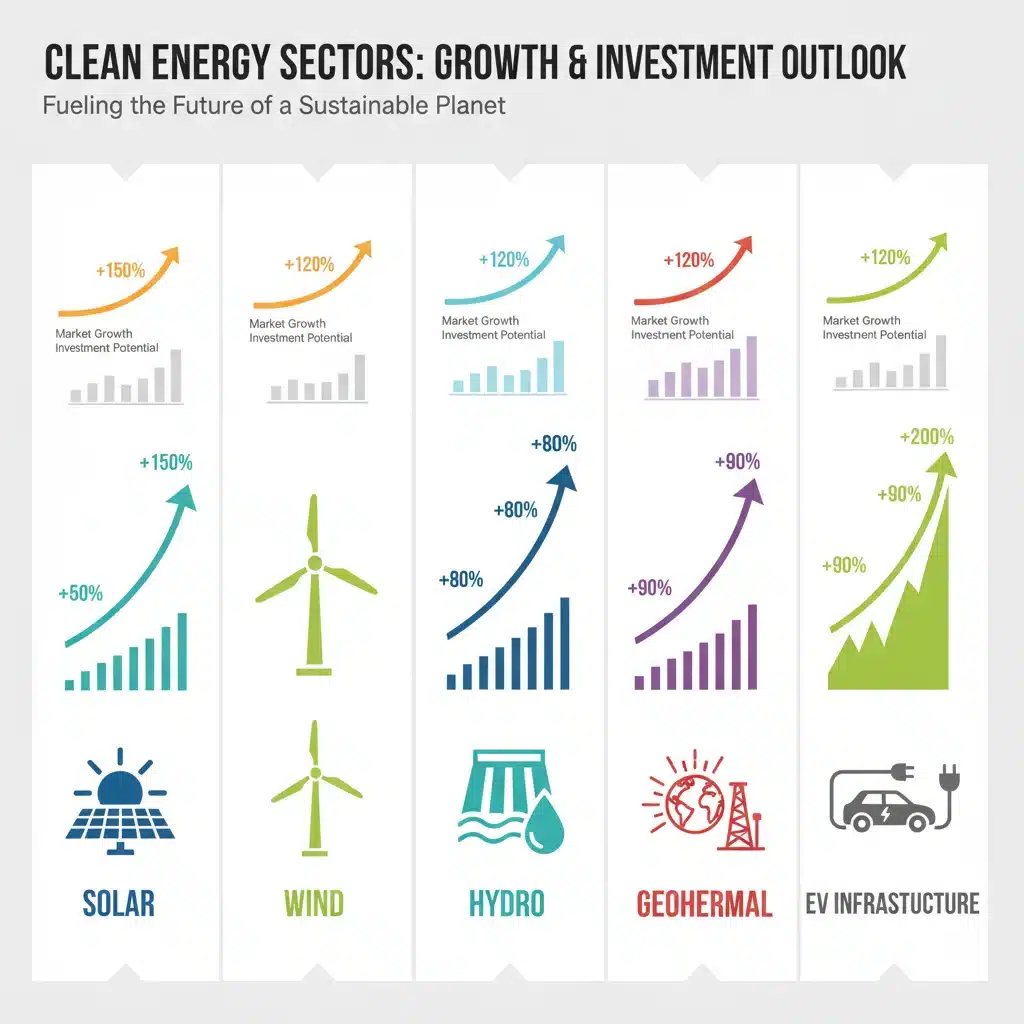
Strategies for Unlocking 20% Growth in Clean Energy Stocks
Achieving significant growth requires a well-defined strategy. Here are key approaches to consider for your Clean Energy Stocks portfolio.
1. Diversification Across Sub-Sectors and Geographies
Don’t put all your eggs in one basket. Diversify your investments across different clean energy sub-sectors (solar, wind, storage, EVs, hydrogen) to mitigate risks associated with specific market downturns or policy changes. Furthermore, consider geographical diversification to capitalize on growth opportunities in various regions, as different countries have varying levels of commitment and support for clean energy.
2. Focus on Companies with Strong Fundamentals and Innovation
Thorough due diligence is paramount. Look for companies with:
- Robust Balance Sheets: Low debt, healthy cash flow, and strong liquidity.
- Competitive Advantage: Patented technology, unique market position, or cost leadership.
- Proven Management Team: Experienced leadership with a clear vision and execution capability.
- Scalable Business Models: Ability to grow operations and revenues efficiently.
- Innovation Pipeline: Continuous investment in R&D to stay ahead of the curve.
Companies that are actively innovating and adapting to new market demands are more likely to deliver sustained growth in Clean Energy Stocks.
3. Leverage ETFs and Mutual Funds for Broader Exposure
For investors who prefer a more diversified and less hands-on approach, Clean Energy Exchange Traded Funds (ETFs) and mutual funds offer an excellent way to gain exposure to the sector. These funds typically hold a basket of clean energy companies, spreading risk and providing access to a wide range of opportunities without requiring individual stock picking. Research funds with low expense ratios and a track record of outperforming their benchmarks.
4. Monitor Policy Developments and Regulatory Changes
As discussed, government policies play a significant role in the clean energy market. Stay informed about legislative changes, new incentive programs, and international agreements. These developments can create new opportunities or pose challenges for specific sub-sectors or companies. Subscribing to industry news and regulatory updates can give you an edge in anticipating market shifts for your Clean Energy Stocks.
5. Understand Valuation Metrics Specific to Growth Stocks
Traditional valuation metrics might not always fully capture the potential of high-growth clean energy companies. While P/E ratios are important, also consider:
- Price-to-Sales (P/S) Ratio: Useful for companies with high growth but not yet significant profits.
- Enterprise Value to EBITDA (EV/EBITDA): Provides a clearer picture of a company’s total value relative to its operating profitability.
- Revenue Growth Rates: Essential for growth-oriented companies.
- Total Addressable Market (TAM): Assess the overall market size and the company’s potential to capture a significant share.
A balanced approach using multiple valuation techniques will provide a more comprehensive view of investment potential.
6. Consider Small-Cap and Mid-Cap Opportunities
While large-cap clean energy stocks offer stability, smaller and mid-sized companies often have higher growth potential. These firms might be developing niche technologies, expanding rapidly in specific markets, or poised for acquisition by larger players. While they come with higher risk, a portion of your portfolio allocated to carefully vetted small-cap Clean Energy Stocks could significantly boost your overall returns.
7. Long-Term Vision with Short-Term Agility
The clean energy transition is a multi-decade journey, suggesting a long-term investment horizon. However, market dynamics can change rapidly. Be prepared to adjust your portfolio based on new information, technological breakthroughs, competitive shifts, and evolving policy landscapes. While maintaining a core long-term strategy, don’t be afraid to take profits or reallocate capital when opportunities arise or risks materialize.
Risk Management in Clean Energy Stock Investments
No investment is without risk, and the clean energy sector is no exception. While the growth potential is high, understanding and mitigating risks is crucial for protecting your capital and achieving your 20% growth target.
Policy and Regulatory Risk
Changes in government incentives, tariffs, or environmental regulations can significantly impact the profitability of clean energy projects and companies. A shift in political climate can lead to reduced subsidies or increased hurdles. Diversifying geographically and investing in companies with strong underlying economics (even without subsidies) can help mitigate this risk.
Technological Obsolescence
The rapid pace of innovation means that today’s cutting-edge technology could be superseded tomorrow. Companies that fail to adapt or invest in R&D risk becoming obsolete. Focus on companies with a strong innovation pipeline and a track record of adapting to technological shifts. This is particularly relevant when considering Clean Energy Stocks in fast-evolving areas like battery storage or green hydrogen.
Supply Chain Disruptions
Many clean energy technologies rely on complex global supply chains, often involving critical minerals and components from specific regions. Geopolitical tensions, trade disputes, or natural disasters can disrupt these chains, leading to delays and increased costs. Look for companies with diversified supply chains or those actively working to localize production.
Commodity Price Volatility
The cost of raw materials (e.g., polysilicon for solar, lithium for batteries) can fluctuate significantly, impacting manufacturing costs and profitability. While some companies can pass these costs on, others may see their margins squeezed. Companies with strong procurement strategies or vertical integration can be more resilient.
Execution Risk
Developing and deploying large-scale clean energy projects (e.g., offshore wind farms, giga-factories for batteries) is complex and capital-intensive. Delays, cost overruns, or operational issues can negatively impact a company’s financial performance. Assess a company’s project management capabilities and track record of successful execution.

Case Studies and Examples of Growth in Clean Energy Stocks
While past performance is not indicative of future results, examining historical growth patterns in specific areas of Clean Energy Stocks can offer valuable insights.
Solar Manufacturing Turnarounds
After a period of intense competition and consolidation, several solar panel manufacturers have emerged stronger, focusing on higher efficiency, specialized markets (e.g., rooftop solar, building-integrated PV), and advanced manufacturing techniques. Companies that successfully navigated these challenges often saw their stock prices rebound significantly as demand surged and cost structures improved.
Battery Storage Leaders
Companies at the forefront of battery technology and deployment have experienced explosive growth. As grid-scale storage becomes indispensable for renewable integration, and EV adoption continues, firms with patented battery chemistries, efficient manufacturing, and robust supply agreements position themselves for substantial gains.
Charging Infrastructure Expansion
The rapid expansion of electric vehicle sales has created a burgeoning market for charging infrastructure. Companies that are strategically building out extensive charging networks, developing innovative payment solutions, or providing charging software and hardware to businesses and municipalities have seen impressive revenue growth and investor interest.
The Environmental and Social Impact of Investing in Clean Energy Stocks
Beyond financial returns, investing in Clean Energy Stocks offers the unique benefit of contributing to a more sustainable future. By allocating capital to companies that are actively developing and deploying solutions to climate change, investors can align their financial goals with their values. This impact can manifest in:
- Reduced Carbon Emissions: Supporting the transition away from fossil fuels.
- Improved Air Quality: Less reliance on combustion, leading to healthier environments.
- Job Creation: The clean energy sector is a significant source of new jobs globally.
- Energy Independence: Reducing reliance on volatile global energy markets.
This dual benefit of financial gain and positive societal impact makes clean energy investing particularly compelling for a growing number of individuals and institutions.
Conclusion: Position Your Portfolio for a Sustainable and Profitable Future
The clean energy revolution is here to stay, presenting one of the most compelling investment opportunities of our generation. By understanding the market dynamics, identifying high-growth sectors, and employing shrewd investment strategies, you can position your portfolio to achieve significant returns, potentially unlocking 20% growth in Clean Energy Stocks over the next 12 months. Remember to conduct thorough research, diversify your holdings, and stay informed about policy and technological advancements.
The future is clean, and the smart money is flowing into the companies building it. Don’t miss out on the chance to contribute to a sustainable world while simultaneously growing your wealth. Embrace the power of clean energy investing and watch your portfolio thrive.