Clean Energy Futures 2026: 3-Month Hedging Outlook
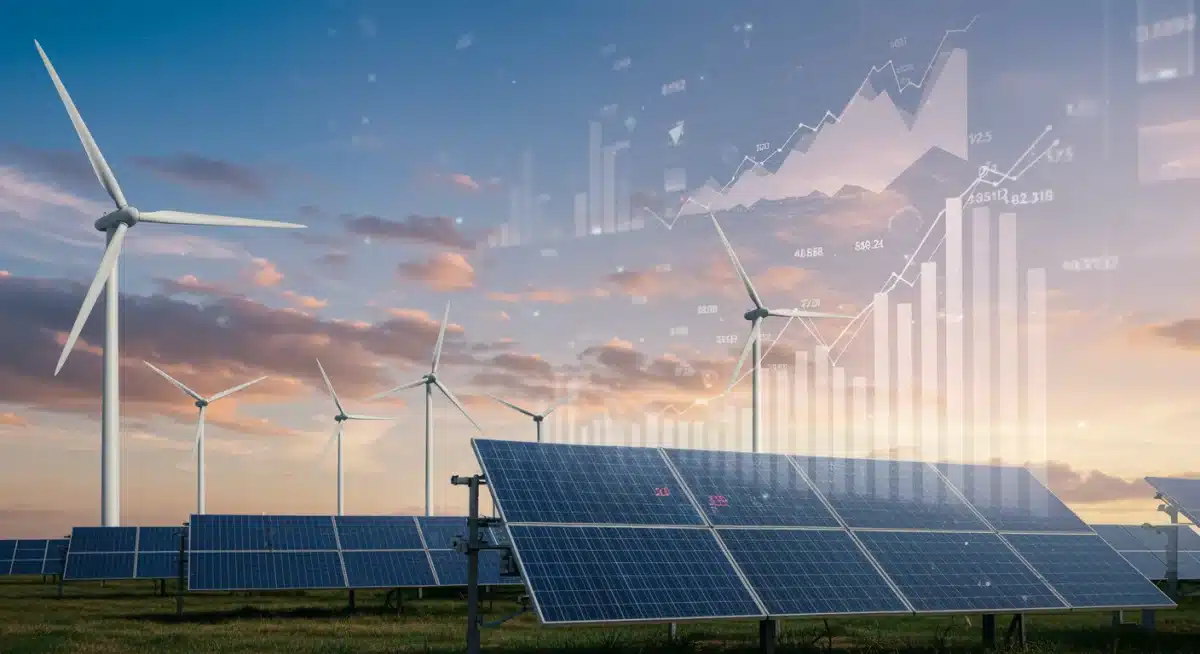
Effectively managing volatility in renewable energy commodity prices is crucial for financial stability in 2026, as this outlook details key hedging strategies and market forecasts to mitigate risks and capitalize on emerging opportunities in the evolving clean energy sector.
The landscape of Clean Energy Futures 2026: A 3-Month Outlook on Hedging Strategies for Volatile Renewable Energy Commodity Prices is dynamic and presents both exciting opportunities and significant risks. As the global push towards decarbonization accelerates, understanding how to navigate the inherent volatility in renewable energy commodity markets becomes paramount for investors, project developers, and energy suppliers. This article delves into the critical hedging strategies that can safeguard financial interests and foster sustainable growth in this rapidly evolving sector.
Understanding the Volatility in Renewable Energy Commodities
The clean energy sector, while promising, is not immune to market fluctuations. Unlike traditional fossil fuels, which have established, albeit volatile, pricing mechanisms, renewable energy commodities often face unique challenges that contribute to price uncertainty. These challenges stem from a combination of technological advancements, policy shifts, and environmental factors that directly impact supply and demand dynamics.
For instance, the prices of key materials used in solar panels and batteries, such as polysilicon, lithium, and cobalt, can swing dramatically based on geopolitical events, mining output, and manufacturing capacities. Similarly, the availability and cost of renewable energy itself, particularly electricity generated from wind and solar, can be influenced by weather patterns and grid infrastructure limitations. Understanding these underlying drivers is the first step toward developing robust hedging strategies.
Key Drivers of Price Volatility
- Supply Chain Disruptions: Geopolitical tensions, trade policies, and natural disasters can severely impact the supply of critical raw materials.
- Technological Advancements: Rapid innovation can lead to sudden shifts in demand for certain materials or technologies, affecting their market value.
- Policy and Regulatory Changes: Government incentives, carbon pricing mechanisms, and environmental regulations can significantly alter the economic viability of renewable projects and, consequently, commodity prices.
- Weather Patterns: The intermittent nature of wind and solar power means that weather events can cause short-term price spikes or drops in electricity markets.
In conclusion, the inherent volatility in renewable energy commodities is a multifaceted issue driven by global supply chains, technological evolution, policy environments, and natural phenomena. Recognizing these factors is essential for any entity looking to engage with clean energy futures in 2026 and beyond.
The Role of Futures Contracts in Clean Energy Markets
Futures contracts are standardized legal agreements to buy or sell a commodity or financial instrument at a predetermined price at a specified time in the future. In the context of clean energy, these contracts are becoming increasingly vital for managing price risk associated with renewable energy commodities. They provide a mechanism for market participants to lock in prices, thereby reducing exposure to future price swings.
For renewable energy producers, futures contracts can guarantee a selling price for their output, ensuring revenue stability. Conversely, for consumers of renewable energy or manufacturers reliant on clean energy materials, futures can secure purchase prices, protecting against cost increases. This forward-looking approach is particularly relevant in 2026, as the market continues its rapid expansion and maturation.
Types of Futures Contracts Relevant to Clean Energy
- Electricity Futures: Allow producers and consumers to hedge against fluctuations in wholesale electricity prices, especially those generated from renewable sources.
- Carbon Credit Futures: Enable companies to manage the cost of their carbon emissions or monetize their emission reductions.
- Raw Material Futures: Cover essential materials like lithium, copper, and polysilicon, critical for battery storage and solar panel manufacturing.
The strategic use of futures contracts allows market participants to gain price certainty and manage risk, which is invaluable in the volatile clean energy landscape. By committing to future transactions at today’s prices, businesses can better plan their budgets and investment strategies, fostering greater stability in their operations. This makes futures an indispensable tool for anyone involved in clean energy hedging in 2026.
Essential Hedging Strategies for 2026
Effective hedging strategies are crucial for mitigating the financial risks associated with volatile renewable energy commodity prices. As we look at the next three months in 2026, a combination of traditional and innovative approaches will be necessary to protect investments and ensure profitability. These strategies are designed to offset potential losses from adverse price movements in the underlying assets.
One of the most common strategies involves the use of futures and forward contracts, as discussed previously. However, a comprehensive hedging approach often incorporates a broader range of financial instruments and risk management techniques. The goal is not necessarily to profit from price movements, but to minimize exposure to unfavorable market conditions, allowing businesses to focus on their core operations.
Diversified Hedging Instruments
- Options Contracts: Provide the right, but not the obligation, to buy or sell an asset at a predetermined price. This offers flexibility and limits downside risk while preserving upside potential.
- Swaps: Agreements to exchange one stream of future cash flows for another. For clean energy, this could involve swapping fixed-price payments for variable-price payments on energy or commodities.
- Physical Hedging: Involves securing long-term supply agreements or power purchase agreements (PPAs) directly with producers or consumers, providing stable pricing outside of the derivatives market.
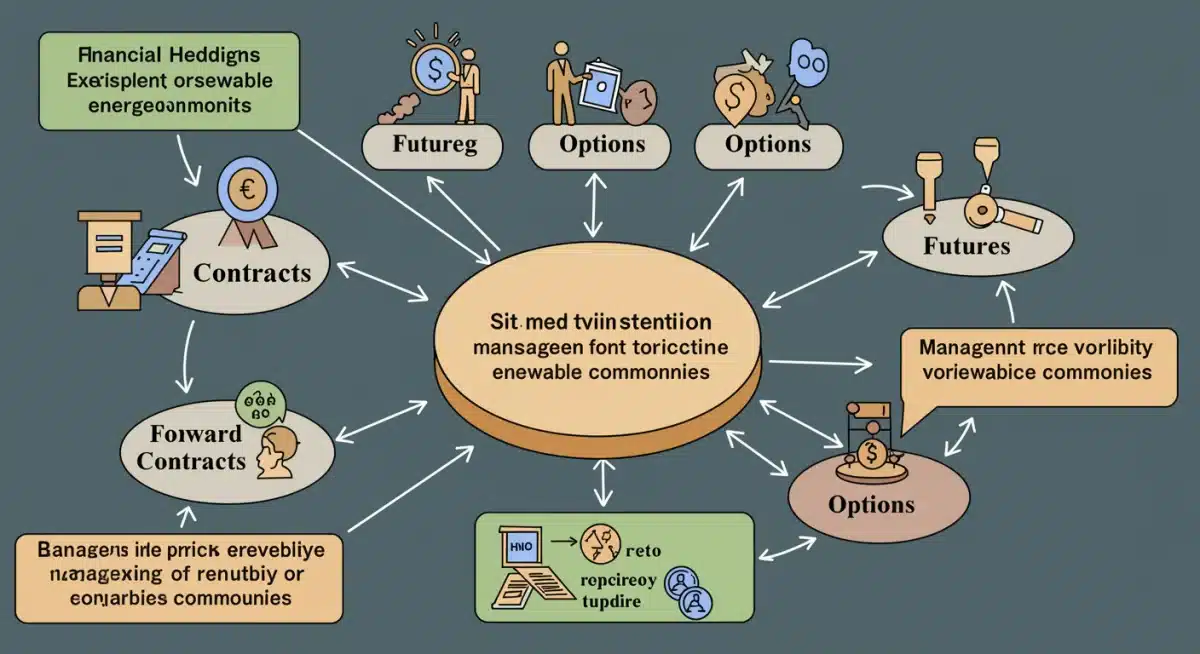

Implementing these strategies requires a deep understanding of market dynamics and careful consideration of the specific risks faced by each entity. A well-executed hedging plan can provide significant financial stability, making it an indispensable component of financial planning for clean energy futures in 2026.
Analyzing Market Trends: A 3-Month Outlook
The next three months of 2026 are expected to be a critical period for the clean energy sector, with several market trends influencing commodity prices. Geopolitical stability, global economic growth, and the pace of technological adoption will all play significant roles. Keeping a close eye on these trends is vital for making informed hedging decisions and adapting strategies as conditions evolve.
Analysts anticipate continued strong demand for renewable energy technologies, driven by ambitious climate targets and increasing corporate sustainability commitments. However, potential bottlenecks in supply chains, particularly for raw materials, could lead to price pressures. Furthermore, advancements in energy storage solutions and grid modernization efforts may introduce new dynamics into electricity markets.
Key Market Indicators to Monitor
- Raw Material Inventories: Tracking levels of critical materials like lithium, cobalt, and rare earth elements can signal potential supply shortages or surpluses.
- Policy Announcements: New government subsidies, tax credits, or regulatory mandates related to clean energy can significantly impact market sentiment and investment flows.
- Economic Growth Forecasts: Stronger economic growth typically correlates with increased energy demand, which can influence both traditional and renewable energy prices.
In summary, the 3-month outlook for clean energy commodity prices in 2026 suggests a complex interplay of demand-side growth and supply-side constraints. Proactive monitoring of key market indicators and a flexible approach to hedging will be essential for navigating this period successfully. This forward-looking analysis helps stakeholders prepare for potential shifts and maintain a competitive edge.
Risk Management and Portfolio Optimization
Beyond simply implementing hedging instruments, a robust risk management framework and continuous portfolio optimization are paramount for navigating the volatile clean energy markets of 2026. Hedging is just one component of a broader strategy that includes assessing overall risk exposure, diversifying investments, and regularly reviewing performance against market benchmarks.
Effective risk management involves identifying all potential financial exposures, from commodity price volatility to currency fluctuations and interest rate changes. Once identified, these risks need to be quantified and prioritized. Portfolio optimization then focuses on constructing a mix of assets and hedging instruments that maximizes expected returns for a given level of risk, or minimizes risk for a target return.
Components of Robust Risk Management
- Value-at-Risk (VaR) Analysis: A statistical method used to quantify the level of financial risk within a firm or investment portfolio over a specific time frame.
- Stress Testing: Simulating extreme market conditions to evaluate the resilience of a hedging strategy and overall portfolio.
- Diversification: Spreading investments across different renewable energy technologies, geographies, and commodity types to reduce concentration risk.
Ultimately, successful risk management and portfolio optimization in clean energy futures require a continuous cycle of analysis, implementation, and review. This proactive approach ensures that hedging strategies remain relevant and effective in the face of changing market conditions, safeguarding long-term financial health and supporting sustainable growth in the clean energy sector. It’s about building resilience into your financial operations.
Future Trends and Long-Term Implications
While our immediate focus is the 3-month outlook for clean energy hedging in 2026, it’s crucial to consider the broader future trends and their long-term implications. The clean energy transition is not a short-term phenomenon but a fundamental shift in global energy systems. Understanding where the market is headed can help refine current strategies and prepare for future opportunities and challenges.
Key trends include the continued decline in the cost of renewable technologies, the increasing integration of artificial intelligence and blockchain in energy management, and the growing importance of green hydrogen. These advancements will likely reshape commodity markets, create new types of financial instruments, and alter the risk profiles of clean energy investments. Projecting these long-term shifts informs more strategic and adaptive hedging.
Emerging Trends Shaping Clean Energy Futures
- Decentralized Energy Systems: The rise of localized power generation and microgrids could impact wholesale electricity prices and the demand for grid infrastructure.
- Green Hydrogen Economy: As green hydrogen production scales, it will create new commodity markets and hedging needs for hydrogen itself and the renewable energy inputs required for its production.
- Circular Economy Principles: Increased focus on recycling and reuse of materials in renewable technologies could reduce reliance on virgin raw materials, influencing their market prices.
Looking beyond the immediate horizon, the clean energy sector is poised for transformative changes. These long-term trends underscore the need for flexible, forward-thinking hedging strategies that can adapt to an evolving market landscape. By anticipating these shifts, stakeholders can position themselves to not only mitigate risks but also to capitalize on the next wave of innovation in clean energy. This strategic foresight is key to sustained success.
| Key Aspect | Brief Description |
|---|---|
| Market Volatility | Renewable commodity prices are influenced by supply chain, policy, and weather factors. |
| Hedging Strategies | Utilizing futures, options, and swaps is crucial for price risk management. |
| 3-Month Outlook | Anticipate strong demand but monitor supply chain bottlenecks and policy shifts. |
| Risk Management | Integrate VaR analysis, stress testing, and diversification for robust financial health. |
Frequently Asked Questions About Clean Energy Hedging in 2026
Clean energy futures are financial contracts to buy or sell renewable energy commodities or related instruments at a future date for a predetermined price. They are crucial in 2026 for managing the price volatility inherent in materials like lithium or carbon credits, enabling market participants to secure future costs or revenues.
Hedging strategies, such as using futures, options, and swaps, help mitigate risk by locking in prices for future transactions. This protects businesses from adverse price movements in renewable energy commodities, offering financial stability and predictability in an otherwise uncertain market environment.
Relevant commodities for hedging in the clean energy sector include raw materials like lithium, cobalt, and polysilicon used in batteries and solar panels. Additionally, electricity futures for renewable energy generation and carbon credit futures are vital for managing operational costs and environmental compliance.
Over the next three months in 2026, renewable energy commodity prices will be influenced by global supply chain stability, geopolitical events, government policy updates, and the ongoing pace of technological innovation. Economic growth forecasts and weather patterns also play significant roles in market dynamics.
Portfolio optimization is crucial alongside hedging because it ensures that investments are diversified and aligned with risk tolerance and return objectives. It involves assessing overall risk exposure, stress testing strategies, and continuously adjusting the portfolio to maintain financial resilience and capitalize on long-term growth in the clean energy sector.
Conclusion
Navigating the complex and often volatile landscape of clean energy futures in 2026 demands a sophisticated understanding of both market dynamics and robust hedging strategies. As the world accelerates its transition to sustainable energy, the financial implications of commodity price fluctuations become increasingly significant. By proactively implementing diversified hedging instruments, continuously analyzing market trends, and embracing comprehensive risk management, stakeholders can secure their financial positions and contribute to a resilient clean energy future. The next three months will offer valuable insights, solidifying the need for adaptable and informed financial planning within this transformative sector.