Clean Energy Production Tax Credit 2025: Small Business Guide

The 2025 Clean Energy Production Tax Credit offers small businesses a substantial financial incentive, allowing them to earn up to $25/MWh for generating clean electricity, thereby promoting sustainable practices and economic growth.
Are you a small business owner looking to reduce operational costs, embrace sustainability, and potentially generate new revenue streams? Understanding the Clean Energy Production Tax Credit in 2025 is paramount, offering an unprecedented opportunity to earn up to $25/MWh for producing clean electricity. This comprehensive guide will navigate the intricacies of this significant federal incentive, designed to empower small enterprises in their transition to a greener future.
Decoding the Clean Energy Production Tax Credit
The Clean Energy Production Tax Credit (PTC) is a federal incentive designed to encourage the generation of electricity from renewable resources. For 2025, it represents a pivotal opportunity for small businesses to not only contribute to environmental sustainability but also to significantly improve their financial health. This credit essentially rewards businesses for every megawatt-hour (MWh) of clean electricity they produce, making renewable energy projects more economically viable.
Initially established to support large-scale renewable energy projects, the PTC has evolved to become more accessible, with specific provisions and opportunities emerging for smaller entities. The structure of the credit is designed to offset the initial capital costs and ongoing operational expenses associated with clean energy generation, making it an attractive proposition for those considering solar, wind, geothermal, or other eligible technologies.
What makes the 2025 PTC unique?
- Enhanced Value: The base credit amount is substantial, with potential for significant bonuses.
- Broader Eligibility: More technologies and project sizes are now covered.
- Direct Pay Option: For certain entities, the credit can be treated as a direct payment, offering immediate cash flow.
The PTC’s primary goal is to accelerate the nation’s transition to a clean energy economy. By providing a tangible financial benefit, it incentivizes businesses to invest in renewable energy infrastructure, driving innovation and job creation. Understanding the specific criteria and mechanisms for claiming this credit is the first step towards harnessing its full potential.
In essence, the 2025 Clean Energy Production Tax Credit is more than just a tax break; it’s a strategic tool for small businesses to achieve energy independence, reduce their carbon footprint, and secure a competitive advantage in an increasingly green marketplace. Its comprehensive nature requires careful planning and a clear understanding of its application.
Eligibility Criteria for Small Businesses
Navigating the eligibility requirements for the Clean Energy Production Tax Credit can seem complex, but with a clear understanding, small businesses can confidently determine their potential to benefit. The credit is specifically structured to support a wide range of clean energy generation methods, ensuring broad applicability across various industries and business models.
To qualify, a project must generate electricity from specified renewable resources and meet certain operational standards. The definition of a small business for these purposes generally aligns with Small Business Administration (SBA) guidelines, though it’s crucial to consult the specific IRS guidance for the most accurate interpretation.
Key eligible technologies include:
- Wind Energy: Both large and smaller-scale wind turbines are typically eligible.
- Solar Energy: Photovoltaic (PV) systems and concentrated solar power.
- Geothermal Energy: Systems that produce electricity from geothermal reservoirs.
- Biomass: Facilities that convert organic matter into electricity.
- Hydropower: Certain types of hydroelectric facilities that meet environmental standards.
Beyond the technology itself, projects must commence construction by a certain date and meet specific placed-in-service deadlines. These timelines are critical, as missing them can result in forfeiture of the credit. Additionally, projects may need to adhere to domestic content requirements or prevailing wage and apprenticeship standards to qualify for the full credit amount, including bonus adders.
Small businesses considering these investments should carefully review the IRS guidelines and potentially consult with a tax professional or energy consultant. Understanding the nuances of project commencement, completion, and the specific energy sources that qualify will be crucial for a successful application. The credit is designed to be accessible, but due diligence is essential.
Maximizing Your Earnings: Up to $25/MWh
The prospect of earning up to $25 per megawatt-hour (MWh) through the Clean Energy Production Tax Credit is a powerful motivator for small businesses. This maximum value isn’t a given; it’s achieved by meeting specific criteria and leveraging various bonus adders. Understanding how to maximize these earnings is key to fully capitalizing on the incentive.
The base credit rate is typically adjusted for inflation annually, providing a stable foundation. However, the ‘up to $25/MWh’ figure often includes significant bonus credits designed to further incentivize specific outcomes, such as domestic manufacturing or investment in energy communities. These bonus adders can substantially increase the financial benefit.
Strategies for maximizing the PTC:
- Domestic Content: Utilizing components manufactured in the United States can significantly boost the credit.
- Energy Community Investment: Locating projects in areas historically impacted by fossil fuel industries can qualify for additional bonuses.
- Prevailing Wage and Apprenticeship: Adhering to specific labor standards during construction and maintenance can unlock higher credit amounts.
The combination of these factors can elevate the credit value far beyond its base rate. Small businesses should meticulously plan their projects to incorporate as many of these maximizing elements as possible. For instance, sourcing solar panels or wind turbine components from domestic manufacturers not only supports local economies but also enhances the financial return on investment.
Furthermore, careful consideration of project siting in designated energy communities can transform a standard clean energy project into a highly lucrative one. These communities are often in need of economic revitalization, and clean energy investments can provide both environmental and social benefits. The cumulative effect of these bonuses can make a substantial difference to a small business’s bottom line, making the initial investment even more attractive.
The Application Process: A Step-by-Step Guide
Successfully claiming the Clean Energy Production Tax Credit requires a clear understanding of the application process. While the specifics can vary, a general step-by-step approach can help small businesses navigate the necessary paperwork and compliance requirements. Proactive planning is crucial to ensure all deadlines are met and documentation is accurate.
The process typically begins with project development and securing financing. Once a project is underway, it’s essential to track all relevant expenses and production data. The credit is claimed on federal tax returns, meaning meticulous record-keeping is non-negotiable. Consulting with a tax professional experienced in renewable energy credits is highly recommended to avoid common pitfalls.
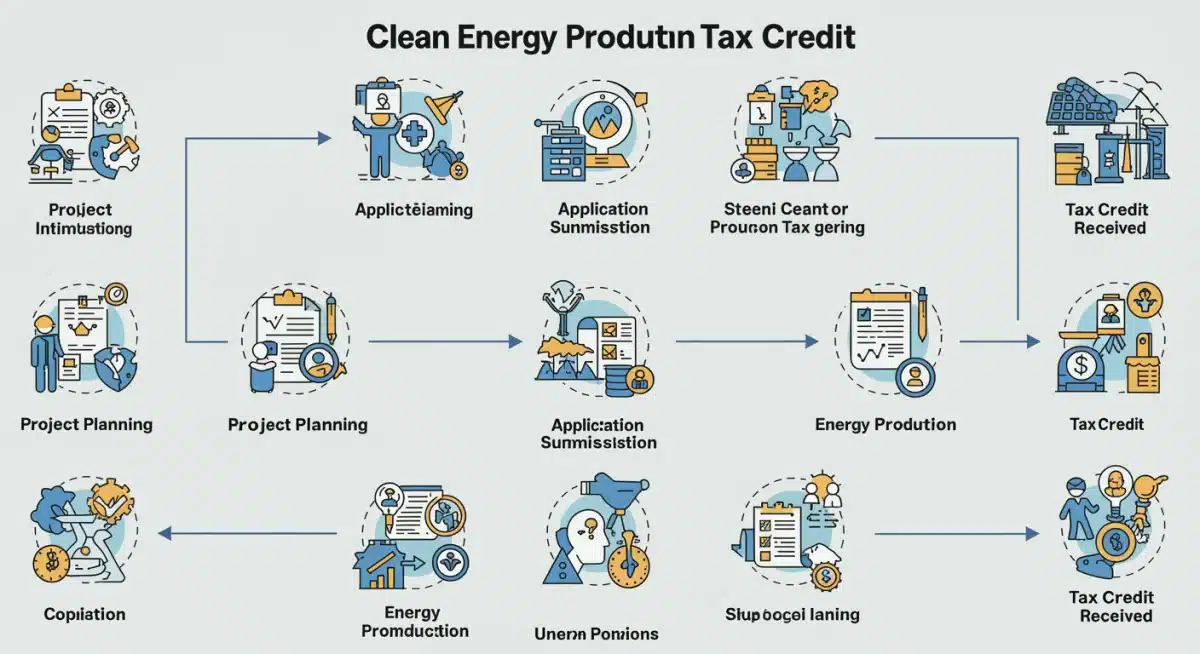

Key steps in the application process:
- Project Planning & Documentation: Detail project scope, costs, and expected energy output.
- Eligibility Confirmation: Verify that your technology and project meet all IRS criteria.
- Record Keeping: Maintain thorough records of construction start dates, placed-in-service dates, and energy production data.
- Tax Form Preparation: Work with a tax expert to complete and submit the relevant IRS forms (e.g., Form 8835).
- Compliance & Verification: Be prepared for potential audits and have documentation ready to verify claims.
One of the most appealing aspects for certain entities, especially tax-exempt organizations and governmental bodies, is the option for ‘direct pay.’ This allows them to receive the value of the tax credit as a refund, even if they have no tax liability. For small businesses, while direct pay may not always be an option, the credit can still significantly reduce their tax burden or be carried forward if not fully utilized in a single year.
Understanding the specific forms, deadlines, and documentation required is paramount. The IRS provides detailed guidance, which should be reviewed carefully. Engaging with professionals who specialize in renewable energy tax credits can streamline the process, ensuring compliance and maximizing the claimed benefits. The application process, while detailed, is a pathway to significant financial incentives for sustainable practices.
Long-Term Benefits Beyond the Credit
While the immediate financial incentive of the Clean Energy Production Tax Credit is undeniably attractive, small businesses stand to gain a multitude of long-term benefits by investing in clean energy. These advantages extend beyond tax savings, impacting operational efficiency, public perception, and overall business resilience. Embracing renewable energy is a strategic move that positions a business for future success.
One primary long-term benefit is reduced operational costs. By generating their own electricity, businesses can significantly lower their utility bills, hedging against fluctuating energy prices. This cost stability provides a predictable expense structure, allowing for better financial planning and improved profitability over time. The initial investment, supported by the PTC, quickly translates into ongoing savings.
Additional long-term advantages:
- Enhanced Brand Image: Demonstrating a commitment to sustainability resonates positively with customers, partners, and employees.
- Energy Independence: Reducing reliance on the grid provides greater control over energy supply and reduces vulnerability to outages.
- Increased Property Value: Installing clean energy systems can increase the value of commercial properties.
- New Revenue Streams: In some cases, businesses can sell excess electricity back to the grid, creating additional income.
Furthermore, investing in clean energy aligns businesses with evolving consumer preferences and regulatory trends. As climate change concerns grow, consumers are increasingly favoring businesses that demonstrate environmental responsibility. This can lead to increased customer loyalty and market share, providing a competitive edge.
From an employee perspective, working for an environmentally conscious company can boost morale and attract top talent who are looking for purpose-driven organizations. The positive impact on employee retention and recruitment should not be underestimated. Ultimately, the long-term benefits of clean energy adoption create a more sustainable, resilient, and reputable business model, far outlasting the initial tax credit.
Common Pitfalls and How to Avoid Them
While the Clean Energy Production Tax Credit offers substantial benefits, small businesses must be aware of common pitfalls that can hinder their ability to claim the credit effectively. Avoiding these mistakes requires careful planning, thorough understanding of regulations, and sometimes, expert guidance. Proactivity in addressing potential issues can save significant time and resources.
One frequent mistake is inadequate record-keeping. The IRS requires detailed documentation to substantiate claims, including proof of project commencement, placed-in-service dates, energy output, and eligible costs. Without meticulous records, businesses may face challenges during audits or even have their credit disallowed. Implementing a robust tracking system from the outset is crucial.
Key pitfalls to watch out for:
- Insufficient Documentation: Failure to maintain comprehensive records of all project phases and financial transactions.
- Misinterpreting Eligibility: Incorrectly assuming a technology or project size qualifies for the credit.
- Missing Deadlines: Overlooking critical dates for project commencement and placed-in-service requirements.
- Ignoring Bonus Adder Requirements: Failing to meet criteria for domestic content or prevailing wages, missing out on maximized credits.
- Lack of Professional Advice: Attempting to navigate complex tax laws without consulting a qualified tax or energy professional.
Another common issue involves misinterpreting the complex eligibility rules, particularly regarding the definition of eligible technologies or the specifics of project commencement. The IRS publishes guidance that can be dense, making it easy for non-experts to overlook critical details. Staying updated with the latest IRS notices and regulations is vital.
Furthermore, some businesses might neglect the specific requirements for bonus adders, such as domestic content or prevailing wage stipulations. While these adders can significantly increase the credit value, they come with their own set of compliance obligations. Failing to meet these can mean leaving substantial money on the table. Engaging with a specialist can help small businesses navigate these complexities and avoid costly errors, ensuring they fully benefit from the Clean Energy Production Tax Credit.
| Key Aspect | Brief Description |
|---|---|
| Credit Value Potential | Small businesses can earn up to $25/MWh for clean electricity generated. |
| Eligibility Scope | Covers various renewable technologies like solar, wind, geothermal, and biomass. |
| Maximization Strategies | Utilize domestic content, invest in energy communities, and adhere to wage standards. |
| Avoiding Pitfalls | Maintain meticulous records, understand IRS guidelines, and seek professional advice. |
Frequently Asked Questions About the PTC
The PTC is a federal incentive that provides a tax credit for each megawatt-hour of electricity produced from eligible renewable energy sources. It aims to encourage investment in clean energy technologies by making projects more financially attractive for businesses and individuals.
For 2025, eligible technologies typically include wind, solar, geothermal, biomass, and certain types of hydropower. The specific eligibility criteria may vary slightly, so businesses should refer to the latest IRS guidance for comprehensive details on qualifying energy sources.
Small businesses can maximize their PTC earnings by meeting bonus adder requirements such as using domestically manufactured components, locating projects in designated energy communities, and adhering to prevailing wage and apprenticeship standards during construction and operation.
Yes, certain entities, particularly tax-exempt organizations, governmental bodies, and rural electric cooperatives, may be eligible for a direct pay option, allowing them to receive the credit amount as a refund even without a tax liability. This option simplifies access to the incentive.
Key steps involve thorough project planning, verifying eligibility, maintaining meticulous records of all project costs and energy production, and correctly filing the appropriate IRS forms, often with the assistance of a tax professional specializing in renewable energy credits.
Conclusion
The 2025 Clean Energy Production Tax Credit presents an unparalleled opportunity for small businesses to embrace sustainable practices while realizing significant financial gains. By offering up to $25/MWh for clean electricity generation, this federal incentive acts as a powerful catalyst for economic growth and environmental stewardship. Navigating the eligibility criteria, understanding the application process, and implementing strategies to maximize the credit are crucial steps for any business looking to capitalize on this benefit. Beyond the immediate tax advantages, investing in clean energy provides long-term operational savings, enhances brand reputation, and fosters greater energy independence. While the process requires diligence and attention to detail to avoid common pitfalls, the rewards—both financial and environmental—make the Clean Energy Production Tax Credit an essential consideration for forward-thinking small business owners.