Clean Energy Tax Credits 2026: Maximizing Your Savings with the Latest 15% ITC Updates
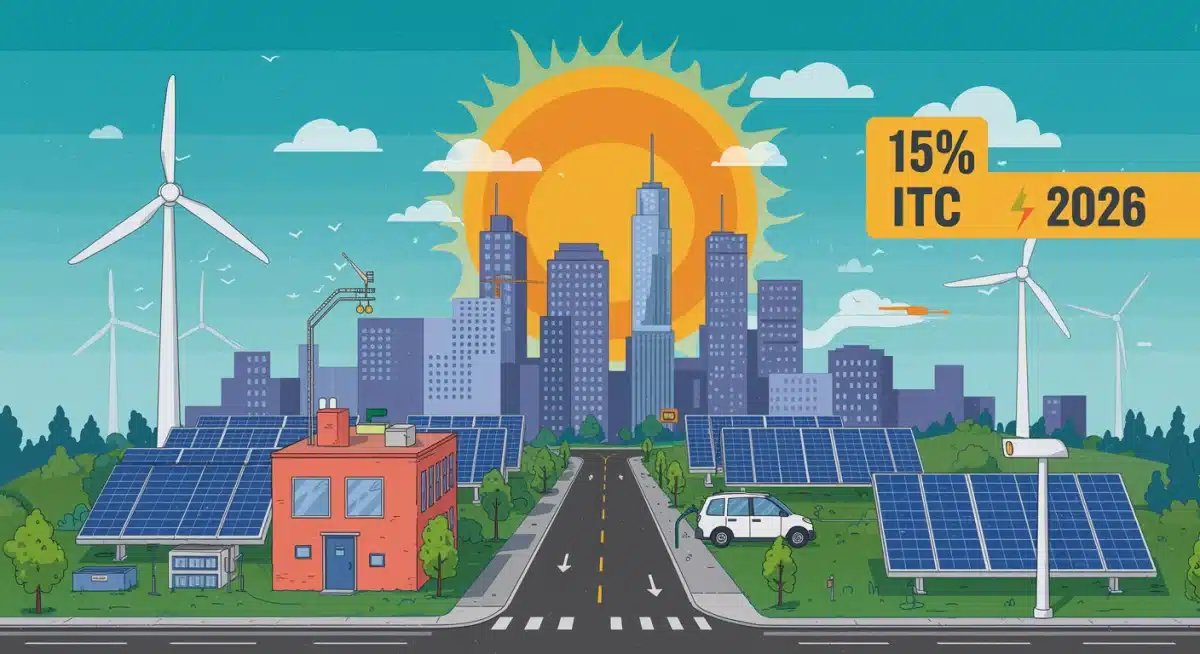
Clean Energy Tax Credits 2026: Maximizing Your Savings with the Latest 15% ITC Updates
The landscape of clean energy incentives is constantly evolving, and for businesses and homeowners looking to invest in sustainable solutions, understanding these changes is paramount. As we look towards 2026, the focus on clean energy tax credits, particularly the Investment Tax Credit (ITC), remains a critical component of accelerating renewable energy adoption. This comprehensive guide will delve into the anticipated 15% ITC updates for 2026, helping you navigate the complexities and maximize your potential savings.
The drive towards a greener future isn’t just an environmental imperative; it’s an economic opportunity. Governments worldwide, including the United States, are implementing robust policies to encourage the transition away from fossil fuels. Clean energy tax credits serve as powerful financial tools, making renewable energy projects more accessible and economically viable for a broader range of investors. For 2026, staying informed about the specifics of these credits, especially the ITC, will be key to unlocking significant cost reductions for your solar, wind, geothermal, or energy storage projects.
Our aim is to provide a detailed roadmap, explaining who is eligible, what projects qualify, and the strategic considerations necessary to fully leverage these federal incentives. Whether you are a large corporation planning a utility-scale solar farm, a small business considering rooftop solar, or a homeowner upgrading to more efficient systems, understanding the 2026 ITC landscape is crucial for informed decision-making and optimal financial outcomes.
Understanding the Investment Tax Credit (ITC) Evolution
The Investment Tax Credit (ITC) has been a cornerstone of U.S. clean energy policy for decades, primarily supporting solar energy development. Its structure and value have seen various iterations, reflecting policy goals and technological advancements. Initially, the ITC offered a substantial incentive, often at 30% of eligible project costs, significantly driving down the upfront investment for solar and other renewable energy technologies.
Historical Context of the ITC
Introduced in 2006, the ITC has been instrumental in the rapid growth of the U.S. solar industry. It provided a tax credit for a percentage of the cost of installing solar energy systems for residential, commercial, and utility-scale projects. This consistent support helped create a stable market, fostering innovation, reducing costs, and increasing deployment across the nation. Over the years, the credit began a step-down schedule, meaning its value was set to gradually decrease.
The Inflation Reduction Act (IRA) and its Impact on Clean Energy Tax Credits
The most significant recent development affecting clean energy tax credits is the Inflation Reduction Act (IRA) of 2022. The IRA revitalized and extended many clean energy incentives, including the ITC, for a decade. Critically, it introduced new structures and bonus credits tied to specific criteria, such as domestic content, energy communities, and meeting prevailing wage and apprenticeship requirements. These additions aim to not only accelerate clean energy deployment but also ensure that the economic benefits are broadly shared and support American manufacturing and labor.
Anticipating the 15% ITC for 2026
While the base ITC was largely reset to 30% under the IRA for projects commencing construction before 2025, the legislation also outlined a transition to technology-neutral clean electricity credits starting in 2025 and phasing down over time. The specific 15% figure for 2026 often refers to scenarios where certain bonus credits are not fully achieved, or as part of a phasedown schedule for specific technologies or project types. It’s crucial to understand that the 15% might represent a base rate or a rate applicable after certain adders are not met, highlighting the importance of strategic planning.
For projects placed in service in 2026, the specific percentage can vary significantly based on how the project was structured and where it’s located. The IRA’s long-term extension of these credits, albeit with a potential step-down, provides a degree of certainty that was previously lacking, allowing for better long-term planning for renewable energy investments. However, navigating the new tiered structure and understanding how to qualify for the maximum available credit is more complex than ever.
Who Qualifies for Clean Energy Tax Credits in 2026?
The eligibility for clean energy tax credits in 2026 extends across a broad spectrum of entities, from individual homeowners to large corporations. The key is understanding the specific criteria for each type of taxpayer and project.
Residential Eligibility
Homeowners who install qualifying clean energy systems on their primary or secondary residences are typically eligible for residential clean energy credits. For solar, this usually includes photovoltaic (PV) systems. The credit applies to the cost of new, qualified clean energy property for your home. This can include not only the equipment but also installation costs. The IRA extended and modified the residential clean energy credit, making it an attractive option for homeowners looking to reduce their carbon footprint and energy bills.
Commercial and Industrial Eligibility
Businesses, regardless of their size, can benefit significantly from the commercial ITC. This applies to a wide range of projects, including commercial-scale solar installations, wind turbines, geothermal systems, and energy storage solutions. The commercial ITC is particularly complex due to the various bonus adders introduced by the IRA.
- Small Businesses: Many small businesses can leverage the ITC to offset operational costs and enhance their sustainability profile. The credit can be directly applied against their tax liability, making renewable energy more financially accessible.
- Large Corporations: For larger entities, the ITC, especially when combined with other incentives like accelerated depreciation, can lead to substantial reductions in the total cost of ownership for major renewable energy infrastructure projects.
- Non-taxable Entities: A significant change introduced by the IRA is the ‘direct pay’ option for certain tax-exempt entities, such as non-profits, municipalities, and tribal governments. This allows them to receive a direct cash payment from the IRS equivalent to the value of the tax credit, even if they don’t have a tax liability to offset. This feature dramatically expands the reach of clean energy tax credits.
Specific Project Types and Technologies
While solar PV remains a primary beneficiary, the ITC and other clean energy credits cover a broader array of technologies. These often include:
- Solar energy equipment (PV and solar thermal)
- Wind energy equipment
- Geothermal heat pumps and geothermal electricity
- Fuel cell property
- Small wind energy property
- Energy storage technology (battery storage, thermal storage)
- Combined heat and power (CHP) property
- Microgrid controllers
Each technology may have specific eligibility requirements regarding efficiency, capacity, or certification. Staying updated on the IRS guidelines and Department of Energy (DOE) regulations is essential to ensure your project qualifies for the intended credits in 2026.
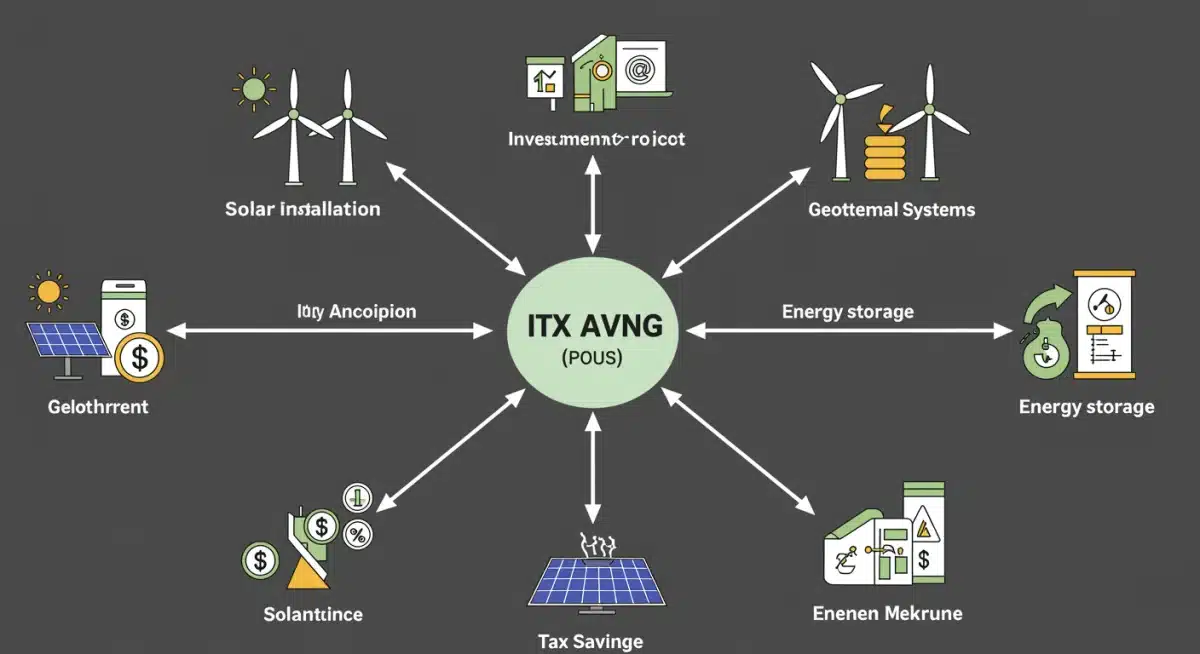
Maximizing Your 15% ITC in 2026: Strategies and Considerations
While a 15% base ITC might seem less than the previous 30%, the Inflation Reduction Act introduced several ‘adders’ that can significantly increase the total credit percentage. Understanding and strategically pursuing these adders is crucial for maximizing your clean energy tax credits in 2026.
Understanding the Base Credit and Bonus Adders
The IRA established a tiered credit structure. The base credit for many clean energy technologies can be as low as 6% (or 15% under certain conditions, as we are discussing for 2026). However, this base credit can be substantially increased by meeting specific criteria:
-
Prevailing Wage and Apprenticeship Requirements: This is arguably the most significant adder. For commercial projects, if prevailing wage and apprenticeship requirements are met during construction and alteration, the base credit jumps from 6% to 30% (or from 15% to potentially higher, depending on the base). This is a critical factor for any commercial project aiming for the maximum credit.
Prevailing Wage: Workers must be paid wages no less than the prevailing wages determined by the Department of Labor for similar work in the locality where the project is located.
Apprenticeship: A certain percentage of total labor hours must be performed by qualified apprentices, registered under the National Apprenticeship Act.
-
Domestic Content Bonus: An additional 10% credit can be earned if certain percentages of the manufactured products and steel/iron used in the project are produced in the United States. This encourages domestic manufacturing and supply chains.
-
Energy Community Bonus: Another 10% adder is available for projects located in ‘energy communities.’ These are defined as areas with significant historical fossil fuel employment or related infrastructure, aiming to bring clean energy investment to regions traditionally reliant on fossil fuels.
-
Low-Income Communities Bonus: Up to an additional 10-20% adder is available for certain projects located in low-income communities or on tribal land, with specific allocation limits set by the Treasury Department.
By stacking these adders, a project that might otherwise qualify for a base 15% ITC in 2026 could potentially reach 45% or higher, making the financial incentives incredibly powerful.
Strategic Planning for Businesses
For businesses, maximizing clean energy tax credits requires meticulous planning:
- Early Assessment: Begin by assessing your project against all potential bonus adder criteria. Can you commit to prevailing wages and apprenticeships? Are you sourcing domestically? Is your project located in an energy community or low-income area?
- Supply Chain Review: If pursuing the domestic content adder, conduct a thorough review of your supply chain to ensure compliance with the manufacturing and steel/iron requirements. This might involve working with new suppliers or negotiating with existing ones.
- Site Selection: For new projects, strategic site selection can unlock significant bonus credits, particularly for energy communities and low-income areas.
- Documentation: Maintain rigorous documentation for all aspects of your project, especially concerning labor wages, apprenticeship hours, and material sourcing, as these will be critical for claiming the adders.
- Professional Guidance: Engage with tax professionals and clean energy consultants who specialize in the IRA and ITC. Their expertise can help navigate the complex rules and ensure full compliance and optimization.
Considerations for Homeowners
While homeowners don’t typically qualify for the commercial bonus adders, they still benefit from a robust residential clean energy credit. To maximize this:
- Choose Qualified Equipment: Ensure your solar panels, battery storage, or other systems meet the efficiency and certification standards set by the IRS.
- Understand Eligible Costs: The credit generally applies to the cost of the equipment and installation. Keep detailed records of all expenses.
- Stay Informed: While simpler than commercial credits, residential credits can also see minor adjustments. Check IRS publications for the latest guidance.
The Role of Direct Pay and Transferability
Two groundbreaking provisions introduced by the Inflation Reduction Act significantly enhance the accessibility and utility of clean energy tax credits: Direct Pay and Transferability. These mechanisms address historical limitations, making credits valuable even for entities without significant tax liabilities.
Direct Pay for Tax-Exempt Entities
Traditionally, tax credits were only beneficial to entities with sufficient tax liability to offset. This excluded many non-profit organizations, municipalities, tribal governments, and rural electric cooperatives from directly benefiting from credits like the ITC. The IRA changed this through the ‘Direct Pay’ provision (also known as ‘Elective Pay’).
With Direct Pay, eligible tax-exempt entities can opt to receive a direct cash payment from the U.S. Treasury equal to the value of the tax credit. This effectively monetizes the credit, allowing these organizations to invest in clean energy projects without needing a tax burden to offset. This is a game-changer for public and non-profit sector clean energy development, opening up vast new opportunities for schools, hospitals, community centers, and government buildings to adopt renewable energy.
- Eligibility: Primarily available to tax-exempt organizations, state and local governments, Indian tribal governments, and Alaska Native Corporations.
- Process: Entities elect to receive direct pay when filing their tax returns (or informational returns for non-profits). The IRS then processes the payment.
- Benefits: Removes the barrier of tax liability, democratizes access to clean energy incentives, and accelerates public sector adoption of renewables.
Transferability for For-Profit Entities
For-profit entities, while generally having tax liabilities, sometimes generate more tax credits than they can utilize in a given tax year. Historically, this led to credits being carried forward, potentially expiring, or requiring complex tax equity financing structures. The IRA introduced ‘Transferability,’ allowing for-profit entities to sell their eligible clean energy tax credits to unrelated third parties for cash.
This provision creates a liquid market for tax credits, simplifying financing for clean energy projects. Instead of needing to find a tax equity investor willing to take on project-specific risks, developers can now simply sell their credits to any cash-rich company looking for tax savings. This reduces transaction costs and broadens the pool of potential investors in clean energy projects.
- Eligibility: Available to for-profit entities that generate eligible clean energy tax credits.
- Process: The credit generator sells the credit to an unrelated third party for cash. The buyer then uses the credit to reduce their own federal tax liability.
- Benefits: Simplifies project financing, increases liquidity for tax credits, reduces reliance on complex tax equity structures, and accelerates project development.
Both Direct Pay and Transferability are pivotal in enhancing the financial viability and accessibility of clean energy tax credits for a wider range of stakeholders, making the 2026 landscape more dynamic and supportive of renewable energy growth.

Navigating the Future of Clean Energy Incentives Beyond 2026
While our immediate focus is on the clean energy tax credits for 2026, it’s prudent for investors and developers to consider the long-term trajectory of these incentives. The Inflation Reduction Act (IRA) provided an unprecedented ten-year extension for many clean energy provisions, offering a degree of stability not seen before. However, the nature of these credits is designed to evolve, eventually transitioning to a technology-neutral framework and then phasing down as the clean energy market matures.
The Technology-Neutral Clean Electricity Credit
Starting in 2025, the existing technology-specific tax credits, such as the ITC for solar and PTC (Production Tax Credit) for wind, are set to transition into technology-neutral clean electricity production credits (45Y) and clean electricity investment credits (48E). These new credits will apply to any facility that generates electricity with zero greenhouse gas emissions, provided it commences construction after December 31, 2024. This shift aims to level the playing field for all clean energy technologies, fostering innovation and allowing the most cost-effective and efficient solutions to emerge.
The clean electricity investment credit (48E) will largely mirror the structure of the current ITC, offering a base credit that can be significantly enhanced by meeting prevailing wage, apprenticeship, domestic content, and energy community requirements. This means that the strategies for maximizing credits discussed for 2026 will largely remain relevant in the subsequent years, albeit under new code sections.
Phasedown and Sunset Provisions
The IRA also outlines a phasedown schedule for these technology-neutral credits. They will begin to phase out in the later of (1) calendar year 2032 or (2) the year in which the annual greenhouse gas emissions from electricity generation are 75% below 2022 levels. Once the phasedown begins, the credit amount will decrease by 25% each year for three years, after which it will expire. This long-term horizon provides considerable certainty for planning major renewable energy investments well into the next decade.
Understanding this phasedown is crucial for long-term project viability and financial modeling. Developers and investors should factor in the potential for reduced credit values in projects planned for the late 2020s and early 2030s. This also underscores the importance of acting sooner rather than later to capture the highest available credit percentages.
Potential for Future Policy Changes
While the IRA provides a strong framework, tax policy can always be subject to future legislative changes. Economic conditions, political shifts, and technological breakthroughs could all influence how clean energy tax credits are structured in the future. Therefore, staying engaged with policy discussions, industry associations, and regulatory updates is vital for any entity deeply invested in the clean energy sector.
For now, the certainty provided by the IRA through 2032 (and potentially beyond, depending on emissions targets) offers a golden opportunity. The focus should be on leveraging the current incentives, particularly by maximizing the bonus adders, to accelerate the transition to a clean energy economy.
Conclusion: Seizing the Opportunity with Clean Energy Tax Credits in 2026
The year 2026 presents a significant window of opportunity for businesses, institutions, and homeowners to make substantial investments in clean energy, buoyed by the robust framework of clean energy tax credits. While the base Investment Tax Credit (ITC) might be evolving, the Inflation Reduction Act (IRA) has fundamentally reshaped the incentive landscape, offering multiple pathways to maximize financial benefits.
Understanding the nuances of the 15% ITC, and more importantly, how to strategically layer on bonus adders for prevailing wage, apprenticeship, domestic content, and energy communities, is paramount. These adders can dramatically increase the credit value, making clean energy projects not just environmentally responsible but also exceptionally economically attractive. For tax-exempt entities, the Direct Pay option is a transformative feature, bringing clean energy within reach for schools, hospitals, and government bodies that previously could not directly benefit from tax credits. Similarly, Transferability simplifies financing for for-profit entities, creating a more liquid and accessible market for these valuable incentives.
The long-term vision of the IRA, with its transition to technology-neutral credits and a clear phasedown schedule beyond 2032, provides a stable, predictable environment for planning future investments. However, the current period, including 2026, offers some of the most potent incentives. Therefore, proactive engagement, meticulous planning, and expert consultation are not just recommended, but essential for navigating this complex yet rewarding terrain.
By seizing the opportunities presented by the 2026 clean energy tax credits, we can collectively accelerate the transition to a sustainable energy future, reduce operational costs, enhance energy independence, and contribute to a healthier planet. The time to invest in clean energy is now, and the financial incentives are aligned to make that investment more rewarding than ever before.