Green Hydrogen Adoption: Congress Targets 30% by 2027
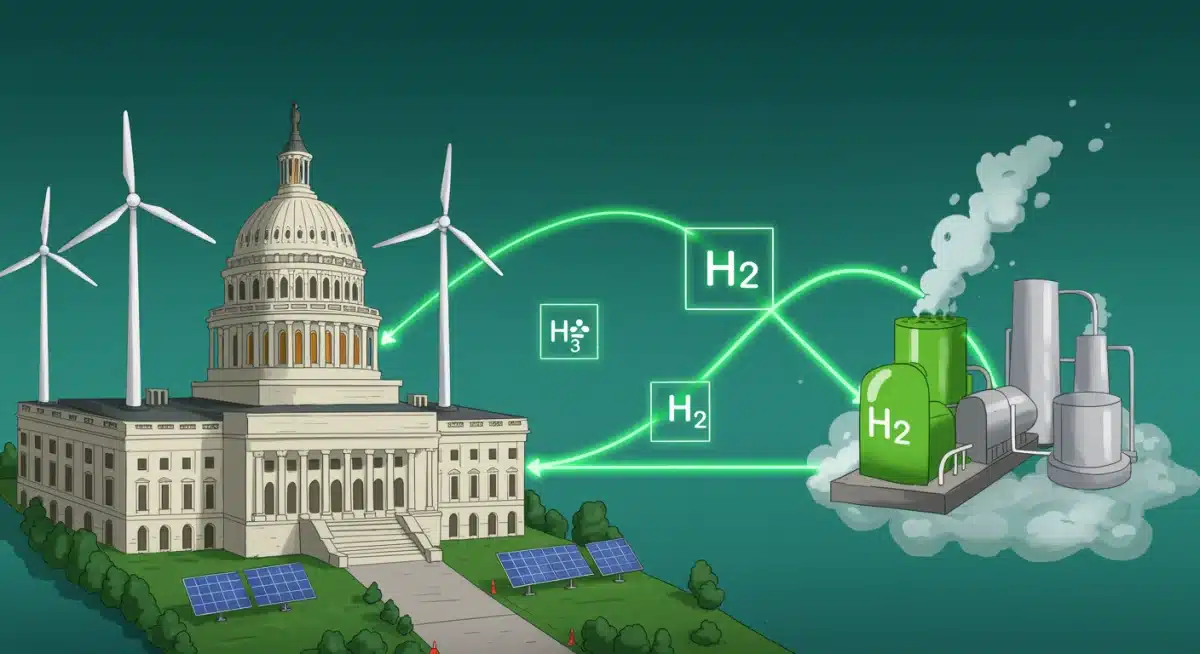
A new legislative initiative in the United States Congress aims to accelerate green hydrogen adoption by an ambitious 30% by 2027, positioning it as a cornerstone of the nation’s future energy strategy.
Breaking news: Major legislative push in Congress aims to accelerate green hydrogen adoption by 30% by 2027, marking a pivotal moment in the United States’ journey toward a sustainable and decarbonized energy future. This ambitious target underscores a collective commitment to leveraging innovative clean energy solutions, promising significant implications for industry, environment, and economic growth.
The legislative landscape: driving green hydrogen forward
The recent legislative initiative in Congress represents a significant stride towards establishing green hydrogen as a core component of the national energy mix. Lawmakers have recognized the immense potential of green hydrogen, produced through electrolysis powered by renewable energy, to decarbonize hard-to-abate sectors such as heavy industry and long-haul transportation. This bill is not just a policy statement; it’s a strategic investment in the future of clean energy.
The proposed legislation includes a comprehensive suite of incentives, regulatory frameworks, and funding mechanisms designed to overcome existing barriers to widespread adoption. Experts believe that a unified federal approach is crucial for scaling up production and reducing costs, making green hydrogen competitive with traditional fossil fuels. This push reflects a growing consensus that incremental changes are no longer sufficient to meet climate goals.
Key provisions of the new bill
- Production tax credits: Enhanced incentives for facilities producing green hydrogen, directly lowering operational costs.
- Infrastructure development: Significant federal funding allocated for building out pipelines, storage facilities, and refueling stations.
- Research and development: Increased investment in advanced electrolysis technologies and hydrogen fuel cell innovations.
- Supply chain support: Programs designed to strengthen domestic manufacturing of green hydrogen components, reducing reliance on foreign supply chains.
The bill also emphasizes the importance of workforce development, aiming to create new jobs and reskill existing workers for the burgeoning green hydrogen economy. This holistic approach seeks to ensure that the United States not only leads in green hydrogen production but also in its associated economic benefits. The legislative effort is poised to create a ripple effect across various sectors, stimulating innovation and creating new market opportunities.
In conclusion, this legislative push is a game-changer for green hydrogen adoption in the U.S. It provides the necessary policy and financial support to transition from pilot projects to large-scale deployment, setting a clear path for achieving the 30% adoption target by 2027. The commitment from Congress signals a serious intent to accelerate the energy transition.
Economic implications: new frontiers for growth and investment
The acceleration of green hydrogen adoption by 2027 holds profound economic implications, promising a surge in investment, job creation, and technological innovation across various sectors. This legislative push is expected to unlock significant private capital, as businesses seek to capitalize on the new incentives and expanding market opportunities. The cascading effect on the economy could be transformative, creating a robust domestic industry.
Analysts predict that the demand for renewable energy sources, such as solar and wind power, will dramatically increase to fuel green hydrogen production. This will, in turn, drive further investment in renewable energy infrastructure, creating a virtuous cycle of growth. The manufacturing sector will also see a boost, as the need for electrolyzers, fuel cells, and other related components escalates. These developments are critical for securing long-term economic stability.
Job creation and workforce development
The green hydrogen industry is poised to generate thousands of new jobs, ranging from engineers and scientists to construction workers and technicians. The legislation includes provisions for training programs and educational initiatives to ensure a skilled workforce is available to meet the demands of this rapidly evolving sector. This focus on human capital is essential for sustainable growth.
- Manufacturing jobs: Production of electrolyzers, fuel cells, storage tanks.
- Construction jobs: Building renewable energy plants, hydrogen pipelines, and refueling stations.
- Research roles: Innovation in hydrogen production, storage, and utilization technologies.
- Operations and maintenance: Managing and maintaining green hydrogen facilities and infrastructure.
Beyond direct employment, the rise of green hydrogen will also foster secondary economic activities, including logistics, financial services, and consulting. This comprehensive economic impact extends far beyond the immediate energy sector, providing a broad base for national prosperity. The U.S. is strategically positioning itself to be a global leader in this emerging market.
In essence, the congressional push for green hydrogen adoption is not merely an environmental policy; it is a powerful economic development strategy. By fostering innovation and creating new markets, the legislation is set to drive substantial growth and investment across the American economy, offering significant returns on public and private capital.
Environmental impact: a pathway to deep decarbonization
Accelerating green hydrogen adoption is a critical step towards achieving deep decarbonization and mitigating the impacts of climate change. Unlike traditional hydrogen production, which often relies on fossil fuels and emits greenhouse gases, green hydrogen is produced using renewable electricity, resulting in zero carbon emissions. This makes it an indispensable tool for sectors where electrification is challenging or impractical.
The environmental benefits extend beyond carbon reduction. Increased use of green hydrogen will also lead to improvements in air quality by displacing pollutants from industrial processes and vehicle emissions. This transition will contribute to healthier communities and ecosystems, offering tangible benefits to public health. The shift away from fossil fuels is a multifaceted endeavor.
Addressing hard-to-abate sectors
Green hydrogen offers a viable solution for decarbonizing industries that are difficult to electrify. These include:
- Steel and cement production: Replacing fossil fuels as a heat source and chemical feedstock.
- Chemical manufacturing: Serving as a clean input for various chemical processes.
- Long-haul transportation: Powering heavy-duty trucks, ships, and potentially aircraft with fuel cells.
- Seasonal energy storage: Storing excess renewable energy for later use, enhancing grid stability.
By targeting these sectors, green hydrogen can make a substantial contribution to overall emissions reductions, helping the U.S. meet its national and international climate commitments. The legislative timetable of 2027 highlights the urgency and importance of this transition, providing a clear roadmap for environmental improvements. This ambitious goal is a testament to the nation’s commitment to sustainability.
Ultimately, the environmental impact of this legislative push for green hydrogen adoption is profound. It provides a credible and scalable pathway to significantly reduce greenhouse gas emissions, clean up industrial processes, and enhance energy security, positioning the United States as a leader in global climate action. The benefits will be felt for generations to come.
Technological advancements: innovation fueling the future
The ambitious target for green hydrogen adoption by 2027 is heavily reliant on continuous technological advancements and innovation. The legislative push includes significant provisions for research and development (R&D), aiming to enhance the efficiency, reduce the cost, and improve the scalability of green hydrogen production and utilization technologies. Breakthroughs in these areas are essential for meeting the aggressive timeline.
Electrolyzer technology, the heart of green hydrogen production, is a primary focus of R&D efforts. Scientists and engineers are working on developing more efficient and durable electrolyzers that can operate at lower costs and higher production rates. Innovations in materials science and manufacturing processes are critical to achieving these goals. The industry is also exploring new methods of hydrogen storage and transportation.
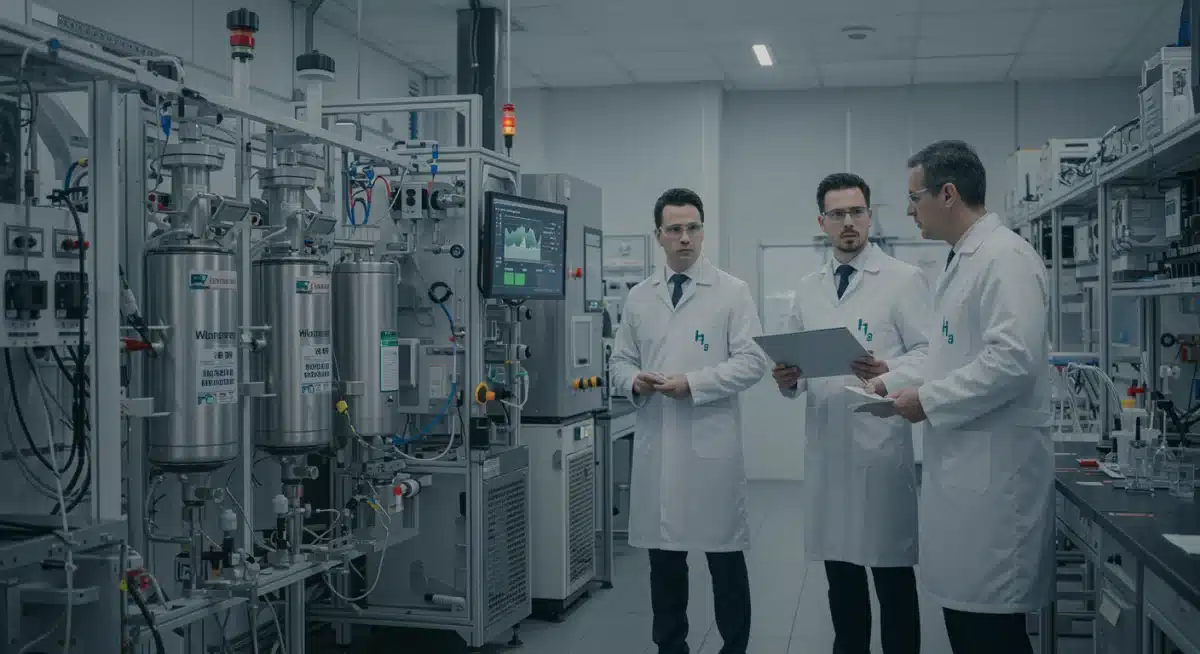
Key areas of technological innovation
- Advanced electrolyzer designs: Developing solid oxide, anion exchange membrane (AEM), and proton exchange membrane (PEM) electrolyzers with improved performance.
- Efficient hydrogen storage: Research into solid-state hydrogen storage, cryo-compressed hydrogen, and liquid organic hydrogen carriers (LOHCs).
- Fuel cell enhancements: Improving the durability, power density, and cost-effectiveness of hydrogen fuel cells for various applications.
- Integrated systems: Designing and optimizing integrated renewable energy and hydrogen production systems for maximum efficiency.
Beyond production, R&D is also focused on the end-use applications of green hydrogen, such as developing more efficient hydrogen-powered vehicles, industrial furnaces, and power generation systems. The legislative support provides a robust framework for these innovations to flourish, fostering collaboration between academia, industry, and government. This collaborative ecosystem is vital for rapid progress.
In conclusion, technological advancements are the bedrock upon which the successful acceleration of green hydrogen adoption will be built. The congressional commitment to R&D ensures that the United States remains at the forefront of clean energy innovation, driving down costs and expanding the possibilities for green hydrogen across multiple sectors.
Challenges and opportunities: navigating the path to 2027
Achieving a 30% acceleration in green hydrogen adoption by 2027 presents both significant challenges and unparalleled opportunities. The path forward requires overcoming hurdles related to infrastructure, cost competitiveness, and public perception, while simultaneously harnessing the potential for economic growth and environmental stewardship. Strategic planning and concerted effort will be paramount.
One of the primary challenges is the sheer scale of infrastructure required. Building new pipelines, storage facilities, and refueling networks demands substantial investment and careful logistical planning. Another hurdle is reducing the cost of green hydrogen production to make it truly competitive with established energy sources. While legislative incentives help, continuous innovation will be key to long-term cost reduction. Public acceptance and understanding of green hydrogen technology also need to be cultivated.
Overcoming key challenges
- Infrastructure development: Coordinating across federal, state, and local entities to streamline permitting and construction.
- Cost reduction: Investing in R&D and scaling up production to achieve economies of scale.
- Regulatory harmonization: Developing consistent standards and regulations for safety, production, and distribution.
- Public education: Informing the public about the benefits and safety of green hydrogen to build trust and acceptance.
Despite these challenges, the opportunities are immense. The push for green hydrogen can stimulate domestic manufacturing, create high-paying jobs, and enhance national energy security by reducing reliance on volatile fossil fuel markets. It also positions the U.S. as a global leader in clean energy, attracting international investment and fostering technological exports. This dual focus on challenges and opportunities is essential for effective policy implementation.
In summary, while the journey to accelerate green hydrogen adoption by 2027 is fraught with challenges, the legislative framework provides a robust foundation for overcoming them. By addressing infrastructure, cost, and public perception, the U.S. can unlock the vast opportunities that green hydrogen presents for a cleaner, more prosperous future.
Global perspective: the U.S. role in green hydrogen leadership
The legislative push in the United States to accelerate green hydrogen adoption by 30% by 2027 has significant implications for its role on the global stage. As nations worldwide race to decarbonize their economies, the U.S. initiative positions it as a frontrunner in developing and deploying green hydrogen technologies. This leadership is crucial for driving international collaboration and setting global standards for sustainable energy.
Many countries are also investing heavily in green hydrogen, recognizing its potential to meet climate targets and ensure energy independence. The U.S. approach, characterized by substantial federal backing and a clear timeline, could serve as a model for other nations. International partnerships will be vital for sharing best practices, accelerating R&D, and building a global green hydrogen economy. This collaborative spirit is essential for tackling a global challenge.
International cooperation and competition
The global green hydrogen market is becoming increasingly competitive, with countries like Germany, Australia, and Japan making significant investments. The U.S. legislative action will intensify this competition but also create opportunities for collaborative ventures. Areas for international cooperation include:
- Standardization: Developing common technical and safety standards for hydrogen production, storage, and transport.
- Supply chain optimization: Collaborating on resilient and ethical global supply chains for critical components.
- Knowledge sharing: Exchanging research findings, best practices, and policy frameworks.
- Joint investment projects: Pooling resources for large-scale green hydrogen projects in strategic regions.
The U.S. commitment to green hydrogen can also influence international trade policies and climate diplomacy. By demonstrating a scalable and economically viable pathway to green hydrogen, the U.S. can encourage other nations to adopt similar ambitious targets, fostering a global movement towards a hydrogen-powered future. This will have a profound impact on geopolitical energy dynamics.
In conclusion, the U.S. legislative push for green hydrogen adoption is not just a domestic policy; it’s a statement of global leadership. By accelerating its own transition, the United States is poised to play a pivotal role in shaping the international green hydrogen landscape, driving innovation, and fostering collaboration for a sustainable global energy future.
| Key Aspect | Brief Description |
|---|---|
| Legislative Goal | Accelerate green hydrogen adoption by 30% by 2027 in the U.S. |
| Economic Impact | Spur investment, create jobs, and foster innovation in clean energy sectors. |
| Environmental Benefits | Decarbonize hard-to-abate sectors and significantly reduce greenhouse gas emissions. |
| Technological Focus | Invest in R&D for advanced electrolyzers, storage, and fuel cell technologies. |
Frequently asked questions about green hydrogen adoption
Green hydrogen is produced by splitting water into hydrogen and oxygen using electrolysis, powered exclusively by renewable energy sources like solar or wind. This process generates no greenhouse gas emissions, making it a truly clean energy carrier for various applications.
Congress aims to accelerate green hydrogen adoption to decarbonize heavy industries, reduce reliance on fossil fuels, create new jobs, and position the United States as a leader in the global clean energy transition. It’s a strategic move for both environmental and economic benefits.
Key challenges include high production costs compared to fossil fuels, the need for extensive new infrastructure (pipelines, storage), and scaling up renewable energy capacity to meet demand. Overcoming these requires significant investment and technological innovation.
The legislation is expected to create new job opportunities in manufacturing and construction, improve air quality, and contribute to a more stable and independent energy supply. Indirectly, it may lead to cleaner products and services as industries adopt green hydrogen.
While green hydrogen shows immense promise for hard-to-abate sectors, a complete replacement of fossil fuels across all applications is complex. It will likely play a complementary role, alongside electrification and other renewable energy solutions, in a diversified clean energy mix.
Conclusion
The congressional push to accelerate green hydrogen adoption by 30% by 2027 signals a profound shift in the United States’ energy strategy. This legislative ambition, backed by significant investment and a clear timeline, is set to revolutionize various sectors, from heavy industry to transportation, while simultaneously fostering economic growth and addressing critical environmental concerns. While challenges remain, the comprehensive nature of the proposed legislation, coupled with ongoing technological advancements, positions the U.S. at the forefront of the global green hydrogen revolution. This initiative is not merely about energy; it’s about securing a sustainable, prosperous, and cleaner future for generations to come, demonstrating a robust commitment to climate action and energy independence.