Maximize 2026 Clean Energy Tax Credits: Save Up To $7,500
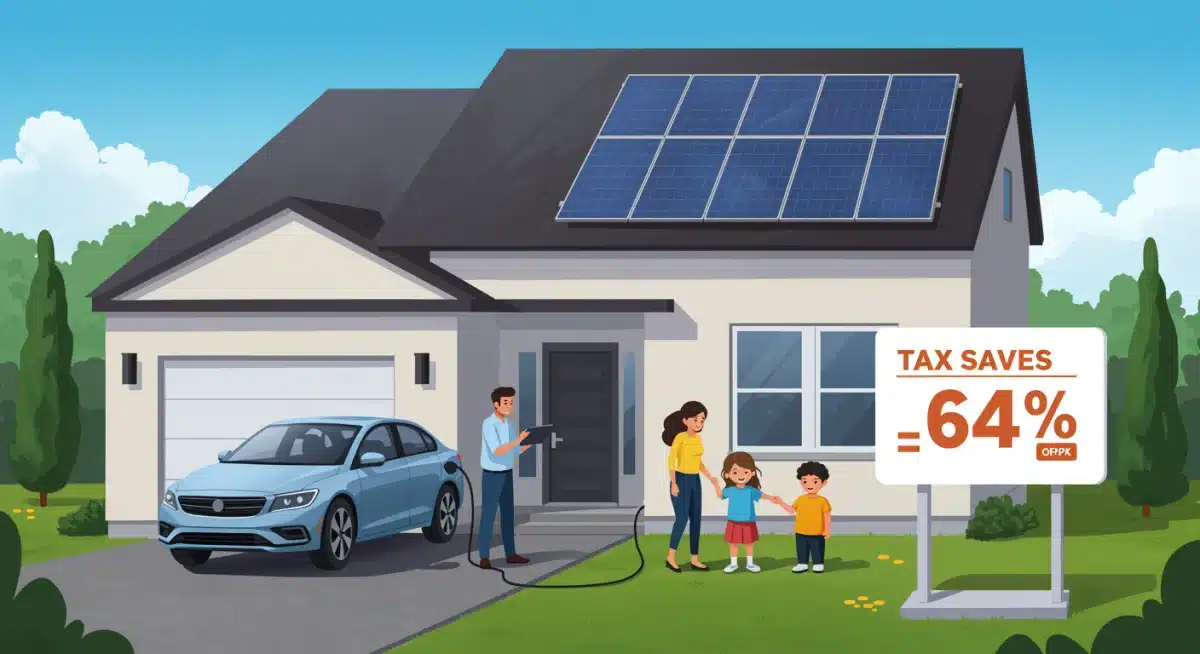
In an era where environmental consciousness meets financial prudence, the opportunity to embrace clean energy solutions has never been more appealing. With the introduction and expansion of various federal incentives, particularly under the Inflation Reduction Act (IRA), homeowners and individuals can now significantly reduce their tax burden while contributing to a greener future. This comprehensive guide will delve into the intricacies of maximizing your 2026 clean energy tax credits, detailing how you could save up to $7,500 this year and beyond.
The landscape of clean energy incentives is constantly evolving, making it crucial to stay informed about the latest provisions. The 2026 clean energy tax credits offer a robust framework for financial relief, encouraging investments in energy-efficient home improvements, renewable energy installations, and electric vehicles (EVs). Understanding these credits and how to strategically apply them can transform your approach to energy consumption and personal finance.
Understanding the Foundation: What Are Clean Energy Tax Credits?
Clean energy tax credits are government incentives designed to encourage individuals and businesses to invest in technologies and practices that reduce carbon emissions and promote energy efficiency. These credits directly reduce the amount of tax you owe, dollar for dollar, making them much more valuable than tax deductions. The primary goal is to accelerate the transition to a clean energy economy, reduce reliance on fossil fuels, and stimulate economic growth in green sectors.
For 2026, many of the key provisions from the Inflation Reduction Act (IRA) remain in effect, offering substantial benefits. These include credits for:
- Residential Clean Energy Credit (Section 25D): Primarily for renewable energy installations like solar panels, wind turbines, geothermal heat pumps, and battery storage.
- Energy Efficient Home Improvement Credit (Section 25C): For qualified energy efficiency improvements to your home, such as insulation, exterior windows, doors, and certain energy-efficient heating and cooling equipment.
- Clean Vehicle Tax Credits (Section 30D and 25E): For new and previously-owned clean vehicles, including electric vehicles and plug-in hybrids.
Each of these credits comes with specific eligibility requirements, credit amounts, and limitations. Navigating these details is key to maximizing your benefits, and that’s precisely what we’ll explore.
The Residential Clean Energy Credit: Powering Your Home with Renewables
The Residential Clean Energy Credit, often referred to as the solar tax credit, is one of the most generous incentives available. It allows homeowners to claim a credit for a percentage of the cost of new, qualified clean energy property for their home. For installations placed in service through 2032, the credit is 30% of the cost, with no credit limit except for fuel cell property.
Eligible Property for the 30% Credit:
- Solar Electric Property (Solar Panels): This includes equipment that generates electricity for your home using solar energy.
- Solar Water Heating Property: Equipment that heats water for use in your dwelling. At least half of the energy used to heat the water must come from solar.
- Wind Energy Property: Small wind turbines that generate electricity for your home.
- Geothermal Heat Pump Property: Geothermal heat pumps that meet Energy Star requirements. These systems use the earth’s stable temperature to heat and cool your home efficiently.
- Fuel Cell Property: Equipment that uses a fuel cell to generate electricity for your home. This has a separate credit limit.
- Battery Storage Technology: Qualified battery storage technology with a capacity of at least 3 kilowatt hours (kWh). This is a significant addition, allowing homeowners to store excess solar energy for later use.
Maximizing Your Residential Clean Energy Credit:
To get the most out of this credit, consider the following:
- Plan Your Installation: The credit applies to the cost of equipment and installation. Get multiple quotes to ensure competitive pricing.
- Combine Technologies: Consider combining solar panels with battery storage for maximum energy independence and credit eligibility.
- Understand the ‘Placed in Service’ Rule: The credit is for the year the property is placed in service, not necessarily when it’s purchased or installed. Ensure your system is operational by December 31st of the tax year you plan to claim the credit.
- No Income Limitations: Unlike some other credits, there are generally no income limitations for claiming the Residential Clean Energy Credit, making it accessible to a wide range of taxpayers.
- Carryforward Provision: If the credit exceeds your tax liability in a given year, you can carry forward the unused portion to future tax years, ensuring you don’t lose out on any benefits.
For example, if you install a solar panel system costing $20,000, you could claim a $6,000 tax credit (30% of $20,000). If you also add a qualified battery storage system for $10,000, that’s an additional $3,000 credit, bringing your total to $9,000 in clean energy credits. Remember, these are direct reductions to your tax bill.
The Energy Efficient Home Improvement Credit: Upgrading Your Home, Saving on Taxes
The Energy Efficient Home Improvement Credit (formerly the Nonbusiness Energy Property Credit) received a significant boost under the IRA. For improvements made in 2023 through 2032, this credit offers an annual tax credit of up to $1,200 for eligible home energy improvements, plus an additional credit for certain heat pumps, biomass stoves, and central air conditioners.
Annual Credit Limits:
- Up to $1,200 total annual credit: This applies to a combination of various energy-efficient improvements.
- Specific component limits:
- $250 per door (up to $500 total for exterior doors)
- $600 per item for exterior windows and skylights, insulation, and certain energy property (e.g., central air conditioners, water heaters, furnaces, boilers).
- $150 for a home energy audit.
- Up to $2,000 annual credit: For qualified heat pumps, biomass stoves, and biomass central air furnaces. This is separate from the $1,200 limit.
Eligible Improvements:
- Insulation materials or systems: Must meet specific energy efficiency requirements.
- Exterior windows and skylights: Must meet Energy Star most efficient certification requirements.
- Exterior doors: Must meet applicable Energy Star requirements.
- Electric or natural gas heat pumps and heat pump water heaters: Must meet CEE (Consortium for Energy Efficiency) Tier 2 efficiency standards or equivalent.
- Central air conditioners: Must meet CEE Tier 2 efficiency standards.
- Natural gas, propane, or oil furnaces and hot water boilers: Must meet specific efficiency ratings.
- Main electric panel or subpanel upgrades: Necessary to enable the installation of other eligible property.
- Home energy audits: For costs associated with a home energy audit, up to $150.
Strategies to Maximize This Credit:
- Plan Annual Upgrades: Since the $1,200 and $2,000 limits are annual, consider spreading out larger projects over several years. For example, install new windows one year and insulation the next to claim credits each year.
- Prioritize High-Impact Upgrades: Focus on improvements that offer the best return on investment for both energy savings and tax credits, such as insulation and heat pump installations.
- Check for Local and State Incentives: These credits can often be stacked with state and local rebates or incentives, further reducing your out-of-pocket costs.
- Keep Detailed Records: Maintain invoices, receipts, and manufacturer certifications for all eligible improvements. These documents are crucial for substantiating your claim.
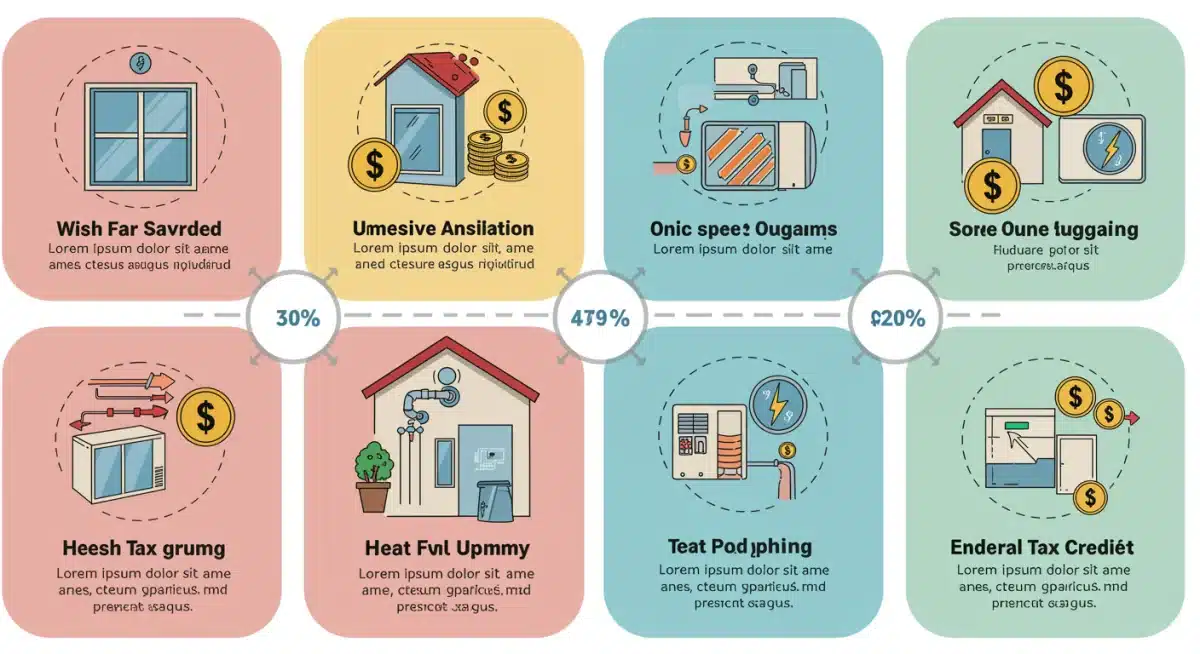
Imagine you install a new heat pump system costing $8,000. You could claim a $2,000 credit for that year. Additionally, if you replace all your exterior windows for $3,000, you could claim up to $600 for windows (up to $600 per item) and potentially other component limits up to the $1,200 annual cap. This strategic planning can significantly enhance your total savings from the clean energy credits.
Clean Vehicle Tax Credits: Driving Towards a Sustainable Future
The clean vehicle tax credits are designed to make electric vehicles (EVs) and plug-in hybrids more accessible and affordable. These credits are divided into two main categories: new clean vehicles and previously-owned clean vehicles.
New Clean Vehicle Tax Credit (Section 30D):
This credit offers up to $7,500 for eligible new clean vehicles. However, the requirements are stringent and have been updated to emphasize domestic manufacturing and critical mineral sourcing.
Key Requirements for 2026:
- Vehicle Price Limit: Manufacturer’s Suggested Retail Price (MSRP) must not exceed $80,000 for vans, SUVs, and pickup trucks, and $55,000 for other vehicles.
- Battery Capacity: The vehicle must have a battery capacity of at least 7 kilowatt hours (kWh).
- Gross Vehicle Weight Rating: Must be less than 14,000 pounds.
- Critical Mineral Requirement: A certain percentage of the value of the battery’s critical minerals must be extracted or processed in the U.S. or a free trade agreement country, or recycled in North America. This percentage increases over time.
- Battery Component Requirement: A certain percentage of the value of the battery components must be manufactured or assembled in North America. This percentage also increases over time.
- Final Assembly: The vehicle must undergo final assembly in North America.
- Income Limitations: Modified Adjusted Gross Income (MAGI) must not exceed $300,000 for married couples filing jointly or surviving spouses, and $150,000 for single filers.
Maximizing the New Clean Vehicle Credit:
- Check IRS and DOE Websites: The Department of Energy (DOE) and IRS regularly update lists of eligible vehicles that meet the final assembly, battery component, and critical mineral requirements. Check these resources frequently.
- Consider Lease Options: Leasing an EV might offer indirect access to the commercial clean vehicle credit (Sec. 45W), which has fewer restrictions on manufacturing and sourcing, as the dealership can claim it and potentially pass on the savings to you through lower lease payments.
- Timing Your Purchase: The requirements for battery components and critical minerals become stricter each year. If a vehicle you’re interested in currently qualifies, it might be wise to purchase it sooner rather than later if you meet the income requirements.
Previously-Owned Clean Vehicle Tax Credit (Section 25E):
This credit offers up to $4,000 for eligible used clean vehicles, providing an excellent opportunity for those looking for a more affordable entry into the EV market.
Key Requirements:
- Credit Amount: 30% of the sale price, up to a maximum of $4,000.
- Sale Price Limit: The vehicle’s sale price must be $25,000 or less.
- Dealer Sale: The vehicle must be purchased from a dealer.
- First Transfer: It must be the first transfer of the vehicle to a qualified buyer after August 16, 2022.
- Model Year: The vehicle must be at least two model years older than the calendar year in which you buy it.
- Income Limitations: MAGI must not exceed $150,000 for married couples filing jointly, and $75,000 for single filers.
Tips for the Used EV Credit:
- Search Certified Dealers: Focus your search on dealerships that specialize in used EVs and can provide the necessary documentation for the credit.
- Verify Eligibility: Ensure the specific vehicle meets all the criteria, especially the price and model year requirements.
- Understand Dealer Reporting: The dealer must report the sale to the IRS, and you will receive a copy of this report.
Beyond Federal Credits: Exploring State and Local Incentives
While federal clean energy credits are substantial, many states, local governments, and even utility companies offer additional incentives that can be stacked with federal benefits. These can include:
- State Tax Credits or Rebates: Some states offer their own tax credits for solar installations, energy-efficient upgrades, or EV purchases.
- Local Government Programs: Cities and counties may have programs for energy audits, insulation upgrades, or EV charging station installations.
- Utility Company Rebates: Many electric and gas utility companies provide rebates for purchasing energy-efficient appliances, smart thermostats, or even for installing solar panels.
It’s crucial to research what’s available in your specific area. Websites like the Database of State Incentives for Renewables & Efficiency (DSIRE) are excellent resources for finding comprehensive information on state and local programs.
Strategic Planning for Maximum Savings: A Step-by-Step Approach
To effectively maximize your 2026 clean energy tax credits, a well-thought-out plan is essential. Here’s a step-by-step guide:
Step 1: Assess Your Eligibility and Needs
- Review Income Limits: For vehicle credits, check if your MAGI falls within the specified limits.
- Identify Potential Projects: What energy-efficient improvements does your home need? Are you considering an EV?
- Prioritize High-Impact Investments: Focus on upgrades that offer the greatest energy savings and credit potential.
Step 2: Research Qualified Products and Services
- Verify Product Eligibility: Ensure that any products you plan to purchase (e.g., windows, heat pumps, EVs) meet the specific efficiency standards or manufacturing requirements for the credits. Look for Energy Star certifications and consult IRS/DOE lists for vehicles.
- Choose Certified Professionals: For home improvements, select contractors who are knowledgeable about clean energy technologies and the associated tax credits. They can often provide the necessary documentation.
Step 3: Keep Meticulous Records
- Collect All Documentation: Keep invoices, receipts, proof of payment, manufacturer certifications, and any other relevant paperwork for every eligible purchase and installation.
- Organize by Tax Year: If you’re spreading projects over multiple years, keep clear records for each tax year.
Step 4: Understand the Claim Process
- Form 5695 (Residential Energy Credits): Use this form to claim the Residential Clean Energy Credit and the Energy Efficient Home Improvement Credit.
- Form 8936 (Clean Vehicle Credits): Use this form to claim the new and previously-owned clean vehicle credits.
- Consult a Tax Professional: Given the complexity of some of these credits, especially with evolving requirements, consulting a qualified tax advisor is highly recommended. They can help ensure you claim all eligible credits and avoid potential pitfalls.
Step 5: Stay Updated
Tax laws and credit requirements can change. Regularly check the IRS website, Department of Energy resources, and reputable tax news sources for any updates or clarifications, especially regarding vehicle eligibility and critical mineral sourcing.
Common Pitfalls to Avoid
While the clean energy credits offer fantastic opportunities, there are several common mistakes that taxpayers make:
- Not Meeting Eligibility Requirements: The most common error is purchasing a product or vehicle that doesn’t fully meet the specific criteria (e.g., efficiency ratings, manufacturing location, price limits). Always double-check before making a significant investment.
- Insufficient Documentation: Without proper receipts, invoices, and certifications, the IRS may deny your claim. Keep everything organized.
- Missing Deadlines: Credits are typically for the year the property is ‘placed in service.’ Ensure installations are completed and operational by December 31st of the tax year you intend to claim.
- Ignoring Income Limitations: For vehicle credits, income phase-outs apply. If your MAGI exceeds the limits, you won’t be eligible.
- Failing to Stack Incentives: Missing out on state, local, or utility rebates that could further reduce your costs.
- Confusing Credits with Deductions: Remember, credits directly reduce your tax bill, while deductions reduce your taxable income. Credits are generally more valuable.
The Long-Term Benefits of Clean Energy Investments
Beyond the immediate tax savings, investing in clean energy solutions offers a myriad of long-term benefits:
- Reduced Energy Bills: Energy-efficient homes and solar installations significantly lower your monthly utility costs.
- Increased Home Value: Homes with solar panels and energy-efficient upgrades often command higher resale values.
- Environmental Impact: You’ll reduce your carbon footprint, contributing to a healthier planet.
- Energy Independence: Rely less on traditional energy grids and fluctuating fuel prices.
- Comfort and Health: Better insulation and modern HVAC systems improve indoor comfort and air quality.
Conclusion: Embrace the Clean Energy Revolution
The 2026 clean energy tax credits represent a powerful incentive for individuals to invest in a sustainable future. By carefully understanding the eligibility requirements, planning your projects strategically, and maintaining thorough records, you can unlock significant financial savings – potentially up to $7,500 or more – while making a tangible positive impact on the environment.
Whether you’re considering solar panels, a new heat pump, or an electric vehicle, now is an opportune time to act. Don’t let the complexity deter you; instead, empower yourself with knowledge and consider seeking professional advice to navigate these valuable opportunities. Embrace the clean energy revolution, save money, and contribute to a brighter, more sustainable world for generations to come.