Residential Solar ROI 2026: Expecting 8-10% Annual Savings

The dawn of a new energy era is upon us, and for homeowners, the prospect of harnessing the sun’s power has never been more appealing or financially rewarding. As we approach 2026, the discussion around residential solar ROI is shifting from ‘if’ to ‘how much’ and ‘how soon’. With advancements in technology, evolving policy landscapes, and a growing global emphasis on sustainability, investing in residential solar is increasingly becoming a strategic financial decision, promising significant returns.
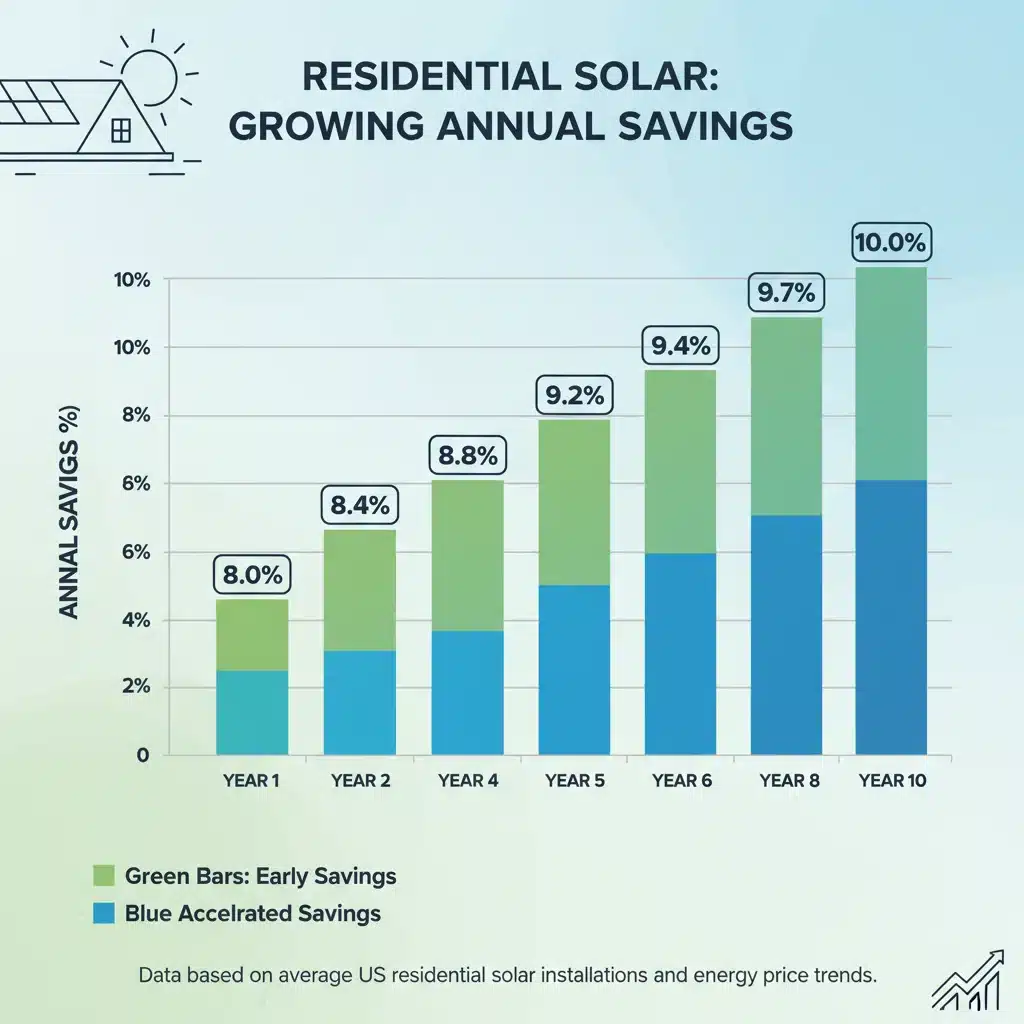
For many years, solar energy was viewed as a niche, environmentally-driven choice, often associated with high upfront costs and lengthy payback periods. However, the narrative has dramatically changed. Today, residential solar systems are not just about reducing your carbon footprint; they are a robust investment designed to deliver tangible financial benefits. Our projections for 2026 indicate that homeowners can realistically expect to see annual savings in the range of 8-10% on their energy bills, making the residential solar ROI incredibly attractive.
This comprehensive guide will delve deep into the factors influencing the residential solar ROI in 2026, exploring the economic drivers, technological advancements, policy support, and practical considerations that homeowners need to understand. We will break down what these projected savings mean for your household budget and how you can maximize your return on this forward-thinking investment.
Understanding the Core Concept: What is Residential Solar ROI?
Before we dive into the specifics of 2026, let’s establish a clear understanding of what Return on Investment (ROI) means in the context of residential solar. Simply put, residential solar ROI measures the financial gain or loss from a solar investment relative to its cost. It’s a critical metric that helps homeowners evaluate the profitability and efficiency of their solar panel system.
The calculation of residential solar ROI typically involves several components:
- Upfront Costs: This includes the purchase and installation of solar panels, inverters, racking, wiring, and any necessary electrical upgrades.
- Ongoing Costs: Maintenance, cleaning, and potential insurance adjustments. These are generally very low for solar systems.
- Annual Savings: The primary benefit comes from the reduction or elimination of electricity bills.
- Incentives and Rebates: Government tax credits, state and local rebates, and SRECs (Solar Renewable Energy Credits) significantly offset initial costs.
- Increased Home Value: Solar panels are proven to increase property value, often by more than the cost of the system itself.
- Net Metering: Policies that allow homeowners to sell excess electricity back to the grid, further boosting savings.
When we talk about an 8-10% annual savings for residential solar ROI in 2026, we are referring to the percentage of your total annual energy expenses that you can expect to save, or the percentage return on your initial investment each year, considering all these factors. This percentage can fluctuate based on location, system size, energy consumption, and local policies, but the general trend points towards increasingly favorable returns.
The Economic Landscape of 2026: Why 8-10% Annual Savings Are Realistic
Several converging factors are creating an optimal environment for robust residential solar ROI by 2026:
1. Declining Installation Costs
The cost of solar panel technology has plummeted over the last decade, making solar more accessible than ever. This trend is expected to continue, albeit at a slower pace. Manufacturing efficiencies, economies of scale, and competitive markets are driving down the per-watt cost of solar installations. While the pace of decline might stabilize, any further reductions will directly enhance your residential solar ROI.
2. Rising Electricity Prices
Conventional electricity prices continue to trend upwards due to factors like fuel costs, infrastructure upgrades, and regulatory changes. By locking in your electricity costs with solar, homeowners effectively hedge against these rising utility rates. The bigger the increase in grid electricity prices, the more valuable your solar-generated power becomes, thus improving your residential solar ROI.
3. Enhanced Solar Panel Efficiency
Technological advancements are leading to more efficient solar panels, meaning they can convert a higher percentage of sunlight into electricity. This allows for more power generation from a smaller footprint, or greater overall output for the same system size. Higher efficiency translates directly into more electricity produced, more savings, and a better residential solar ROI.
4. Battery Storage Integration
The cost of battery storage solutions is also decreasing, making it more feasible for homeowners to store excess solar energy for use during peak hours or outages. This enhances self-sufficiency and allows homeowners to fully capitalize on their solar production, reducing reliance on the grid and maximizing their residential solar ROI, especially in areas with time-of-use (TOU) tariffs.
5. Favorable Government Incentives and Policies
While specific incentives can vary, the overarching trend continues to support renewable energy. The federal Investment Tax Credit (ITC) for solar, which provides a significant tax credit for new installations, is a key driver. Many states and local municipalities also offer their own rebates, grants, and property tax exemptions. These incentives directly reduce the net cost of your solar system, thereby boosting your residential solar ROI significantly.
Breaking Down the 8-10% Annual Savings Target
Achieving an 8-10% annual savings as part of your residential solar ROI is a realistic goal for many homeowners in 2026. Let’s look at how this translates into real-world benefits:
Scenario 1: Direct Energy Bill Reduction
For a typical household with an annual electricity bill of $1,800 (or $150 per month), an 8-10% annual saving would mean reducing that bill by $144 – $180 per year. Over a 20-25 year lifespan of a solar system, these savings compound significantly, totaling thousands of dollars.
Scenario 2: Investment Payback Period
The payback period is the time it takes for the savings generated by your solar system to equal the initial investment. With an 8-10% annual return on investment, homeowners can expect a relatively swift payback period, often ranging from 6 to 10 years, depending on the initial cost, incentives, and energy prices in their region. After the payback period, the electricity generated is essentially free, leading to pure profit and an even higher effective residential solar ROI.
Scenario 3: Increased Home Value
Studies consistently show that homes with solar panels sell faster and for more money than comparable non-solar homes. While the exact increase varies, a 3-4% boost in home value is frequently cited. For a $400,000 home, this could mean an additional $12,000 – $16,000 in equity, further enhancing the overall residential solar ROI, even before considering energy savings.
Scenario 4: Environmental and Social Benefits
While not directly quantifiable in monetary terms for ROI, the environmental benefits of reducing carbon emissions and supporting clean energy are invaluable. Many homeowners also appreciate the energy independence and resilience that solar power provides, especially when coupled with battery storage. These non-monetary returns contribute to a holistic understanding of the value of residential solar.
Maximizing Your Residential Solar ROI by 2026
To ensure you hit or even exceed the 8-10% annual savings target, consider these key strategies:
1. Optimize System Sizing
The ideal solar system size is one that matches your household’s energy consumption. Oversizing can lead to unnecessary costs, while undersizing means you’re still heavily reliant on grid power. A professional solar installer can conduct an energy audit and recommend the perfect system size for your needs, ensuring optimal residential solar ROI.
2. Choose High-Quality Components
Investing in reputable solar panels, inverters, and mounting hardware pays off in the long run. High-quality components offer better efficiency, longer warranties, and greater durability, minimizing maintenance costs and maximizing energy production over the system’s lifespan. This directly impacts your long-term residential solar ROI.
3. Understand and Utilize All Available Incentives
Research federal, state, and local incentives thoroughly. The federal Investment Tax Credit (ITC) is a major benefit, but don’t overlook state rebates, property tax exemptions, and Solar Renewable Energy Credits (SRECs) if available in your area. These incentives can significantly reduce your upfront costs and accelerate your residential solar ROI.
4. Explore Financing Options
Various financing options are available, including cash purchase, solar loans, and power purchase agreements (PPAs) or leases. While cash purchase typically offers the highest residential solar ROI, solar loans can make the investment accessible without significant upfront capital, with monthly payments often lower than your previous electricity bills.
5. Consider Battery Storage
As battery technology becomes more affordable, integrating a battery storage system can further enhance your residential solar ROI. It allows you to store excess solar energy generated during the day and use it at night or during peak utility rates, reducing your reliance on the grid and maximizing your self-consumption.
6. Monitor and Maintain Your System
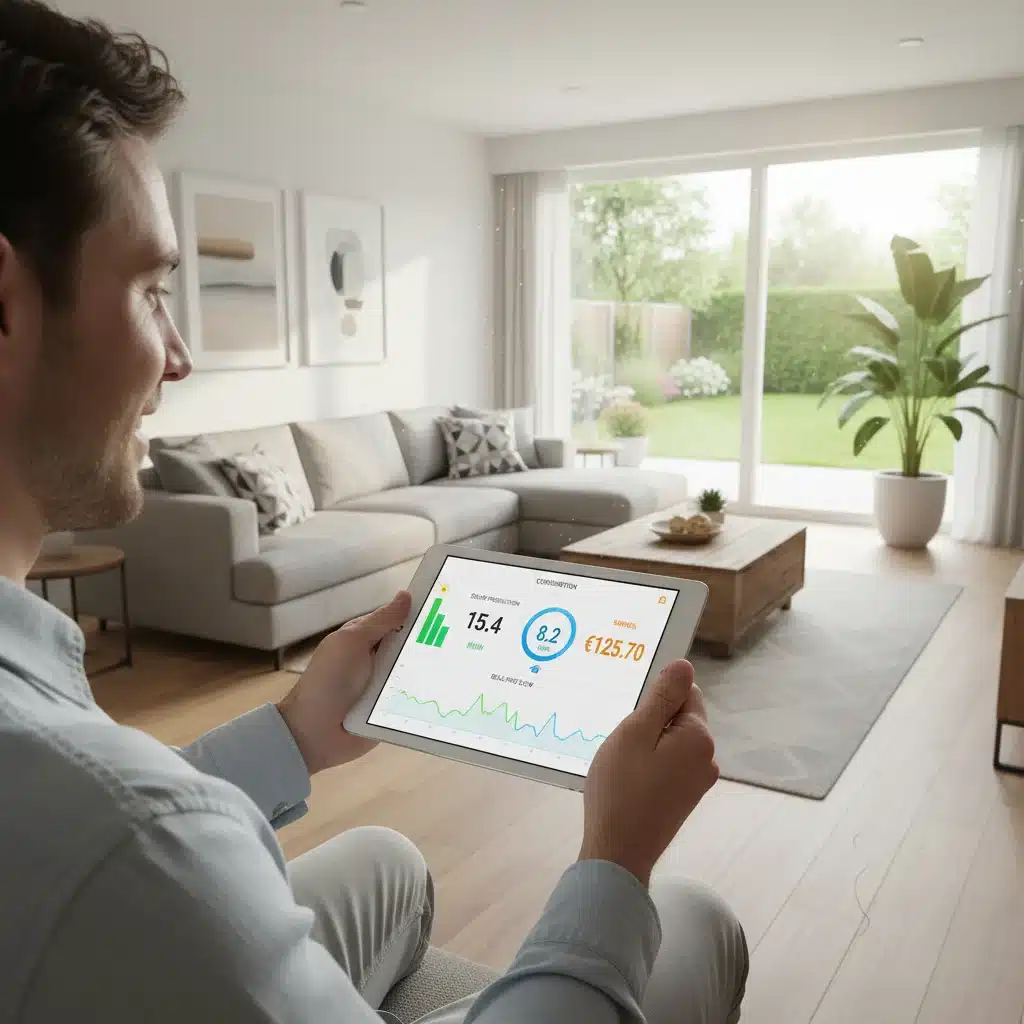
Regular monitoring of your solar system’s performance ensures it’s operating at peak efficiency. Most modern systems come with monitoring apps. While solar panels require minimal maintenance, occasional cleaning and checking for any obstructions can help maintain optimal energy production and safeguard your residential solar ROI.
The Future of Residential Solar: Beyond 2026
The outlook for residential solar ROI extends far beyond 2026, with continued innovation and policy support expected. We anticipate further advancements in solar panel technology, leading to even higher efficiencies and potentially new applications like transparent solar windows or integrated building materials. The smart home ecosystem will likely become even more intertwined with solar energy, allowing for intelligent energy management and optimization.
Policy-wise, while specific incentives may evolve, the global commitment to renewable energy is unwavering. Governments are increasingly recognizing the economic, environmental, and energy security benefits of widespread solar adoption. This sustained support will continue to foster a favorable environment for homeowners investing in solar.
Furthermore, the growing demand for electric vehicles (EVs) will create a synergistic relationship with residential solar. Homeowners can use their solar panels to charge their EVs, essentially fueling their transportation with free, clean energy, further enhancing their overall financial savings and the attractiveness of their residential solar ROI.
Potential Challenges and Considerations
While the future of residential solar ROI is bright, it’s important to acknowledge potential challenges and considerations:
- Regulatory Changes: Net metering policies, tax credits, and local regulations can change, potentially impacting the financial benefits. Staying informed about local energy policies is crucial.
- Upfront Investment: Despite decreasing costs, the initial investment for a solar system can still be substantial. However, various financing options make it more accessible.
- Roof Suitability: Not all roofs are ideal for solar. Factors like shading, roof age, orientation, and structural integrity need to be assessed by a professional.
- Weather Dependence: Solar panel output is dependent on sunlight. While systems are designed to handle varying weather conditions, extended periods of cloudy weather can temporarily reduce generation.
- Choosing the Right Installer: Selecting a reputable and experienced solar installer is paramount to ensuring a high-quality installation and maximizing your long-term residential solar ROI.
By carefully considering these factors and planning accordingly, homeowners can mitigate risks and ensure a successful solar investment.
Conclusion: A Bright Investment for 2026 and Beyond
The landscape for residential solar is incredibly promising, with 2026 shaping up to be a pivotal year for homeowners looking to invest in sustainable, cost-effective energy solutions. The projected 8-10% annual savings on energy bills underscore the compelling financial argument for going solar, positioning it as not just an eco-friendly choice, but a smart, long-term financial investment.
From declining technology costs and rising electricity rates to robust government incentives and increasing home values, all indicators point towards a strong and accelerating residential solar ROI. By understanding the factors at play, optimizing system design, and leveraging available support, homeowners can confidently step into an era of energy independence and significant financial gain.
Embrace the power of the sun and secure your financial future. The time to consider residential solar is now, and the rewards in 2026 are set to be more substantial than ever before. Make the informed choice, invest in your home’s energy future, and enjoy the tangible benefits of a maximized residential solar ROI.