Solar Panel Supply Chain: Easing Disruptions & Cost Reduction by Q3 2026
The renewable energy sector has been a beacon of hope in the global effort to combat climate change. Among its many facets, solar energy stands out as a leading contender, promising clean, abundant power. However, like any burgeoning industry, it has faced its share of challenges, particularly concerning the solar panel supply chain. For several years, disruptions have plagued the industry, from raw material shortages to logistics bottlenecks, impacting production, delivery, and ultimately, costs. Yet, a new horizon is emerging, bringing with it optimistic projections for the future of solar. Industry experts and market analysts are now forecasting a significant easing of these disruptions by Q3 2026, a development that is expected to usher in a crucial 10% reduction in solar panel costs. This is not just a statistical prediction; it represents a pivotal moment for the industry, promising accelerated adoption, increased accessibility, and a more robust path towards a sustainable future.
Understanding the Solar Panel Supply Chain Challenges
To fully appreciate the significance of the impending relief, it’s essential to understand the complexities and vulnerabilities that have characterized the solar panel supply chain in recent years. The journey of a solar panel, from its constituent raw materials to its final installation, is a global odyssey involving multiple continents, diverse manufacturing processes, and intricate logistical networks. This inherent complexity makes it susceptible to various external shocks.
Raw Material Volatility
At the heart of every solar panel is silicon, specifically polysilicon, which forms the semiconductor material. The production of polysilicon is energy-intensive and concentrated in a few geographical regions, making it vulnerable to regional policies, energy price fluctuations, and production capacities. China, for instance, dominates polysilicon production, and any policy shifts or environmental regulations within the country can send ripple effects across the entire solar panel supply chain. Beyond silicon, other critical materials like silver, copper, aluminum, and various rare earth elements also contribute to the panel’s construction, each with its own unique supply dynamics and potential for disruption. Price volatility in these raw materials directly translates to higher manufacturing costs, which are then passed on to consumers.
Manufacturing Bottlenecks
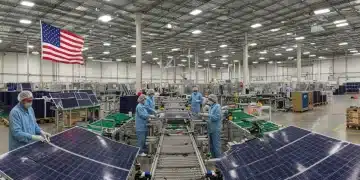
The manufacturing process for solar panels is multi-staged, beginning with polysilicon purification, ingot pulling, wafer slicing, cell fabrication, and finally, module assembly. Each stage requires specialized equipment, technical expertise, and significant capital investment. A bottleneck at any one of these stages can slow down the entire production line. For example, a shortage of specialized glass for solar panels or a scarcity of encapsulant materials can significantly impede module assembly. The COVID-19 pandemic exacerbated these issues, leading to factory shutdowns, reduced workforce availability, and delayed equipment deliveries, creating a domino effect throughout the solar panel supply chain.
Logistical Hurdles
Once manufactured, solar panels must be transported from factories to distribution centers and then to project sites worldwide. This involves a vast and often strained global logistics network. The past few years have seen unprecedented challenges in shipping, including container shortages, port congestion, increased freight costs, and labor shortages in the trucking industry. These logistical hurdles not only add to the cost of solar panels but also extend lead times, making project planning and execution more difficult for developers and installers. The sheer volume and fragility of solar panels also necessitate specialized handling and transportation, further complicating logistics.
Geopolitical Tensions and Trade Policies
The global nature of the solar panel supply chain also makes it susceptible to geopolitical tensions and evolving trade policies. Tariffs, import restrictions, and trade disputes between major economies can significantly alter the flow of goods, forcing manufacturers to re-evaluate their sourcing strategies and potentially absorb higher costs. The drive for energy independence and national security has also led some countries to incentivize domestic manufacturing, which, while beneficial for local economies, can sometimes create inefficiencies or higher costs in the short term compared to a globally optimized supply chain.
The Turning Tide: Factors Driving Solar Panel Supply Chain Recovery
The forecast for easing disruptions by Q3 2026 is not based on wishful thinking but on several converging factors that indicate a fundamental shift in the solar panel supply chain dynamics. These factors represent a concerted effort by industry players, governments, and technological advancements to build a more resilient and efficient system.
Increased Manufacturing Capacity
One of the most significant drivers of recovery is the substantial investment in expanding manufacturing capacity across key segments of the solar panel supply chain. This includes new polysilicon plants coming online, increased wafer and cell production capabilities, and more module assembly facilities being established in diverse geographical locations. Governments, particularly in the US and Europe, are providing significant incentives through legislation like the Inflation Reduction Act to bolster domestic solar manufacturing. This geographical diversification reduces over-reliance on a single region, making the entire supply chain more robust against localized disruptions.
Technological Advancements and Efficiency Gains
Innovation continues to play a critical role. Advancements in solar cell technology are leading to higher efficiency panels that require fewer raw materials per unit of power generated. Furthermore, manufacturing processes are becoming more automated and efficient, reducing labor costs and waste. New materials science is also exploring alternatives to traditionally scarce or volatile components, further reducing dependency and improving cost-effectiveness. These technological leaps are not only making solar panels more powerful but also streamlining their production.
Stabilization of Raw Material Markets
After periods of intense volatility, several raw material markets are showing signs of stabilization. Increased production capacity for polysilicon, coupled with improved mining and refining processes for other critical minerals, is helping to balance supply and demand. Long-term contracts and strategic partnerships between solar manufacturers and raw material suppliers are also becoming more common, providing greater price predictability and supply security. While fluctuations will always be a part of commodity markets, the extreme swings witnessed recently are expected to subside.
Improved Logistics and Shipping Infrastructure
The global logistics sector is slowly but surely recovering from the pandemic-induced chaos. Port congestion is easing, container availability is improving, and freight rates, while still elevated compared to pre-pandemic levels, are showing a downward trend. Investments in port infrastructure, digitalization of shipping processes, and the development of more efficient transportation routes are contributing to a smoother flow of goods. Furthermore, the diversification of manufacturing hubs means that panels will need to travel shorter distances to reach certain markets, reducing transit times and costs.
Enhanced Supply Chain Visibility and Resilience
Lessons learned from recent disruptions have prompted companies to invest heavily in improving supply chain visibility and resilience. This includes adopting advanced analytics, artificial intelligence, and blockchain technologies to track materials and components in real-time. Companies are also implementing dual-sourcing strategies, holding larger inventory buffers, and developing contingency plans to mitigate the impact of future disruptions. This proactive approach is building a more adaptable and less fragile solar panel supply chain.
The Impact: A 10% Reduction in Solar Panel Costs
The culmination of these positive developments is the highly anticipated 10% reduction in solar panel costs by Q3 2026. This isn’t merely a small adjustment; it’s a significant economic shift with far-reaching implications for the entire renewable energy landscape and beyond.
Increased Affordability and Accessibility
A 10% reduction makes solar energy more affordable for a wider range of consumers, businesses, and public entities. For residential customers, lower panel costs translate to reduced upfront investment, shorter payback periods, and higher returns on investment. This will undoubtedly accelerate the adoption of rooftop solar, especially in regions where cost has been a significant barrier. For utility-scale projects, lower panel costs improve project economics, making solar power more competitive with traditional energy sources and encouraging more large-scale deployments.
Accelerated Global Solar Deployment
The cost reduction will act as a powerful catalyst for global solar deployment. With more attractive economics, countries worldwide will be more inclined to invest in solar infrastructure, helping them meet their renewable energy targets and climate commitments more rapidly. This acceleration is crucial for achieving the ambitious goals set forth in international agreements like the Paris Agreement. Emerging markets, in particular, stand to benefit immensely, as lower costs will enable them to leapfrog traditional energy infrastructure and build out clean energy grids more quickly and economically.
Enhanced Grid Stability and Energy Security
As solar energy becomes more prevalent and cost-effective, it contributes significantly to grid stability. The distributed nature of solar generation, from rooftop installations to large solar farms, reduces reliance on centralized power plants and strengthens energy grids against localized failures. Furthermore, by reducing dependence on imported fossil fuels, increased solar deployment enhances national energy security, insulating countries from volatile global energy markets and geopolitical supply risks.
Job Creation and Economic Growth
A booming solar industry, fueled by lower costs and increased demand, will create a substantial number of jobs across the entire value chain. This includes manufacturing jobs, installation and maintenance roles, research and development positions, and jobs in supporting sectors like finance, logistics, and project management. This economic growth will be a significant boon for local economies and contribute to a green recovery in many parts of the world.
Looking Beyond Q3 2026: The Future of the Solar Panel Supply Chain
While Q3 2026 marks a significant milestone, the evolution of the solar panel supply chain is an ongoing process. The industry is continuously striving for greater efficiency, sustainability, and resilience. Several trends and innovations are expected to shape its future beyond this immediate forecast.
Circular Economy Principles
The focus is increasingly shifting towards circular economy principles, aiming to minimize waste and maximize resource utilization throughout the solar panel lifecycle. This includes developing more efficient recycling processes for end-of-life solar panels, recovering valuable materials like silicon, silver, and glass. It also involves designing panels for easier disassembly and material recovery, reducing the environmental footprint of solar energy and creating new economic opportunities in recycling and material recovery.
Advanced Manufacturing Techniques
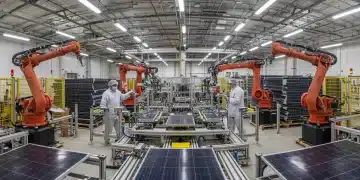
Further advancements in manufacturing, such as 3D printing for certain components or the use of artificial intelligence for predictive maintenance in factories, will continue to drive down production costs and improve quality. The integration of robotics and automation will also enhance efficiency and consistency, further optimizing the solar panel supply chain.
Localized and Regional Supply Chains
While global trade remains crucial, there will be an increased emphasis on developing more localized or regional supply chains to reduce shipping distances, mitigate geopolitical risks, and support local economies. This doesn’t mean complete decoupling but rather a strategic balance between global efficiency and regional resilience, ensuring that critical components can be sourced closer to where they are needed.
Digitalization and Transparency
The ongoing digitalization of the solar panel supply chain will lead to even greater transparency and traceability. Blockchain technology, for example, can be used to verify the origin of materials, ensure ethical sourcing, and track panels from manufacturing to installation. This enhanced transparency will build consumer trust and help meet increasingly stringent regulatory requirements regarding sustainability and ethical practices.
Integration with Energy Storage Solutions
The solar panel supply chain cannot be viewed in isolation; its future is intrinsically linked to the supply chain for energy storage solutions, particularly batteries. As solar penetration increases, the demand for reliable energy storage will grow exponentially. Optimizing the combined supply chains for solar and storage will be crucial for creating truly resilient and sustainable energy systems, ensuring that clean energy is available even when the sun isn’t shining.
Challenges Remain, but Optimism Prevails
Despite the overwhelmingly positive outlook, it’s important to acknowledge that challenges will always be a part of such a dynamic industry. Geopolitical events, unforeseen natural disasters, and new technological shifts could introduce new complexities. However, the industry’s response to recent disruptions demonstrates a strong capacity for adaptation and innovation. The concerted efforts to diversify manufacturing, improve logistics, and enhance resilience indicate a mature and forward-thinking sector.
The forecast of easing solar panel supply chain disruptions and a subsequent 10% cost reduction by Q3 2026 is a testament to this resilience. It signals a new era for solar energy, one characterized by greater affordability, accelerated deployment, and a more secure path towards a global clean energy transition. This development is not just good news for the solar industry; it’s great news for the planet, offering a tangible step forward in the fight against climate change and the pursuit of a sustainable future for all.
Conclusion: A Brighter Future for Solar
The journey of the solar panel supply chain has been a rollercoaster of innovation, growth, and disruption. From its humble beginnings to its current status as a global powerhouse, solar energy has continuously pushed the boundaries of what’s possible in renewable power generation. The recent challenges, while significant, have served as valuable lessons, prompting the industry to adapt, innovate, and build a more robust and resilient framework.
The upcoming stabilization and projected 10% cost reduction by Q3 2026 represent a critical inflection point. This isn’t merely about cheaper panels; it’s about unlocking new opportunities for energy independence, fostering economic growth, and accelerating the global transition away from fossil fuels. It signifies that solar power is not just a viable alternative but an increasingly economically attractive and accessible solution for meeting the world’s growing energy demands.
As we approach 2026, the anticipation within the renewable energy sector is palpable. The easing of solar panel supply chain disruptions will empower more individuals, businesses, and nations to embrace solar technology, democratizing access to clean energy and paving the way for a more sustainable and prosperous future. The sun, it seems, is indeed rising on a new era for solar energy.