
Unlock Major Savings: The Federal Solar Tax Credit for 2026 Explained
Are you a homeowner considering making the switch to solar energy? The year 2026 presents an incredible opportunity to significantly reduce your installation costs thanks to the ongoing federal solar tax credit. This isn’t just about going green; it’s about smart financial planning. The solar tax credit 2026 allows eligible homeowners to claim a substantial 30% of the cost of their solar panel system as a tax credit. This comprehensive guide will delve into everything you need to know about this valuable incentive, ensuring you can maximize your savings and contribute to a sustainable future.
What is the Federal Solar Tax Credit?
The federal solar tax credit, officially known as the Investment Tax Credit (ITC), is one of the most significant incentives for homeowners and businesses to install solar energy systems. Established in 2005, it has been a cornerstone of the renewable energy movement in the United States, driving down the upfront cost of solar and encouraging widespread adoption. The credit is not a deduction; it’s a dollar-for-dollar reduction in the income taxes you owe, making it incredibly powerful.
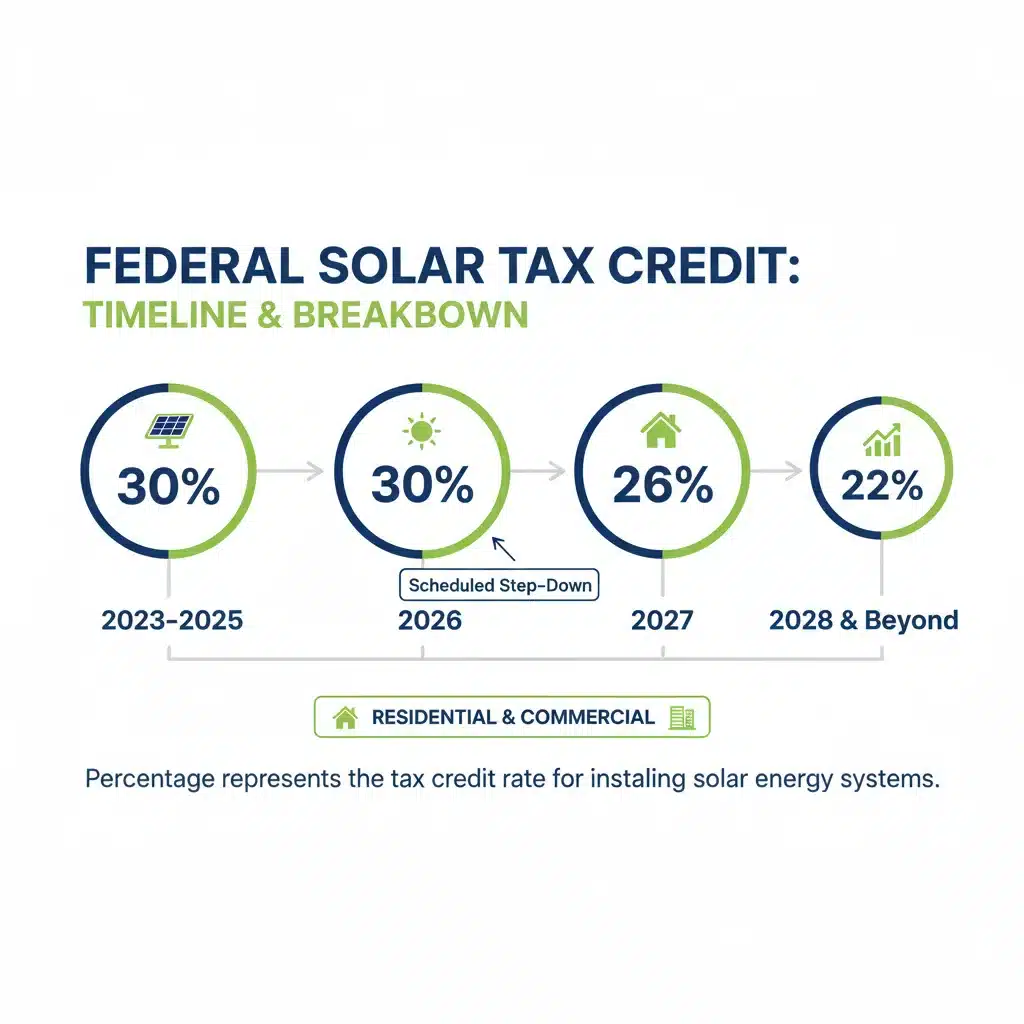
For the solar tax credit 2026, the rate remains a generous 30% of the total cost of your solar energy system. This includes not only the solar panels themselves but also associated equipment like inverters, wiring, mounting hardware, and even the labor costs for installation. This broad coverage means that a significant portion of your investment is recoverable, making solar power more accessible and affordable than ever before.
Understanding the nuances of this credit is crucial. It’s not a rebate check you receive immediately; rather, it’s a credit applied when you file your federal income taxes. If the credit exceeds your tax liability in a given year, you can typically carry forward the unused portion to future tax years, ensuring you don’t lose out on any of the savings. This carry-forward provision is a key benefit, especially for large installations.
The Evolution of the Solar Tax Credit: Why 2026 is Key
The ITC has seen several extensions and adjustments since its inception. Initially set at 30%, it was scheduled to gradually step down. However, with the passage of the Inflation Reduction Act (IRA) in August 2022, the 30% credit was reinstated and extended for a decade. This move provided much-needed long-term certainty for the solar industry and for homeowners planning their renewable energy investments.
For the solar tax credit 2026, the 30% rate is firmly in place. This high rate is applicable for systems placed in service from 2022 through 2032. After 2032, the credit is scheduled to step down to 26% in 2033 and 22% in 2034, before expiring for residential systems in 2035 (though a commercial credit will remain). This makes the years leading up to 2033 particularly attractive for homeowners looking to maximize their savings.
The stability provided by the IRA’s extension of the 30% credit means homeowners have ample time to plan their solar projects without the rush of expiring incentives. However, acting sooner rather than later can still be beneficial, as energy costs continue to rise, and the sooner you install solar, the sooner you can start enjoying reduced electricity bills.
Who is Eligible for the Solar Tax Credit 2026?
Eligibility for the solar tax credit 2026 is relatively straightforward, primarily focusing on ownership and system type. Here are the key criteria:
- Homeowners: The credit is primarily for homeowners who purchase and install new solar energy systems on their primary or secondary residences in the U.S.
- Owned System: You must own your solar energy system, not lease it. If you lease your system or have a power purchase agreement (PPA), the third-party owner typically claims the credit.
- New Installation: The system must be new. The credit applies to the original installation of solar panels.
- System Location: The solar panels must be installed on a home located in the United States.
- System Type: The credit applies to solar photovoltaic (PV) systems that generate electricity. It also covers solar water heaters (if certified by the Solar Rating Certification Corporation or a comparable entity), small wind energy property, geothermal heat pumps, and fuel cell property.
- No Income Limit: There is no income cap for claiming the federal solar tax credit, making it accessible to a wide range of taxpayers.
It’s important to note that the credit is non-refundable, meaning it can reduce your tax liability to zero, but you won’t receive a refund for any excess credit beyond your tax owed. However, as mentioned, you can carry forward any unused credit to subsequent tax years. Always consult with a tax professional to understand how the credit specifically applies to your individual tax situation.
What Costs Are Covered by the 30% Solar Tax Credit 2026?
The beauty of the solar tax credit 2026 lies in its broad coverage of eligible expenses. When calculating your 30% credit, you can include:
- Solar PV Panels: The cost of the photovoltaic cells that convert sunlight into electricity.
- Equipment: Inverters, wiring, mounting equipment, and other necessary components.
- Labor Costs: This includes professional installation fees, permitting fees, inspection costs, and developer fees.
- Storage Batteries: If your battery storage system has a capacity of at least 3 kilowatt-hours (kWh) and is installed in connection with your solar array, its cost is also eligible for the 30% credit, even if installed in a subsequent tax year. This is a significant addition from the Inflation Reduction Act.
- Sales Tax: Any sales tax paid on eligible equipment is also included in the total cost.
This comprehensive inclusion of costs ensures that homeowners can truly realize substantial savings on their entire solar project. It encourages not just the installation of panels but also the integration of advanced technologies like battery storage, which enhances energy independence and grid resilience.
How to Claim Your Solar Tax Credit in 2026
Claiming the solar tax credit 2026 is a straightforward process when you file your federal income taxes. Here’s a step-by-step guide:
- Purchase and Install Your System: Ensure your solar energy system is purchased and installed (placed in service) within the tax year you plan to claim the credit. For the 2026 tax credit, this means your system must be operational by December 31, 2026.
- Keep Detailed Records: Maintain all documentation related to your solar installation. This includes invoices, receipts for equipment and labor, contracts with your solar installer, and any permits. These documents will be crucial if the IRS ever requests verification.
- Fill Out IRS Form 5695: When you file your federal income tax return, you will need to complete IRS Form 5695, titled ‘Residential Energy Credits.’ This form is used to calculate and claim various residential clean energy credits, including the solar tax credit.
- Calculate Your Credit: On Form 5695, you will enter the total eligible costs of your solar energy system. The form will guide you through calculating 30% of that amount.
- Apply the Credit to Your Tax Liability: The calculated credit from Form 5695 is then transferred to your Form 1040 (U.S. Individual Income Tax Return) to reduce your total tax liability.
- Carry Forward Unused Credit: If your credit amount is greater than the tax you owe, the remaining credit can be carried forward to the following tax year(s) until it is fully used or the credit expires.
While the process is generally simple, it’s always advisable to consult with a qualified tax professional or use reputable tax software to ensure accuracy and to address any specific questions related to your personal financial situation. They can help you navigate any complexities and ensure you claim the maximum allowable credit.
Beyond the Federal Credit: State and Local Solar Incentives
While the solar tax credit 2026 is a powerful federal incentive, it’s important to remember that many states, counties, and even local utilities offer additional programs to encourage solar adoption. These can significantly enhance your overall savings and make solar even more attractive. Common state and local incentives include:
- State Tax Credits: Some states offer their own income tax credits for solar installations, which can be stacked on top of the federal credit.
- Sales Tax Exemptions: Many states exempt solar equipment from sales tax, reducing the upfront cost.
- Property Tax Exemptions: Installing solar panels typically increases your home’s value, but many states offer property tax exemptions or abatements for the added value from solar, meaning your property taxes won’t increase due to your solar investment.
- Rebates: State or utility programs may offer direct cash rebates for installing solar, further reducing your out-of-pocket expenses.
- Net Metering: This policy allows you to send excess electricity generated by your solar panels back to the grid in exchange for credits on your utility bill, effectively reducing or even eliminating your electricity costs.
- Solar Renewable Energy Certificates (SRECs): In some markets, you can earn SRECs for the clean electricity your system generates. These certificates can then be sold to utilities to help them meet renewable energy mandates, providing an additional revenue stream.
Researching these local incentives is a critical step in your solar journey. Websites like DSIRE (Database of State Incentives for Renewables & Efficiency) are excellent resources for finding programs available in your specific area. Combining federal, state, and local incentives can dramatically improve the return on investment for your solar system.
The Long-Term Benefits of Investing in Solar in 2026
Beyond the immediate financial relief provided by the solar tax credit 2026, investing in solar energy offers a multitude of long-term benefits that extend far beyond your tax return:
Reduced or Eliminated Electricity Bills
This is often the primary motivator for homeowners. By generating your own electricity, you become less reliant on your utility company and their fluctuating rates. Over the lifespan of your system (typically 25-30 years), this can lead to tens of thousands of dollars in savings, especially as electricity prices continue their upward trend.
Increased Home Value
Studies consistently show that homes with solar panel systems sell for a premium and often sell faster than comparable homes without solar. Buyers are increasingly seeking energy-efficient homes, and a pre-installed solar system is a major selling point. The value added to your home often exceeds the initial cost of the system, even before accounting for the tax credit.
Environmental Impact
By choosing solar, you are directly contributing to a cleaner environment. Solar energy produces no greenhouse gas emissions during operation, reducing your carbon footprint and helping to combat climate change. This benefit provides a sense of personal satisfaction and aligns with growing environmental consciousness.
Energy Independence and Security
Having your own power source provides a degree of energy independence, protecting you from grid outages and price volatility. With battery storage, you can even maintain power during blackouts, offering peace of mind and resilience.
Low Maintenance
Modern solar panel systems are incredibly durable and require very little maintenance. Most systems come with long warranties, and routine cleaning is often the only upkeep required, making them a hassle-free investment.

Choosing a Solar Installer for Your 2026 Project
Selecting the right solar installer is paramount to a successful project and ensuring you can fully leverage the solar tax credit 2026. Here are key factors to consider:
- Experience and Reputation: Look for installers with a proven track record, positive customer reviews, and relevant certifications. Check their licensing and insurance.
- System Design and Customization: A good installer will conduct a thorough site assessment and design a system tailored to your home’s energy needs, roof characteristics, and local sunlight conditions.
- Equipment Quality: Inquire about the brands and types of panels, inverters, and batteries they use. Reputable installers will offer high-quality, warrantied equipment.
- Warranties: Understand the warranties offered on both the equipment (product warranty) and the installation (workmanship warranty). Comprehensive warranties provide peace of mind.
- Pricing and Financing Options: Get multiple quotes to compare costs. Discuss financing options, including loans, and how they interact with the tax credit. Ensure all costs are transparently laid out.
- Permitting and Interconnection: A reliable installer will handle all necessary permits and the interconnection process with your utility company, which can be complex.
- Understanding of Incentives: Your installer should be knowledgeable about the federal solar tax credit 2026 and any state or local incentives, and be able to explain how they apply to your project.
Don’t hesitate to ask questions, request references, and read contracts carefully before signing. A well-chosen installer will guide you through the entire process, from initial consultation to system activation, ensuring a smooth and beneficial transition to solar energy.
Common Misconceptions About the Solar Tax Credit
Despite its popularity, some misunderstandings persist about the federal solar tax credit. Let’s clarify a few common ones:
- It’s a Direct Refund: As established, it’s a tax credit, not a refund. It reduces your tax liability. If you have no tax liability, you won’t get a check, but you can carry the credit forward.
- It Expires Soon: While it has had expiration dates in the past, the current 30% rate for the solar tax credit 2026 is secure through 2032, providing a long window for homeowners.
- It’s Only for New Homes: The credit applies to existing homes and new constructions, as long as the system is new and placed in service.
- It Covers Leased Systems: As noted, you must own the system to claim the credit. Leased systems or PPAs typically mean the leasing company benefits from the ITC.
- It’s Too Complicated to Claim: While taxes can be complex, Form 5695 simplifies the process for residential energy credits. With good record-keeping or professional help, it’s quite manageable.
Dispelling these myths helps ensure homeowners approach solar investment with accurate information, allowing them to make informed decisions and fully capitalize on the available incentives.
The Future of Solar Energy and Incentives Post-2026
While our focus is on the incredible opportunity presented by the solar tax credit 2026, it’s also worth briefly considering the landscape beyond that year. The 30% credit is secure through 2032, after which it will gradually step down. This long-term commitment from the federal government signals strong support for renewable energy and suggests that solar will continue to be a viable and encouraged option for years to come.
Technological advancements are also constantly making solar panels more efficient and affordable. Innovations in battery storage, smart home energy management systems, and grid integration are enhancing the value proposition of solar energy. As the cost of solar continues to decline and efficiency improves, the economic benefits will only grow, even as the federal tax credit eventually phases out.
Furthermore, as more states and localities recognize the economic and environmental benefits of solar, we can anticipate the introduction of new or expanded regional incentives. Staying informed about these evolving programs will be key for future homeowners considering solar investments.
Conclusion: Seize the Solar Opportunity in 2026
The solar tax credit 2026 offers an unprecedented opportunity for homeowners to invest in renewable energy with significant financial backing from the federal government. With a robust 30% tax credit covering a wide range of costs, coupled with potential state and local incentives, there has never been a better time to go solar.
By installing a solar energy system, you’re not just reducing your carbon footprint; you’re also locking in lower electricity bills, increasing your home’s value, and gaining greater energy independence. The process of claiming the credit is straightforward, and with careful planning and the right installer, you can ensure a smooth transition to clean, sustainable power.
Don’t miss out on this prime window to make a smart, sustainable investment in your home and your future. Start exploring your solar options today and prepare to claim your substantial savings with the federal solar tax credit in 2026.