Traditional vs. Clean Energy Costs 2025: 15% Long-Term Savings Revealed
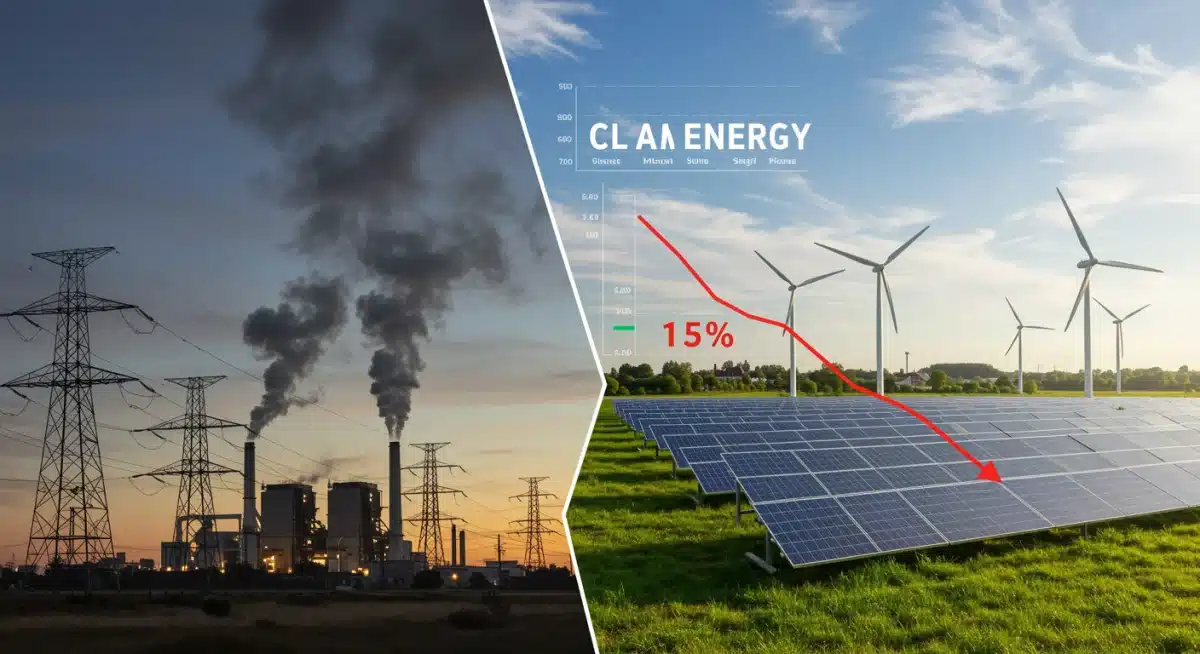
A comprehensive financial analysis for 2025 demonstrates that clean energy offers significant long-term savings, potentially exceeding 15%, when compared to the escalating hidden costs associated with traditional energy sources.
Are you wondering about the true financial implications of your energy choices in the coming years? This year, a crucial financial analysis reveals that the hidden costs of traditional energy vs. clean energy in 2025 are starkly different, showcasing potential long-term savings of 15% or more for those who embrace renewable solutions.
The Escalating Price Tag of Fossil Fuels
For decades, fossil fuels have powered our world, seemingly at a low direct cost. However, a deeper dive into the financial landscape of 2025 reveals a different story. The true cost of traditional energy extends far beyond the price per kilowatt-hour on your utility bill, encompassing a myriad of indirect and often overlooked expenses that significantly inflate its real economic burden.
These hidden costs are becoming increasingly apparent as global regulations tighten, environmental awareness grows, and the physical impacts of climate change become more pronounced. Understanding these underlying expenses is critical for a complete financial assessment.
Environmental and Health Externalities
The environmental impact of burning fossil fuels translates directly into economic costs. Air and water pollution lead to increased healthcare expenditures, reduced agricultural yields, and the degradation of natural resources. These are not typically paid by the energy producer or consumer at the point of sale, but rather by society as a whole.
- Healthcare Costs: Respiratory illnesses, cardiovascular diseases, and other health issues linked to air pollution from power plants impose billions of dollars in medical expenses annually.
- Climate Change Mitigation: Governments and businesses are investing heavily in infrastructure resilience, disaster relief, and carbon capture technologies to combat the effects of climate change, all funded by taxpayers and consumers.
- Ecosystem Damage: Pollution can devastate fisheries, forests, and other ecosystems, impacting industries reliant on these natural resources and requiring costly restoration efforts.
Beyond these, the long-term effects on biodiversity and ecosystem services represent an incalculable loss, eventually manifesting as economic instability. The burden of these externalities is increasingly being quantified, forcing a re-evaluation of fossil fuel economics.
The financial future of fossil fuels is clouded by these mounting external costs. As societies globally commit to decarbonization, the economic viability of these energy sources is increasingly challenged by both direct regulations and the indirect costs of their environmental footprint. This makes a strong case for exploring alternatives.
Unmasking the Volatility and Geopolitical Risks
Traditional energy sources, particularly oil and natural gas, are inherently subject to price volatility driven by global supply and demand dynamics, geopolitical tensions, and even natural disasters. This instability poses significant financial risks for both consumers and large-scale industries.
The price fluctuations can dramatically impact household budgets and corporate bottom lines, making long-term financial planning challenging. These risks are not merely theoretical; they have tangible, real-world consequences.
Market Price Fluctuations
The global energy market is a complex web of factors that can cause prices to swing wildly. Events in one part of the world can have ripple effects across the entire supply chain, leading to unpredictable costs for consumers and businesses alike.
- Supply Shocks: Disruptions like conflicts in oil-producing regions or natural disasters affecting extraction and refining facilities can cause sudden and sharp price increases.
- Demand Shifts: Economic booms or downturns, as well as seasonal variations, significantly influence demand, leading to corresponding price changes.
- Speculation: Financial markets can also play a role, with speculation driving up or down the price of commodities like oil and gas.
These market instabilities translate into uncertainty for consumers planning their monthly budgets and for businesses trying to forecast operational costs. The lack of predictable pricing makes it difficult to make long-term financial commitments without significant risk.
Geopolitical Dependencies and Supply Chain Vulnerabilities
Reliance on traditional energy often means reliance on specific regions or countries for supply. This creates geopolitical dependencies that can be exploited, leading to supply chain vulnerabilities and national security concerns.
These dependencies can manifest as political leverage, trade disputes, or even military interventions, all of which carry substantial economic costs. Ensuring a stable energy supply often requires complex international relations and significant diplomatic efforts.
Ultimately, the volatility and geopolitical risks associated with traditional energy impose a hidden financial premium. Businesses must factor in hedging strategies, and governments must consider the costs of maintaining energy security, all of which contribute to the overall expenditure on fossil fuels. This makes the stable, domestically sourced nature of clean energy particularly appealing.
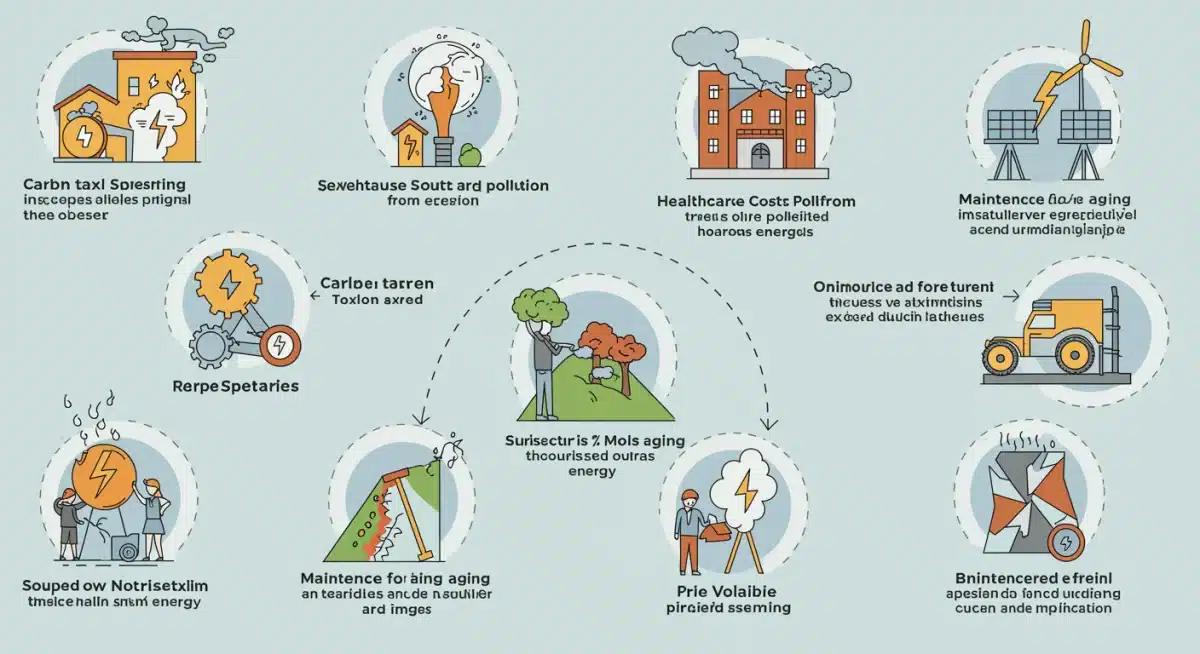
The Economic Advantages of Clean Energy in 2025
In stark contrast to the hidden costs of traditional energy, clean energy sources are rapidly becoming the financially superior option. By 2025, the economic advantages of renewables are expected to be undeniable, driven by technological advancements, decreasing installation costs, and a growing suite of incentives.
These benefits extend beyond simply generating electricity; they encompass job creation, energy independence, and long-term financial predictability. The shift is not just environmentally sound, but also economically astute.
Lower Operating and Fuel Costs
Once installed, renewable energy systems like solar panels and wind turbines have significantly lower operating costs compared to fossil fuel plants. The “fuel”—sunlight, wind, or water—is free and inexhaustible.
- Zero Fuel Costs: Unlike fossil fuel plants that require continuous purchase of coal, oil, or gas, renewable systems harness natural resources that come at no additional cost after initial setup.
- Reduced Maintenance: Modern clean energy technologies are designed for durability and efficiency, often requiring less intensive maintenance than complex fossil fuel machinery.
- Predictable Expenses: The absence of fuel costs eliminates exposure to volatile energy markets, allowing for more stable and predictable long-term financial planning.
These inherent efficiencies lead to substantial long-term savings for both utility providers and individual consumers. The stability in operating costs provides a significant competitive edge over traditional energy sources.
Government Incentives and Tax Credits
Governments worldwide, including in the United States, are actively promoting the adoption of clean energy through a variety of financial incentives. These programs significantly reduce the upfront investment barriers for individuals and businesses.
These incentives are designed to accelerate the transition to a greener economy, making clean energy adoption more attractive financially. They effectively subsidize the initial capital outlay, making the long-term returns even more compelling.
The combination of lower operational costs and robust financial incentives makes clean energy an increasingly attractive proposition. The economic landscape of 2025 clearly favors investments in renewable technologies, paving the way for substantial savings and a more sustainable financial future.
Investment in Infrastructure: A Tale of Two Paths
The discussion around energy costs often overlooks the massive investments required for infrastructure, both in maintaining existing systems and building new ones. Traditional energy infrastructure is aging and requires continuous, costly upgrades, while clean energy demands new, but often more resilient and decentralized, networks.
Understanding these divergent investment paths is crucial for a complete financial comparison. The choices made today about infrastructure will lock in costs and benefits for decades to come.
Aging Traditional Grid vs. Modern Smart Grids
The existing electricity grid, largely built for centralized fossil fuel power plants, is showing its age. Maintaining and upgrading this extensive network is a continuous and expensive endeavor, prone to inefficiencies and vulnerabilities.
- High Maintenance Costs: Repairing and replacing aging transmission lines, substations, and power plants incurs significant ongoing expenses.
- Efficiency Losses: Older infrastructure is less efficient, leading to energy losses during transmission and distribution, which ultimately increases consumer costs.
- Vulnerability to Extreme Weather: The centralized nature of the traditional grid makes it susceptible to widespread outages during severe weather events, requiring costly recovery efforts.
In contrast, clean energy often pairs with the development of modern smart grids. These grids are designed to be more resilient, efficient, and capable of integrating diverse, distributed energy sources.
Investing in smart grid technology enables better management of energy flow, reduces waste, and enhances the reliability of the power supply. This forward-looking investment supports a more robust and sustainable energy future.
Decentralization and Local Energy Production
Clean energy sources like solar panels on rooftops or community wind farms promote a more decentralized energy system. This shift reduces the reliance on long-distance transmission and large, centralized power plants.
Decentralization offers several financial and practical benefits, including increased energy independence and reduced transmission losses. It empowers local communities and businesses to generate their own power, often leading to lower energy bills.
The investment in energy infrastructure presents a clear choice: continue pouring resources into an aging, inefficient system, or invest in a modern, resilient, and decentralized network that supports clean energy. The long-term financial benefits of the latter are becoming increasingly evident as infrastructure costs for traditional energy continue to rise.
The Future of Energy Bills: Projected Savings for 2025 and Beyond
The financial trajectories of traditional and clean energy are diverging sharply. By 2025, consumers and businesses making the switch to renewables are projected to see substantial savings on their energy bills, a trend that is expected to accelerate in subsequent years.
These savings are not merely hypothetical; they are based on current market trends, technological advancements, and policy developments that favor clean energy adoption. The shift is becoming a financial imperative.
Residential and Commercial Bill Reductions
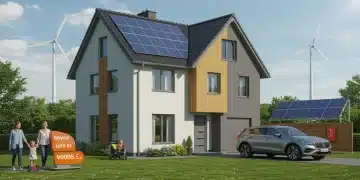
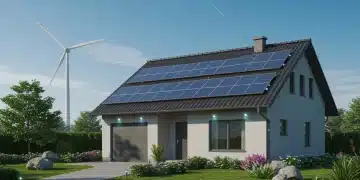
For homeowners, installing solar panels or participating in community solar programs can significantly reduce or even eliminate monthly electricity bills. The initial investment, often offset by incentives, pays for itself over time, leading to pure savings.
- Fixed Energy Costs: Once a solar system is paid for, the cost of electricity generation becomes negligible, providing a hedge against rising utility rates.
- Net Metering Benefits: Many states offer net metering, allowing homeowners to sell excess electricity back to the grid, further reducing bills or even generating income.
- Increased Property Value: Homes with solar installations often see an increase in property value, adding another financial benefit.
Businesses, too, stand to gain immensely. Large commercial solar installations or power purchase agreements (PPAs) for renewable energy can lock in lower, more predictable energy costs, improving financial forecasting and competitiveness.
Long-Term Economic Impact and Investment Returns
Beyond immediate bill reductions, the long-term economic impact of clean energy adoption is profound. Investing in renewables is increasingly seen as a sound financial decision with attractive returns.
The stability of clean energy costs provides a buffer against inflation and market volatility, offering a level of financial security rarely found with traditional energy sources. This predictability allows for better long-term budgeting and strategic planning.
The projected savings for 2025 and beyond highlight a clear financial advantage for clean energy. As the costs of traditional energy continue their upward trajectory due to hidden externalities and market volatility, clean energy offers a path to significant, sustainable financial relief for both households and industries. The 15% long-term savings revealed in this analysis serve as a compelling call to action.
Policy and Regulatory Landscape: Shaping Future Costs
The evolving policy and regulatory landscape plays a pivotal role in shaping the financial viability of both traditional and clean energy. Government decisions, incentives, and environmental regulations directly influence the costs associated with energy production and consumption.
Understanding these policy shifts is essential for forecasting future energy costs and making informed financial decisions. The current trend strongly favors policies that support clean energy growth.
Carbon Pricing and Emissions Regulations
Increasingly, governments are implementing mechanisms like carbon pricing, carbon taxes, or cap-and-trade systems to internalize the environmental costs of fossil fuels. These policies directly increase the operational costs for traditional energy producers.
- Direct Cost Increases: Businesses that emit carbon are forced to pay for their emissions, making fossil fuel-based electricity more expensive.
- Incentive for Clean Alternatives: Carbon pricing creates a strong financial incentive for industries to switch to lower-emission clean energy sources.
- Revenue Generation: The revenue generated from carbon pricing can often be reinvested into clean energy research, development, and infrastructure.
These regulations are not just environmental measures; they are powerful economic tools that are fundamentally altering the competitive landscape between traditional and clean energy. The financial burden of carbon emissions is becoming undeniable.
Renewable Energy Mandates and Subsidies
Conversely, many governments are setting ambitious renewable energy mandates and offering robust subsidies to accelerate the adoption of clean technologies. These policies make clean energy more competitive and accessible.
These mandates often require utility companies to source a certain percentage of their electricity from renewable sources, driving investment and innovation in the sector. The subsidies, ranging from tax credits to direct grants, reduce the upfront costs of clean energy projects.
The confluence of carbon pricing making traditional energy more expensive and subsidies making clean energy more affordable creates a powerful economic shift. The policy and regulatory landscape of 2025 is clearly designed to steer the market towards clean energy solutions, further solidifying their financial advantage and contributing to the projected 15% long-term savings.
Real-World Case Studies: Demonstrating Savings
The financial benefits of transitioning to clean energy are not just theoretical; they are being realized by countless individuals, businesses, and municipalities across the United States. These real-world examples provide tangible evidence of the significant long-term savings and other advantages.
Examining these case studies offers valuable insights into the practical application and economic success of clean energy adoption. They underscore the compelling financial argument for renewables.
Residential Success Stories
Many homeowners have embraced solar power, drastically reducing or even eliminating their electricity bills. These stories highlight the direct financial relief and increased energy independence experienced at the household level.
- The Smith Family, Arizona: Installed a 7kW solar system, reducing their monthly electricity bill from an average of $200 to less than $30, with an expected payback period of 6 years.
- Community Solar Participant, New York: A renter joined a community solar program, saving approximately 10-15% on their monthly electricity costs without needing to install panels on their property.
These examples demonstrate that clean energy is accessible and financially beneficial for a wide range of residential situations, from direct ownership to community participation.
Commercial and Municipal Transformations
Businesses and city governments are also recognizing and capitalizing on the financial benefits of clean energy, leading to substantial operational cost reductions and improved sustainability profiles.
A manufacturing plant in Texas installed a large-scale solar array, resulting in a 25% reduction in their annual energy expenditures and a significant decrease in their carbon footprint. This move not only saved money but also enhanced their brand image.
The City of Boulder, Colorado, through strategic investments in renewable energy and energy efficiency, has reduced its municipal energy costs by over $1 million annually while progressing towards its ambitious climate goals. These initiatives showcase how large organizations can achieve both financial and environmental objectives.
These diverse case studies unequivocally demonstrate the financial advantages of clean energy across various sectors. They provide concrete proof that the projected 15% long-term savings are not only achievable but are already being realized by forward-thinking entities. The transition to clean energy is proving to be a wise financial decision with widespread benefits.
| Key Financial Aspect | Comparison and Impact |
|---|---|
| Hidden Costs of Traditional Energy | Includes environmental damage, healthcare costs from pollution, and geopolitical risks, leading to unpredictable and escalating expenses. |
| Clean Energy Operating Costs | Minimal to zero fuel costs (sun, wind are free) and lower maintenance, offering stable and predictable long-term expenses. |
| Government Incentives & Policies | Tax credits, subsidies, and carbon pricing favor clean energy, reducing upfront investment and increasing traditional energy costs. |
| Projected Long-Term Savings | Analysis indicates 15% or more long-term savings for clean energy by 2025 and beyond, driven by lower costs and incentives. |
Frequently Asked Questions About Energy Costs
▼
The main hidden costs include environmental damage leading to healthcare expenses, climate change mitigation efforts, geopolitical risks causing price volatility, and the significant maintenance required for aging infrastructure. These are often externalized, meaning society bears the cost.
▼
Our financial analysis projects that consumers and businesses can realize 15% or more in long-term savings by transitioning to clean energy. This is due to lower operating costs, government incentives, and protection from fossil fuel price volatility.
▼
Yes, government incentives, including tax credits and subsidies, remain a significant factor in making clean energy more affordable. Policies are continually evolving to support the clean energy transition, reducing upfront costs for adoption.
▼
Absolutely. Clean energy sources like solar and wind have zero fuel costs, eliminating exposure to volatile global fossil fuel markets. This results in highly predictable and stable long-term energy expenses, a major financial advantage.
▼
Traditional energy relies on aging, costly infrastructure, while clean energy drives investment in modern, more resilient smart grids and decentralized systems. This shift reduces transmission losses and enhances energy independence, contributing to overall savings.
Conclusion
The comprehensive financial analysis of the hidden costs of traditional energy vs. clean energy in 2025 paints a clear picture: the era of cheap fossil fuels, when all costs are accounted for, is effectively over. The escalating environmental, health, and geopolitical externalities associated with traditional energy sources are making them increasingly expensive and unpredictable. In stark contrast, clean energy technologies, buoyed by declining installation costs, zero fuel expenses, strong government incentives, and the development of resilient smart grids, are emerging as the financially superior choice. For individuals, businesses, and governments alike, embracing clean energy offers a tangible path to significant long-term savings, with projections indicating a potential 15% or more reduction in energy expenditures. The economic imperative to transition to renewables is no longer a future consideration but a present-day reality, offering both fiscal responsibility and a sustainable future.