Mastering 2026 Clean Energy Certifications: Your Guide to New Standards

Mastering 2026 clean energy certifications is vital for professionals to navigate the evolving industry landscape and meet the demands of new standards and required training modules.
The clean energy landscape is transforming at an unprecedented pace, demanding that professionals stay ahead of the curve.
Mastering 2026 clean energy certifications is no longer just an advantage but a necessity for those looking to thrive in this dynamic sector.
This guide offers a clear pathway through the updated standards and essential training modules.
Understanding the Evolving Landscape of Clean Energy in 2026
The year 2026 marks a pivotal moment in the clean energy sector, characterized by significant technological advancements, stricter regulatory frameworks, and an amplified global commitment to decarbonization. As the United States pushes towards ambitious climate goals, the demand for skilled professionals equipped with the latest knowledge and certifications is surging. This evolution necessitates a deep dive into what these changes mean for current and aspiring clean energy workers.
New policies and incentives are shaping the industry, favoring sustainable practices and innovative solutions. This shift directly impacts the types of expertise required, moving beyond traditional energy roles to encompass specialized areas like smart grid management, advanced battery storage, and green hydrogen production. Understanding these foundational changes is the first step toward identifying the most relevant certifications for your career trajectory.
Key Drivers of Change in the Clean Energy Sector
- Technological Innovation: Rapid developments in solar, wind, geothermal, and energy storage technologies.
- Governmental Policies and Incentives: Federal and state-level initiatives promoting renewable energy adoption and efficiency.
- Market Demand: Increasing consumer and industrial demand for sustainable energy solutions.
- Global Climate Goals: International agreements and national targets driving the transition from fossil fuels.
These drivers collectively create a complex yet exciting environment where continuous learning and adaptation are paramount. Professionals must not only grasp the technical aspects but also understand the economic and policy implications of new energy projects.
The emphasis on grid modernization and resilience is also a significant trend. With more distributed energy resources coming online, the need for professionals who can manage complex energy systems, optimize performance, and ensure grid stability is critical. This holistic understanding forms the bedrock of competence in the 2026 clean energy arena.
The Importance of 2026 Clean Energy Certifications for Career Growth
In a competitive job market, certifications serve as powerful indicators of specialized knowledge and practical skills. For the clean energy sector in 2026, possessing the right certifications can significantly enhance career prospects, opening doors to advanced roles and higher earning potential. Employers are actively seeking candidates who can demonstrate proficiency in the latest industry standards and best practices.
These certifications validate an individual’s expertise, assuring employers that they are up-to-date with current technologies, safety protocols, and regulatory compliance. This is particularly crucial in a field where technology evolves quickly, and adherence to new standards is non-negotiable. Investing in certification is an investment in your professional future.
Benefits of Obtaining Relevant Certifications
- Enhanced Employability: Stand out from other candidates in a crowded job market.
- Increased Earning Potential: Certified professionals often command higher salaries.
- Validation of Expertise: Official recognition of specialized skills and knowledge.
- Networking Opportunities: Connect with industry leaders and peers through certification programs.
Moreover, certifications often provide access to exclusive resources, professional networks, and continuous learning platforms, which are invaluable for staying informed about emerging trends. They demonstrate a proactive approach to professional development, a quality highly valued by leading clean energy organizations.
The credibility that comes with certification can also lead to more significant responsibilities and leadership opportunities within organizations. It signals a commitment to excellence and a readiness to tackle complex challenges in an innovative and efficient manner. Therefore, understanding which certifications are most impactful is a critical step in strategic career planning.
Key New Industry Standards in 2026 and Their Impact
The clean energy sector in 2026 is defined by a set of updated and newly introduced industry standards designed to improve efficiency, safety, and environmental performance. These standards are not merely guidelines; they are often legally binding requirements that dictate how projects are designed, implemented, and operated. Staying abreast of these standards is fundamental for anyone working in or aspiring to join the field.
For instance, new standards for grid integration of renewable energy sources emphasize advanced control systems and cybersecurity measures to protect critical infrastructure. Similarly, updated safety protocols for battery energy storage systems reflect the increasing scale and complexity of these installations. Non-compliance can lead to severe penalties, project delays, and safety hazards, underscoring the importance of current knowledge.
Notable New Standards and Their Focus
- IEC 61850 for Smart Grids: Enhances interoperability and communication protocols for intelligent energy systems.
- UL 9540A for Battery Storage: Specifies testing methods for thermal runaway fire propagation in battery energy storage systems.
- ASHRAE 90.1: Updated guidelines for energy efficiency in buildings, impacting solar thermal and geothermal installations.
- ISO 50001: Revised framework for energy management systems, promoting continuous improvement in energy performance.
These standards influence everything from equipment manufacturing to project deployment and maintenance. Professionals involved in design, engineering, installation, or operations must have a thorough understanding of these regulations to ensure compliance and optimize project outcomes. Training modules for 2026 certifications are specifically tailored to incorporate these new benchmarks.
The impact extends beyond technical compliance; these standards also drive innovation by setting higher benchmarks for performance and sustainability. Companies and professionals who embrace and integrate these new standards are better positioned to lead the market and contribute to a more resilient and efficient energy future.
Essential Training Modules for 2026 Clean Energy Certifications
To successfully navigate the 2026 clean energy landscape, professionals must engage with specific training modules designed to impart the necessary skills and knowledge. These modules are meticulously crafted to cover the latest technologies, regulatory requirements, and best practices, ensuring that certified individuals are fully prepared for the demands of modern clean energy projects.
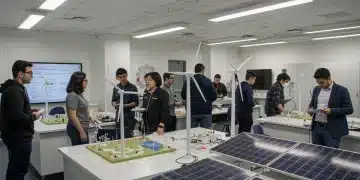
Training programs typically include a blend of theoretical instruction, practical hands-on exercises, and case studies, offering a comprehensive learning experience. From foundational principles of renewable energy to advanced topics in grid management and energy storage, the modules are structured to build expertise progressively. Choosing the right modules depends on your current role and desired career path.
Core Training Module Categories
- Renewable Energy Systems: Solar PV installation and design, wind turbine technology, geothermal energy applications.
- Energy Storage Solutions: Battery management systems, grid-scale storage integration, safety protocols.
- Smart Grid and Microgrid Technologies: Advanced metering infrastructure, demand-side management, grid cybersecurity.
- Energy Efficiency and Management: Building energy audits, industrial energy optimization, sustainability consulting.

Many of these training modules are offered by accredited institutions, industry associations, and specialized training providers. They often culminate in an examination that, upon successful completion, awards the participant a recognized certification. It’s crucial to select programs that are aligned with industry-recognized standards and future job market needs.
The emphasis in 2026 training is on practical application and problem-solving. Learners are expected to not only understand the concepts but also to apply them in real-world scenarios. This ensures that certified professionals are not just theoretically knowledgeable but also highly competent and ready to contribute effectively from day one.
Navigating the Certification Process: A Step-by-Step Guide
Embarking on the journey to obtain 2026 clean energy certifications can seem daunting, but a structured approach can make the process manageable and highly effective. This section outlines a step-by-step guide to help you identify, pursue, and successfully achieve your desired certifications, ensuring you maximize your investment of time and resources.
The first step involves a thorough assessment of your career goals and current skill set. Aligning your certification choices with market demand and personal aspirations is crucial. Researching various certification bodies and their offerings will help you understand prerequisites, course content, and examination formats. This initial planning phase is vital for making informed decisions.
Steps to Successful Certification
- Assess Your Goals: Determine which certifications align best with your career ambitions and the clean energy sector’s needs.
- Research Programs: Investigate accredited training providers, course curricula, and instructor qualifications.
- Meet Prerequisites: Ensure you meet any educational or experiential requirements before enrolling.
- Enroll and Study: Dedicate time to master the course material, utilizing all available resources.
- Pass the Examination: Prepare thoroughly for the certification exam and complete it successfully.
- Maintain Certification: Understand renewal requirements, which often include continuing education credits.
Once you have selected a program, active engagement with the training material is key. This includes participating in discussions, completing assignments, and seeking clarification on challenging topics. Many programs offer online resources, study groups, and practice exams to aid in preparation.
Finally, passing the certification exam is the culmination of your efforts. However, the journey doesn’t end there. Most certifications require ongoing professional development to maintain their validity. This ensures that certified individuals remain current with the latest advancements and continue to be valuable assets to the clean energy industry.
Future-Proofing Your Career with Advanced Clean Energy Skills
As the clean energy sector continues its rapid evolution, merely obtaining certifications is not enough; professionals must also actively engage in future-proofing their careers by continuously developing advanced skills. This proactive approach ensures long-term relevance and adaptability in a dynamic industry that constantly introduces new technologies and methodologies.
Beyond formal certifications, cultivating soft skills such as problem-solving, critical thinking, and interdisciplinary collaboration is increasingly important. The ability to work effectively in cross-functional teams, communicate complex technical information clearly, and adapt to unforeseen challenges are attributes highly valued by employers in 2026 and beyond.
Key Advanced Skills for Long-Term Success
- Data Analytics: Interpreting energy consumption patterns, optimizing system performance, and predicting market trends.
- Project Management: Overseeing complex clean energy installations from conception to completion.
- Policy and Regulatory Expertise: Understanding the legal and political landscape influencing clean energy development.
- Cybersecurity for Energy Systems: Protecting critical infrastructure from digital threats.
- Emerging Technologies: Staying informed about innovations like green hydrogen, carbon capture, and advanced nuclear.
Continuous learning extends beyond formal training. Subscribing to industry publications, attending webinars and conferences, and participating in professional associations are excellent ways to stay informed about the latest developments and network with peers and experts. Building a robust professional network can also open doors to new opportunities and collaborative projects.
The clean energy sector is ultimately about innovation and sustainability. Professionals who can integrate new knowledge, adapt to change, and contribute to groundbreaking solutions will be best positioned for sustained success. By embracing a mindset of lifelong learning and skill development, you can ensure your career remains vibrant and impactful in the years to come.
The Role of Digitalization in 2026 Clean Energy Certifications
Digitalization is profoundly transforming how clean energy certifications are delivered, accessed, and maintained in 2026. The integration of digital platforms, artificial intelligence, and virtual reality is making training more accessible, engaging, and effective. This shift not only streamlines the certification process but also enhances the learning experience for professionals worldwide.
Online learning platforms have become the norm, offering flexible schedules and diverse course materials that cater to different learning styles. This accessibility is particularly beneficial for professionals who need to balance work commitments with their educational pursuits. Digital badging and blockchain-based certifications are also gaining traction, providing secure and verifiable credentials that can be easily shared and validated by employers.
Digital Innovations in Certification
- Virtual Reality (VR) Simulations: Providing immersive, risk-free environments for hands-on training in complex energy systems.
- AI-Powered Learning Platforms: Personalized learning paths, adaptive assessments, and intelligent feedback for students.
- Blockchain for Credentials: Secure, immutable records of certifications, enhancing trust and preventing fraud.
- Remote Proctoring: Allowing for secure and convenient online examination delivery, broadening access to certifications.
The use of data analytics in learning management systems (LMS) allows training providers to track student progress, identify areas for improvement, and refine course content continually. This data-driven approach ensures that certification programs remain relevant and impactful, directly addressing the evolving needs of the clean energy industry.
Furthermore, digitalization facilitates ongoing professional development through micro-credentials and continuous learning modules. Professionals can acquire specialized skills in shorter, focused programs, allowing them to adapt quickly to new technologies and market demands without committing to extensive, long-term courses. This agile approach to skill acquisition is crucial for staying competitive in 2026 and beyond.
| Key Aspect | Brief Description |
|---|---|
| New Industry Standards | Updated regulations and technical benchmarks for efficiency, safety, and environmental performance in clean energy. |
| Essential Training Modules | Specialized courses covering solar, wind, energy storage, smart grids, and energy efficiency, vital for 2026 certifications. |
| Career Growth Importance | Certifications boost employability, earning potential, and validate expertise in a rapidly evolving clean energy job market. |
| Digitalization Impact | Online platforms, VR, and AI enhance accessibility and effectiveness of certification training and credential management. |
Frequently Asked Questions About 2026 Clean Energy Certifications
2026 clean energy certifications are crucial due to rapid technological advancements, evolving regulatory landscapes, and increased global commitment to decarbonization. They ensure professionals possess up-to-date skills, meet new industry standards, and remain competitive in a dynamic job market.
Key new standards for 2026 include updated protocols for smart grid integration (e.g., IEC 61850), enhanced safety for battery storage (e.g., UL 9540A), and revised energy efficiency guidelines for buildings (e.g., ASHRAE 90.1). Staying informed ensures compliance and optimized project outcomes.
Choosing the right certification involves assessing your career goals, current skill set, and market demand. Research accredited programs, consider your desired specialization (e.g., solar, wind, energy storage), and ensure the certification aligns with industry-recognized standards and future job prospects.
Yes, essential training modules for 2026 certifications often cover renewable energy systems, energy storage solutions, smart grid technologies, and energy efficiency. These modules are tailored to incorporate the latest standards and provide practical skills through theoretical and hands-on learning experiences.
Digitalization enhances clean energy certifications through online platforms, VR simulations, and AI-powered learning, making training more accessible and effective. Blockchain-based credentials and remote proctoring also improve security and convenience, future-proofing the certification process for professionals.
Conclusion
The journey of mastering 2026 clean energy certifications is an imperative for professionals committed to a sustainable future and robust career growth. As the industry continues to innovate, adapt to new standards, and embrace digital transformation, continuous learning and specialized validation become non-negotiable. By strategically pursuing relevant certifications and engaging with the latest training modules, individuals can not only enhance their employability and expertise but also play a critical role in shaping the clean energy landscape of tomorrow. The commitment to staying current is a testament to one’s dedication to excellence and the broader mission of global decarbonization.