Clean Energy Degrees 2026: Best ROI University Programs

The global shift towards sustainability is no longer a distant ideal but a present-day imperative. As concerns about climate change intensify and the demand for environmentally friendly solutions soars, the clean energy sector is experiencing unprecedented growth. This surge creates a vibrant job market, attracting bright minds eager to contribute to a greener future. For prospective students and career changers, investing in a clean energy degree in 2026 could be one of the most astute decisions for a high return on investment (ROI).
Choosing the right university program, however, can be a daunting task. With a myriad of options ranging from engineering to policy, understanding which clean energy degrees offer the best prospects requires careful consideration. This article delves into the landscape of clean energy education, comparing various programs for 2026 and providing insights into their potential ROI, helping you navigate your path to a successful and impactful career.
The Rise of Clean Energy Degrees: A Global Perspective
The clean energy revolution is reshaping industries worldwide. From solar power farms stretching across deserts to offshore wind turbines harnessing the might of the oceans, the infrastructure of the future is being built today. This transformation demands a highly skilled workforce, capable of innovation, design, implementation, and management of complex renewable energy systems. Consequently, universities globally have responded by developing specialized clean energy degrees and programs designed to meet this escalating demand.
These programs are not merely about technical skills; they encompass a holistic understanding of energy systems, environmental impact, economic viability, and policy frameworks. Students pursuing clean energy degrees are trained to be problem-solvers, innovators, and leaders in a rapidly evolving field. The interdisciplinary nature of these programs ensures graduates are well-equipped to tackle the multifaceted challenges of the energy transition.
The global investment in clean energy infrastructure is projected to continue its upward trajectory, fueled by government incentives, corporate sustainability goals, and increasing public awareness. This sustained growth guarantees a robust job market for graduates of relevant clean energy degrees. Therefore, understanding the nuances of these programs and their long-term career implications is crucial for maximizing your educational investment.
Defining ROI in Clean Energy Education
When we talk about ‘Return on Investment’ (ROI) in the context of education, we’re not just referring to financial gains. While salary potential is a significant factor, ROI for clean energy degrees also encompasses career satisfaction, job security, opportunities for innovation, and the ability to contribute positively to global challenges. A high ROI degree should offer:
- Strong Employment Prospects: A high demand for graduates in various sectors of the clean energy industry.
- Competitive Salaries: Earning potential that justifies the cost and time invested in education.
- Career Growth and Advancement: Opportunities for professional development, leadership roles, and specialization.
- Impact and Purpose: The chance to work on projects that directly address climate change and promote sustainability.
- Skill Versatility: A curriculum that equips students with transferable skills applicable across different roles and industries.
Evaluating these factors will help prospective students make an informed decision when choosing among the numerous clean energy degrees available in 2026. It’s about finding a program that aligns with personal aspirations while also providing tangible benefits in the professional landscape.
Top Clean Energy Degree Categories and Their ROI Potential for 2026
The field of clean energy is broad, encompassing various disciplines. Here, we break down the main categories of clean energy degrees and assess their potential ROI for those graduating in 2026 and beyond.
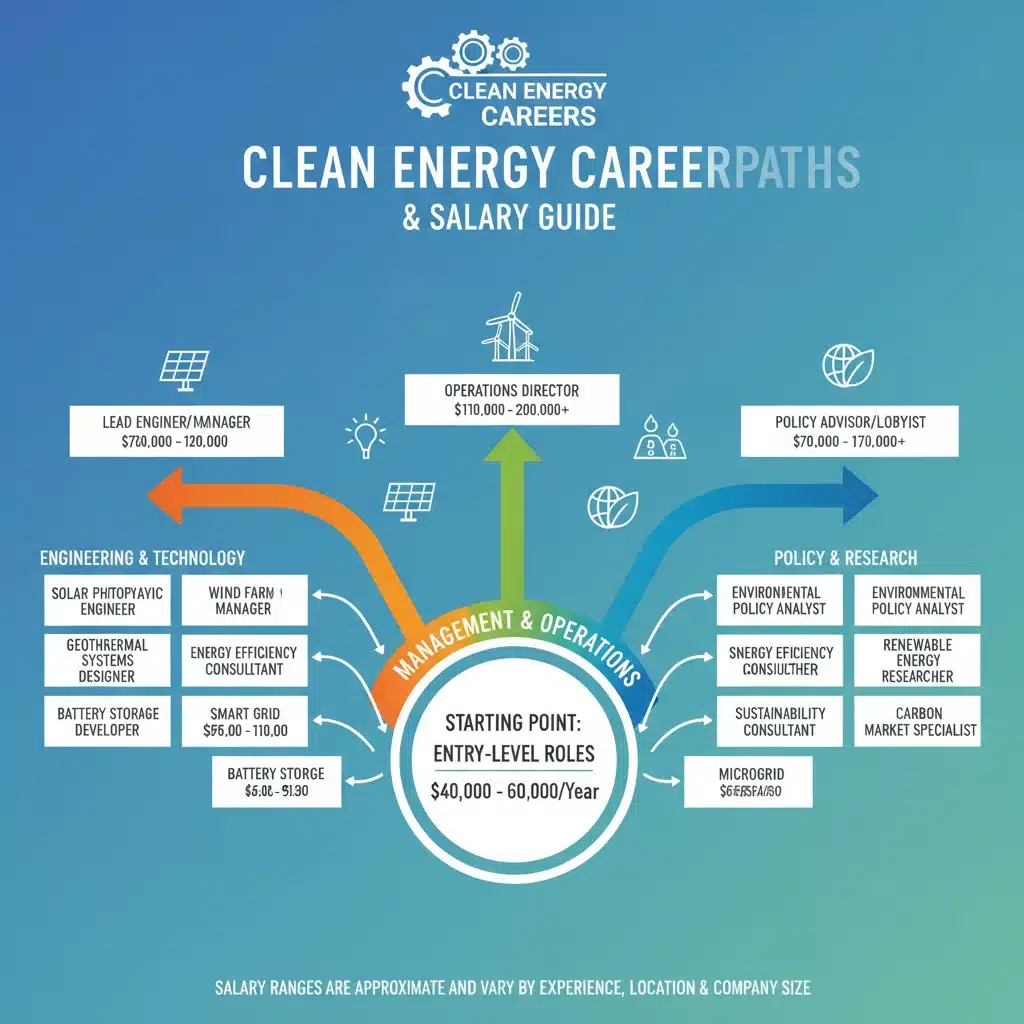
1. Renewable Energy Engineering Degrees
Focus: These programs concentrate on the design, development, and optimization of renewable energy systems such as solar, wind, hydro, geothermal, and biomass. Students learn about energy conversion, power systems, materials science, and project management specific to renewable technologies.
Typical Courses: Solar Photovoltaic Systems, Wind Energy Engineering, Energy Storage Technologies, Power Electronics, Thermodynamics, Fluid Mechanics, Sustainable Materials.
Career Paths: Renewable Energy Engineer, Solar Engineer, Wind Farm Developer, Energy Systems Designer, R&D Engineer, Project Engineer.
ROI Potential: High. Engineering roles are consistently in high demand and command competitive salaries. The practical, hands-on nature of these clean energy degrees ensures graduates possess highly sought-after technical skills. As technology advances, the need for engineers to innovate and refine systems will only grow. Graduates can expect strong job security and excellent opportunities for career progression into senior engineering or project management roles.
2. Sustainable Energy Management & Policy Degrees
Focus: These clean energy degrees are interdisciplinary, blending aspects of business, economics, policy, and environmental science. They prepare students to manage energy projects, analyze market trends, develop sustainable business strategies, and influence energy policy.
Typical Courses: Energy Economics, Environmental Law and Policy, Project Finance, Sustainable Business Models, Energy Auditing, International Energy Markets, Climate Change Mitigation.
Career Paths: Energy Manager, Sustainability Consultant, Policy Analyst, Environmental Planner, Project Manager (Renewable Energy), Business Development Manager, Regulatory Affairs Specialist.
ROI Potential: Very High. With the increasing complexity of energy markets and the regulatory landscape, professionals who can bridge the gap between technical innovation and strategic implementation are invaluable. These clean energy degrees equip graduates with strong analytical, communication, and leadership skills, making them adaptable to various roles in both the public and private sectors. The ability to shape policy and drive large-scale sustainable initiatives offers significant professional satisfaction and influence.
3. Environmental Science with an Energy Specialization
Focus: These programs provide a strong foundation in environmental science, ecology, and sustainability, with a specific focus on energy systems and their environmental impacts. Students learn to assess the ecological footprint of energy production and consumption, develop mitigation strategies, and promote sustainable practices.
Typical Courses: Environmental Impact Assessment, Climate Science, Ecology, Energy and the Environment, Waste-to-Energy Systems, Resource Management, GIS for Environmental Applications.
Career Paths: Environmental Scientist, Sustainability Specialist, Conservation Officer, Energy Auditor, Environmental Consultant, Research Scientist.
ROI Potential: Moderate to High. While perhaps not as directly lucrative as engineering roles initially, these clean energy degrees offer immense value in understanding the broader context of energy transition. As environmental regulations tighten and corporate social responsibility becomes paramount, the demand for experts who can ensure clean energy projects are truly sustainable will grow. Graduates can find fulfilling careers in NGOs, government agencies, and corporate sustainability departments, contributing to crucial environmental stewardship.

4. Energy Systems & Data Analytics Degrees
Focus: A newer, but rapidly growing field, these clean energy degrees combine energy science with advanced data analysis techniques. Students learn to collect, analyze, and interpret large datasets from energy grids, smart meters, and renewable energy installations to optimize performance, predict trends, and improve efficiency.
Typical Courses: Big Data Analytics, Machine Learning for Energy, Smart Grid Technologies, Energy Forecasting, Statistical Modeling, Cybersecurity for Energy Systems.
Career Paths: Energy Data Scientist, Smart Grid Analyst, Energy AI Specialist, Predictive Maintenance Engineer, Energy Efficiency Analyst, Data Engineer (Energy Sector).
ROI Potential: Extremely High. Data is the new oil, and in the clean energy sector, it’s critical for optimizing systems and making informed decisions. Professionals with skills in both energy systems and data analytics are exceptionally rare and highly sought after. These clean energy degrees prepare graduates for cutting-edge roles at the intersection of technology and sustainability, offering top-tier salaries and unparalleled career growth potential in a field that is only just beginning to realize its full potential.
5. Renewable Energy Technology & Technicians Programs (Associate’s/Vocational)
Focus: These programs are typically shorter in duration and more hands-on, preparing students for direct installation, maintenance, and operational roles in the clean energy sector. They often lead to certifications alongside or instead of a traditional degree.
Typical Courses: Solar Panel Installation, Wind Turbine Maintenance, Electrical Systems, HVAC for Green Buildings, Safety Protocols, Diagnostic Techniques.
Career Paths: Solar Panel Installer, Wind Turbine Technician, Energy Auditor, HVAC Technician (focus on geothermal/heat pumps), Green Building Specialist.
ROI Potential: High (especially considering lower upfront cost and quicker entry to market). While not traditional university clean energy degrees, these programs offer a rapid entry into a high-demand workforce. Technicians are the backbone of the clean energy infrastructure, and their skills are crucial for the deployment and upkeep of renewable systems. The ROI is excellent for those looking for practical, well-paying jobs without the extensive time commitment of a four-year degree. There’s also potential for continued education and specialization.
Key Factors Influencing ROI for Clean Energy Degrees in 2026
Beyond the specific degree type, several other factors will significantly impact the return on your educational investment:
University Reputation and Program Quality
Attending a university with a strong reputation in engineering, environmental science, or business, particularly one with dedicated clean energy centers or research initiatives, can provide a significant advantage. Such institutions often have:
- Cutting-edge Research: Access to the latest technologies and methodologies.
- Industry Connections: Networking opportunities with leading companies and organizations.
- Experienced Faculty: Professors who are experts and active practitioners in the field.
- Strong Alumni Networks: A valuable resource for mentorship and job placement.
Research university rankings, faculty publications, and industry partnerships when evaluating clean energy degrees.
Internships and Practical Experience
Theoretical knowledge is vital, but practical experience is often the differentiator in a competitive job market. Programs that integrate mandatory internships, co-op placements, or hands-on lab work provide students with invaluable real-world experience. Graduates with relevant internships are often hired faster and at higher starting salaries. Look for clean energy degrees that emphasize applied learning.
Specialization and Niche Skills
While a broad understanding of clean energy is beneficial, developing specialized skills can significantly boost your ROI. For example, within renewable energy engineering, specializing in offshore wind technology, grid modernization, or advanced energy storage can make you a highly sought-after expert. Similarly, in policy, a focus on carbon markets or international climate agreements can open up unique opportunities. Consider combining your clean energy degree with a minor or certificate in a complementary field like data science or project management.
Geographic Location and Job Market Demand
The demand for clean energy professionals can vary geographically. Regions with strong government support for renewables, significant investment in green infrastructure, or a high concentration of clean energy companies will naturally offer more opportunities and potentially higher salaries. Research the job markets in areas where you envision yourself working and choose clean energy degrees that align with those regional demands.
Networking and Professional Development
Beyond the classroom, actively engaging in professional organizations, attending industry conferences, and building a strong network are crucial for long-term career success. Many clean energy degrees programs facilitate these opportunities through guest speakers, career fairs, and alumni events. A robust network can lead to job offers, mentorship, and collaborative projects, significantly enhancing your career trajectory and ROI.
Future Trends Shaping the ROI of Clean Energy Degrees
The clean energy landscape is dynamic, with new technologies and challenges constantly emerging. Staying abreast of these trends is essential for maximizing the ROI of your clean energy degree in 2026 and beyond.
- Grid Modernization and Smart Grids: The integration of intermittent renewable sources requires advanced grid infrastructure. Expertise in smart grid technologies, energy storage, and grid stability will be highly valued.
- Hydrogen Economy: Green hydrogen is emerging as a critical vector for decarbonizing heavy industry and long-haul transport. Degrees that incorporate hydrogen production, storage, and application will see increasing demand.
- Carbon Capture, Utilization, and Storage (CCUS): While primarily focused on reducing emissions from fossil fuels, CCUS technologies are also being explored for direct air capture, creating a niche for specialized engineers and scientists.
- Circular Economy Principles: Moving beyond just clean energy generation, the entire lifecycle of energy technologies (from raw material extraction to recycling) will require professionals skilled in sustainable resource management and circular design.
- Artificial Intelligence and Machine Learning: AI/ML will continue to revolutionize energy forecasting, system optimization, predictive maintenance, and autonomous energy management. Degrees integrating these technologies with energy systems will be at the forefront of innovation.
- Energy Equity and Justice: Ensuring that the benefits of the clean energy transition are shared equitably across all communities will be a growing focus. Professionals with backgrounds in social science, policy, and community engagement, combined with energy knowledge, will play a vital role.
Prospective students should seek out clean energy degrees that are forward-looking and incorporate these emerging trends into their curriculum. A degree that prepares you for the challenges of tomorrow will undoubtedly offer a higher long-term ROI.
Making Your Decision: Beyond the Numbers
While financial ROI is an important metric, the decision to pursue a clean energy degree should also be driven by passion and a desire to make a difference. The clean energy sector offers the unique opportunity to align your career with your values, contributing to a more sustainable and resilient world.
When comparing programs, ask yourself:
- Does this program excite me?
- Does it align with my long-term career goals and personal values?
- Will I gain the skills necessary to be a leader in this evolving field?
- What kind of impact do I want to make?
The best clean energy degrees are those that not only provide strong career prospects and competitive salaries but also foster a sense of purpose and allow you to contribute meaningfully to addressing one of humanity’s greatest challenges. The ROI, in this broader sense, becomes immeasurable.
Conclusion: Investing in a Sustainable Future
The clean energy sector is a beacon of innovation and opportunity, offering a vast array of career paths for those committed to sustainability. For students considering their educational options for 2026, pursuing one of the many clean energy degrees can lead to a highly rewarding career with significant return on investment.
Whether your passion lies in designing cutting-edge renewable technologies, shaping energy policy, managing sustainable projects, or analyzing complex energy data, there’s a specialized degree program tailored to your ambitions. By carefully evaluating program curricula, faculty expertise, industry connections, and the evolving demands of the job market, you can identify the clean energy degrees that will best position you for success.
The future is clean, and the demand for skilled professionals to build that future is only growing. An investment in a clean energy degree today is an investment not just in your personal career growth, but also in the health and prosperity of our planet. Choose wisely, engage passionately, and become a pivotal part of the global energy transition.