Federal Geothermal Incentives 2026: Save Thousands on HVAC

Federal Geothermal Incentives 2026: Your Guide to Saving Up to $4,000 on Sustainable HVAC
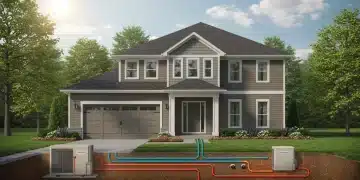
As we advance into 2026, the commitment to sustainable living and energy independence continues to grow. For homeowners looking to make a significant impact on their carbon footprint and energy bills, geothermal heating and cooling systems stand out as a premier solution. These innovative systems harness the stable temperature of the earth to provide efficient and environmentally friendly climate control for your home. However, the initial investment can be a consideration for many. This is where federal incentives come into play, offering substantial financial relief to make these advanced systems more accessible. In 2026, homeowners can anticipate saving up to $4,000 through various federal programs, making it an opportune time to consider a geothermal installation.
This comprehensive guide will delve into the specifics of the geothermal incentives 2026, outlining the available tax credits, grants, and other financial benefits. We’ll explore how these incentives work, who is eligible, and the steps you need to take to maximize your savings. By understanding the landscape of federal support, you can confidently embark on your journey towards a more energy-efficient and comfortable home.
The Enduring Appeal of Geothermal Energy: Why Invest?
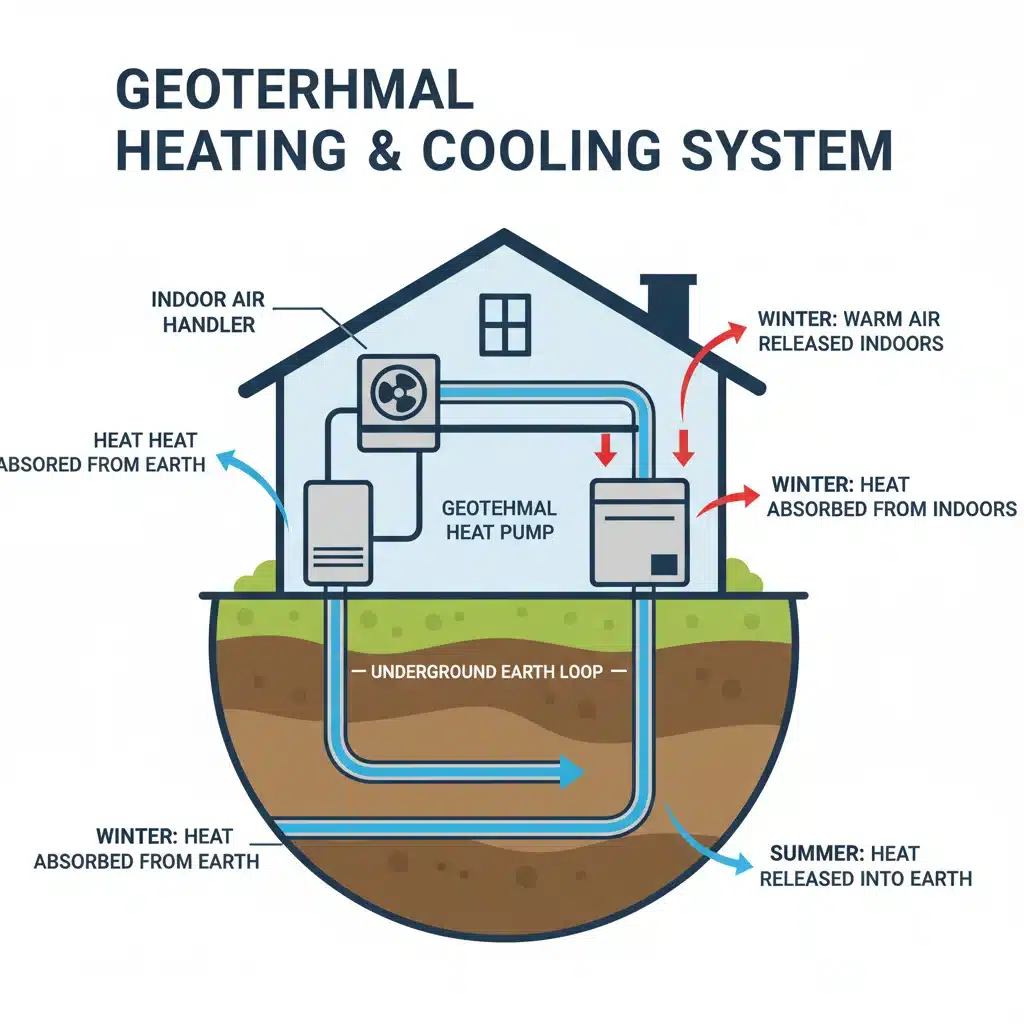
Before we dive into the financial incentives, it’s crucial to understand why geothermal heating and cooling systems are such a worthwhile investment, even without the generous federal support. Geothermal systems operate by exchanging heat with the earth, which maintains a relatively constant temperature year-round, unlike the fluctuating air temperatures. This fundamental principle allows geothermal heat pumps to operate with remarkable efficiency, typically 300% to 600% more efficiently than traditional HVAC systems.
The benefits extend far beyond just energy efficiency. Homeowners who install geothermal systems often experience significantly lower utility bills, reduced maintenance costs due to fewer moving parts and indoor placement, and a longer system lifespan compared to conventional furnaces and air conditioners. Furthermore, geothermal systems are incredibly quiet, provide consistent and comfortable heating and cooling, and have a minimal environmental impact, producing no direct greenhouse gas emissions. These long-term advantages, coupled with the attractive geothermal incentives 2026, make a compelling case for switching to this renewable energy solution.
Key Benefits of Geothermal Systems:
- Substantial Energy Savings: Up to 70% reduction in heating and cooling costs.
- Environmental Friendliness: Zero direct emissions, reduced carbon footprint.
- Enhanced Comfort: Consistent temperatures and improved indoor air quality.
- Long Lifespan: Ground loops can last 50+ years, indoor components 20-25 years.
- Quiet Operation: No noisy outdoor units.
- Increased Home Value: A desirable feature for potential buyers.
Understanding Federal Tax Credits for Geothermal Installations in 2026
The cornerstone of federal support for geothermal systems remains the Residential Clean Energy Credit, often referred to as the federal solar tax credit, which also applies to geothermal heat pumps. This non-refundable tax credit allows homeowners to claim a percentage of the cost of new, qualified clean energy property for their home. For geothermal systems installed in 2026, the credit is set at a generous 30% of the installed cost. This is a significant incentive, as it directly reduces your tax liability dollar-for-dollar.
It’s important to note that there is no cap on the amount of credit you can claim for geothermal installations. This means that if your system costs $30,000, you could receive a $9,000 tax credit. However, our focus on saving up to $4,000 in this article refers to a common scenario for many homeowners, considering average installation costs and other potential state or local incentives that might stack with the federal credit. The 30% credit is available for systems placed in service through 2032, after which it will gradually step down. This extended timeline provides a stable window for planning your geothermal investment and leveraging these impactful geothermal incentives 2026.
Eligibility Requirements for the Residential Clean Energy Credit:
- The geothermal heat pump must meet Energy Star requirements.
- The system must be installed in a home located in the United States.
- It must be a new, qualified geothermal heat pump.
- The credit applies to both existing homes and newly constructed homes.
- The home must be your primary or secondary residence. Rental properties are generally not eligible unless you live in one unit of a multi-unit dwelling.
To claim the credit, you’ll need to file Form 5695, Residential Energy Credits, with your federal income tax return. It’s always advisable to keep thorough records of your installation, including receipts, invoices, and any certifications, as proof of purchase and compliance.
Beyond Tax Credits: Exploring Other Federal Programs and the Inflation Reduction Act
While the Residential Clean Energy Credit is the most prominent federal incentive, other programs and the overarching impact of the Inflation Reduction Act (IRA) of 2022 further bolster the financial appeal of geothermal. The IRA significantly expanded and extended many clean energy tax credits and rebates, solidifying the long-term commitment to renewable energy and energy efficiency. While specific new grants directly for residential geothermal might not be as widespread as the tax credit, the IRA has paved the way for states and local entities to receive federal funding, which they can then use to create their own incentive programs.
For instance, the High-Efficiency Electric Home Rebate Program (HEEHRP), established under the IRA, offers point-of-sale rebates for various high-efficiency electric home appliances, including heat pumps. While the specifics for geothermal heat pumps under this program can vary by state and local implementation, it’s crucial for homeowners to investigate if their state has adopted and rolled out these rebate programs. These rebates can cover up to 100% of the purchase and installation costs for low-income households and up to 50% for moderate-income households, with a maximum rebate of $8,000 for qualifying heat pumps. While not exclusively for geothermal, some states may integrate geothermal heat pumps into their high-efficiency electric heat pump rebate structures, providing another layer of savings alongside the geothermal incentives 2026.
The Role of State and Local Incentives
It’s vital to remember that federal incentives often work in conjunction with state and local programs. Many states, utilities, and municipalities offer their own tax credits, rebates, or low-interest loans for geothermal installations. These can significantly reduce your out-of-pocket expenses and often stack with federal benefits. For example, some states might offer a separate tax credit or a rebate that, when combined with the 30% federal credit, could push your total savings well beyond the $4,000 mark, potentially covering a substantial portion of the system’s cost.
To find out about state and local incentives specific to your area, resources like the Database of State Incentives for Renewables & Efficiency (DSIRE) are invaluable. This comprehensive database provides detailed information on federal, state, local, and utility incentives and policies that promote renewable energy and energy efficiency. Checking DSIRE should be one of your first steps when researching geothermal incentives 2026 in your region.
Maximizing Your Geothermal Savings: A Step-by-Step Approach
Navigating the various incentives can seem complex, but with a structured approach, you can ensure you’re maximizing every available saving opportunity. Here’s a step-by-step guide to help you:
- Research Federal Incentives: Start by understanding the Residential Clean Energy Credit thoroughly. Confirm the 30% rate for 2026 and any specific requirements for geothermal heat pumps.
- Explore State and Local Programs: Use resources like DSIRE to identify all available state, local, and utility incentives in your area. Pay attention to whether these can be combined with federal credits.
- Get Multiple Quotes from Qualified Installers: Obtain detailed quotes from at least three reputable geothermal installers. Ensure these quotes break down the costs of equipment, installation, and any associated services. Ask installers if they are familiar with current federal and local incentive programs and if they can assist with the application process.
- Verify Installer Credentials: Choose an installer with certifications from organizations like the International Ground Source Heat Pump Association (IGSHPA). This ensures a quality installation that meets industry standards and will qualify for incentives.
- Understand System Requirements: Ensure the geothermal system you choose meets all necessary efficiency standards (e.g., Energy Star) to qualify for tax credits and rebates. Your installer should be able to confirm this.
- Keep Meticulous Records: Save all invoices, receipts, contracts, and any documentation related to your geothermal system purchase and installation. These will be crucial for claiming tax credits and rebates.
- Consult a Tax Professional: Before filing your taxes, consult with a qualified tax advisor. They can help you understand how the federal tax credit applies to your specific financial situation and ensure you correctly file Form 5695.
- Apply for Rebates Promptly: For any state or local rebates, be aware of application deadlines and requirements. Many rebates operate on a first-come, first-served basis or have specific windows for application.
By following these steps, you can confidently navigate the landscape of geothermal incentives 2026 and significantly reduce the net cost of your system, making this sustainable investment even more attractive.
The Financial Impact: How $4,000 in Savings Translates
While the exact cost of a geothermal system varies widely based on home size, geology, and system complexity, an average installation might range from $20,000 to $45,000 or more. A $4,000 saving, whether entirely from federal sources or a combination of federal, state, and local incentives, represents a substantial reduction in this initial outlay. For a system costing $25,000, a $4,000 saving immediately brings the net cost down to $21,000, not accounting for the long-term energy bill reductions.
Consider the cumulative impact: the upfront savings from incentives, combined with the dramatically lower monthly energy bills, accelerate the payback period for your geothermal system. Instead of waiting 7-10 years to recoup your investment through energy savings alone, incentives can shave years off that timeline. This makes geothermal a financially sound decision, not just an environmentally conscious one. The availability of strong geothermal incentives 2026 significantly de-risks the investment for homeowners.
Example Scenario:
- Geothermal System Cost: $30,000
- Federal Tax Credit (30%): $9,000
- State Rebate (e.g., $1,000): $1,000
- Total Upfront Savings: $10,000
- Net Cost After Incentives: $20,000
In this example, the savings are even greater than $4,000, illustrating the potential when combining various programs. The $4,000 figure is a conservative estimate, showing the minimum significant savings many homeowners can expect.
Addressing Common Concerns and Misconceptions
Despite the clear advantages and robust incentives, some homeowners may still have reservations about geothermal systems. Let’s address a few common concerns:
Is Geothermal Installation Disruptive?
The installation of the ground loop system does require excavation. However, reputable installers use specialized equipment to minimize disruption to your landscaping. Horizontal loops require more land but are shallower, while vertical loops require less land but deeper drilling. The choice depends on your property and budget. Once installed, the ground loop is completely underground and out of sight.
Are Geothermal Systems Reliable?
Yes, geothermal systems are renowned for their reliability and longevity. The underground components are protected from harsh weather, and the indoor heat pump unit has fewer moving parts than traditional HVAC, leading to less wear and tear and fewer breakdowns. Regular maintenance is still recommended, but it’s generally less intensive than for conventional systems.
What About Maintenance?
Geothermal systems typically require less maintenance than conventional HVAC. You’ll need to change air filters regularly, and an annual check-up by a qualified technician is recommended to ensure optimal performance and efficiency. The ground loop itself requires virtually no maintenance.
The Future of Geothermal and Continued Support
The strong federal incentives for geothermal systems, particularly the 30% tax credit extending through 2032, signal a clear commitment from the government to promote renewable energy and reduce carbon emissions. This long-term support provides stability and confidence for homeowners considering this significant investment. As technology continues to advance, geothermal systems are becoming even more efficient and cost-effective, further solidifying their role as a leading sustainable HVAC solution.
The emphasis on electrification and renewable energy sources, as evidenced by legislation like the Inflation Reduction Act, suggests that similar or even enhanced incentives could be available in the years to come. Staying informed about policy changes and emerging programs will be key to continuously leveraging the best financial opportunities for your home. The geothermal incentives 2026 are just a stepping stone in a broader movement towards a greener, more energy-independent future.
Conclusion: Unlock Your Savings with Geothermal in 2026
The year 2026 presents an exceptional opportunity for homeowners to embrace geothermal heating and cooling systems, backed by robust federal incentives that can lead to savings of up to $4,000 or more. The 30% Residential Clean Energy Credit, combined with potential state and local rebates, makes the transition to this highly efficient and environmentally friendly technology more affordable than ever before.
Beyond the immediate financial benefits, investing in geothermal means investing in long-term energy independence, significant reductions in utility bills, and a healthier planet. By carefully researching available programs, selecting qualified installers, and maintaining meticulous records, you can confidently navigate the process and unlock the full potential of these valuable geothermal incentives 2026. Don’t miss this chance to transform your home into a beacon of sustainability and comfort, all while enjoying substantial financial rewards.
Start your journey today by connecting with local geothermal experts and exploring the specific incentives available in your area. Your comfortable, energy-efficient future awaits!