In an era where sustainability and economic prudence converge, understanding and optimizing your home’s energy consumption is no longer just a niche interest – it’s a financial imperative. As we look towards 2026, the landscape of home energy efficiency is evolving, bringing with it unprecedented opportunities for homeowners. Central to unlocking these opportunities is a simple, yet profoundly impactful, investment: the home energy audit. For an average cost of around $150, this initial step can pave the way for thousands of dollars in federal benefits, significantly reduce your utility bills, and enhance your home’s comfort and value.
The federal government, recognizing the critical role of residential energy efficiency in national climate goals and economic stability, continues to roll out and enhance programs designed to incentivize homeowners. These incentives, ranging from generous tax credits to direct grants, are specifically structured to reward those who take proactive steps to improve their homes’ energy performance. And it all begins with a comprehensive home energy audit.
This comprehensive guide will delve deep into why a home energy audit in 2026 is not just a recommendation but a strategic move. We’ll explore the immediate and long-term financial benefits, delineate the federal programs available, explain how to navigate the process, and provide actionable advice to maximize your returns. Prepare to transform your understanding of home energy, turning a modest investment into a cascade of savings and a more sustainable lifestyle.
What Exactly is a Home Energy Audit?
Before we dive into the financial incentives, let’s clarify what a home energy audit entails. Often referred to as a home energy assessment, it’s a systematic evaluation of your home’s energy efficiency. A certified energy auditor will inspect your property, identifying areas where energy is being wasted and pinpointing opportunities for improvement. This isn’t just about looking at your insulation; it’s a holistic review of your home as a complex energy system.
Key components of a typical home energy audit include:
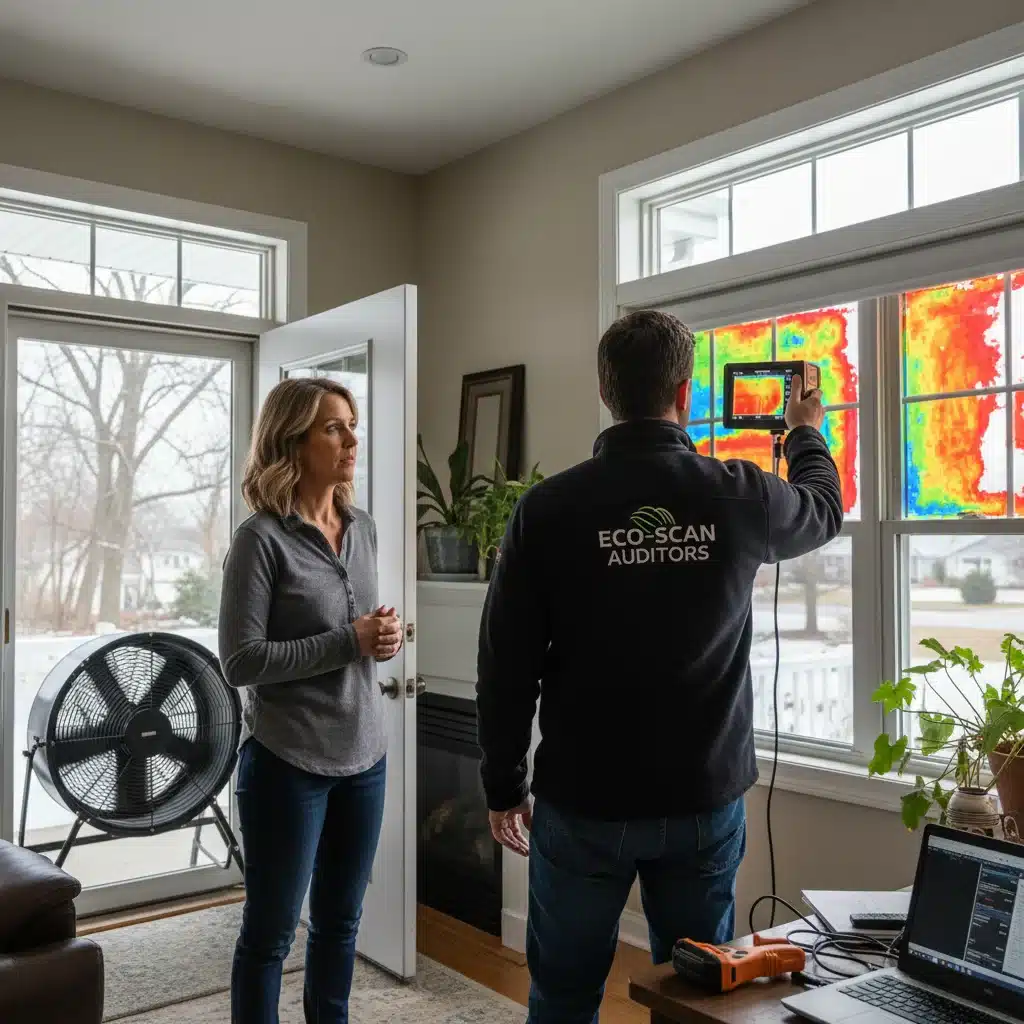
- Blower Door Test: This test depressurizes your home to locate air leaks in the building envelope, such as around windows, doors, and electrical outlets. These leaks can account for a significant portion of heat loss or gain.
- Infrared Camera Scan: An infrared camera helps visualize temperature differences, revealing missing insulation, thermal bridges, and areas of air leakage that aren’t visible to the naked eye.
- Insulation Inspection: The auditor will check the type, R-value, and condition of insulation in your attic, walls, and crawl spaces.
- HVAC System Check: Evaluation of your heating, ventilation, and air conditioning (HVAC) systems for efficiency, proper sizing, and maintenance.
- Water Heater Assessment: Checking the efficiency of your water heater and recommending improvements or replacements if necessary.
- Appliance Review: Sometimes, an audit will include a brief review of major appliance energy consumption.
- Lighting Analysis: Recommendations for upgrading to more energy-efficient lighting, such as LEDs.
Upon completion, you receive a detailed report outlining the auditor’s findings, prioritized recommendations for energy-saving improvements, and an estimate of the potential savings and costs associated with each upgrade. This report is your roadmap to energy efficiency and, crucially, often a prerequisite for accessing federal benefits.
The Power of a Professional Home Energy Audit: More Than Just a Checklist
While DIY energy audits can provide some basic insights, the true power, especially when aiming for federal benefits, lies in a professional home energy audit. Certified auditors possess the expertise and specialized equipment to conduct a thorough and accurate assessment. They can identify subtle issues that homeowners might miss and provide scientifically backed recommendations.
The average cost of a professional home energy audit in 2026 is projected to remain around $150, though it can vary based on your location and the size of your home. This modest investment is often recouped very quickly through immediate energy savings, even before considering federal incentives.
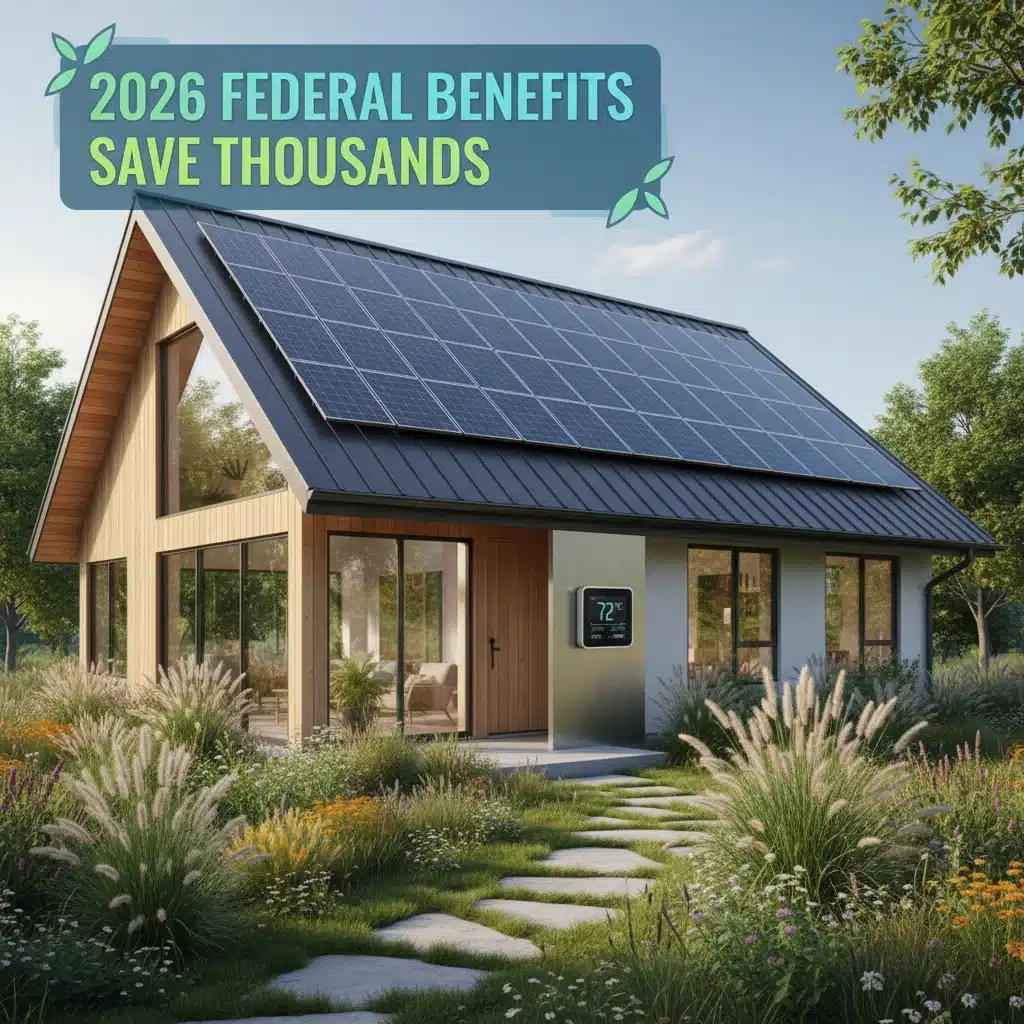
Federal Benefits in 2026: Your Path to Thousands in Savings
The federal government offers a robust suite of incentives to encourage homeowners to improve their energy efficiency. These programs are designed to make significant upgrades more affordable, ultimately leading to lower energy bills and a reduced carbon footprint. A key aspect of many of these programs is that they often require documentation of energy improvements, and a professional home energy audit report serves as crucial evidence.
Energy Efficient Home Improvement Credit (Section 25C)
This is perhaps one of the most significant federal incentives for homeowners. The Energy Efficient Home Improvement Credit, often referred to by its IRS section number 25C, allows you to claim a tax credit for making qualifying energy efficiency improvements to your home. In 2026, this credit is expected to continue offering:
- 30% of the cost of eligible home energy improvements: This includes expenses for things like insulation, exterior windows and skylights, exterior doors, and certain energy-efficient home equipment.
- Annual & Lifetime Limits: There’s an annual limit of $1,200 for most improvements, with specific higher limits for certain items like heat pumps ($2,000) and biomass stoves. The overall lifetime limit has been removed, making it possible to claim this credit year after year for different improvements.
- Audit Requirement: Critically, the cost of a home energy audit itself can often be included as an eligible expense for this credit, further reducing your out-of-pocket cost for the audit. The audit report is also often a key document to substantiate the need for and effectiveness of the improvements you make.
Imagine, you spend $150 on a home energy audit. If this qualifies, you could potentially get 30% of that back, effectively bringing your audit cost down to $105. But the real value comes when the audit identifies that you need new insulation, costing, say, $3,000. You could then claim 30% of that cost, or $900, back as a tax credit. This is a direct reduction in your tax liability, not just a deduction.
Residential Clean Energy Credit (Section 25D)
While not directly tied to a home energy audit, this credit is highly relevant for homeowners making larger, renewable energy investments. If your audit recommends installing solar panels, geothermal heat pumps, or wind turbines, this credit could save you even more:
- 30% of the cost: This credit covers 30% of the cost of new, qualified clean energy property for your home.
- No Annual Limit: Unlike the 25C credit, there is no annual dollar limit for the 25D credit, meaning you can claim 30% of even very large installations.
A home energy audit can help you understand your overall energy consumption, making the case for larger renewable energy investments clearer and demonstrating the potential for even greater savings when combined with efficiency upgrades.
High-Efficiency Electric Home Rebate Program (HEERAH)
This program, part of the Inflation Reduction Act, offers upfront discounts (rebates) at the point of sale for a variety of energy-efficient electric appliances and home upgrades. While the specific implementation details can vary by state and local utility, the core benefits are substantial:
- Up to $8,000 for Heat Pumps: For installing new electric heat pumps for heating and cooling.
- Up to $1,750 for Heat Pump Water Heaters: For upgrading your water heating system.
- Up to $840 for Electric Stoves/Cooktops/Ovens: Encouraging the transition away from natural gas.
- Up to $4,000 for Electrical Panel Upgrades: Often necessary to support new electric appliances.
- Up to $1,600 for Insulation, Air Sealing & Ventilation: Direct rebates for foundational energy efficiency work identified by your home energy audit.
- Up to $2,500 for Wiring Upgrades: To support new electrification projects.
- Income-Based Benefits: The rebate amounts are often higher for low- and moderate-income households, potentially covering 100% of the project costs up to certain limits.
The home energy audit is crucial here because it provides the data to justify these upgrades and helps you prioritize which improvements will yield the greatest benefits and qualify for the most rebates. The auditor’s report can serve as a vital piece of documentation when applying for these rebates through your state or utility program.
State and Local Programs
Beyond federal incentives, many states, municipalities, and utility companies offer their own energy efficiency programs, rebates, and low-interest loans. These can often be stacked with federal benefits, multiplying your savings. Your home energy audit report will be invaluable when exploring these local options, as it provides a professional assessment of your home’s needs and recommended solutions that align with program requirements.

The True Return on Investment (ROI) of a $150 Home Energy Audit
Let’s crunch some numbers to illustrate the potential ROI of a $150 home energy audit:
- Initial Cost: $150 (average)
- Potential Tax Credit (25C): If the audit qualifies, you could get 30% back, reducing the effective cost to $105.
Now, consider the recommendations from the audit:
- Scenario 1: Basic Upgrades
The audit recommends sealing air leaks and adding insulation, costing $1,500. Through the 25C credit, you get $450 back (30% of $1,500). If you qualify for HEERAH, you might get an additional $1,600 rebate. Total savings: $2,050. Your initial $150 audit led to over $2,000 in direct financial benefits, not to mention the ongoing utility bill savings. - Scenario 2: Major Electrification
The audit recommends a new heat pump and heat pump water heater, costing $12,000. Under 25C, you could claim a $2,000 credit for the heat pump and potentially an additional $360 for the water heater (capped at $600 for water heaters). If HEERAH applies, you could receive up to $8,000 for the heat pump and $1,750 for the water heater. Total potential savings: $12,110. In this scenario, your $150 audit helped you unlock benefits that exceed the entire cost of the upgrades!
These scenarios highlight that the $150 investment in a home energy audit is not an expense, but a strategic down payment on significant financial returns and a more comfortable, sustainable home. The audit acts as the diagnostic tool that justifies and optimizes your applications for these lucrative federal and local programs.
Beyond Financial Benefits: The Intangible Gains
While the financial incentives are compelling, a home energy audit offers a wealth of other benefits:
- Increased Home Comfort: Addressing drafts, uneven heating/cooling, and humidity issues leads to a more consistently comfortable living environment year-round.
- Improved Indoor Air Quality: Sealing leaks and improving ventilation can reduce the entry of pollutants and moisture, leading to healthier indoor air.
- Enhanced Home Value: Energy-efficient homes are increasingly attractive to buyers, commanding higher resale values. An audit report can serve as a valuable marketing tool.
- Reduced Environmental Impact: By consuming less energy, you reduce your household’s carbon footprint, contributing to broader environmental sustainability goals.
- Extended Appliance Lifespan: Efficient homes reduce the strain on HVAC systems and other appliances, potentially extending their operational life.
- Peace of Mind: Knowing your home is operating efficiently and that you’re taking advantage of available savings offers significant peace of mind.
How to Prepare for Your Home Energy Audit in 2026
To ensure you get the most out of your home energy audit, a little preparation goes a long way:
- Gather Energy Bills: Have your utility bills from the past 12-24 months available. This helps the auditor understand your historical energy consumption patterns.
- List Problem Areas: Make a note of any areas in your home that are consistently too hot or too cold, drafty spots, or signs of moisture.
- Note Recent Upgrades: Inform the auditor about any recent renovations or appliance replacements you’ve made.
- Clear Access: Ensure the auditor has clear access to your attic, crawl spaces, utility closets, and the exterior of your home.
- Ask Questions: Don’t hesitate to ask the auditor questions during the process. This is your opportunity to learn about your home’s energy performance.
- Research Local Programs: Before the audit, do some preliminary research on state, local, and utility company rebate programs in your area. This way, you can ask the auditor if their recommendations align with these programs.
Choosing a Certified Energy Auditor
The effectiveness of your home energy audit largely depends on the expertise of the auditor. Look for professionals who are:
- BPI Certified: The Building Performance Institute (BPI) offers highly respected certifications for energy auditors.
- RESNET Certified: The Residential Energy Services Network (RESNET) also certifies home energy raters and auditors.
- Experienced: Choose an auditor with a proven track record and positive client testimonials.
- Reputable: Check reviews and ask for references.
- Clear Communicators: Ensure they can explain complex concepts in an understandable way and provide a comprehensive, easy-to-read report.
Maximizing Your Federal Benefits Post-Audit
Once you have your home energy audit report, the real work of maximizing your federal benefits begins:
- Prioritize Recommendations: Your report will likely list several recommendations. Focus on those with the highest ROI and those that qualify for the most significant federal and local incentives.
- Get Multiple Quotes: For any recommended upgrades, obtain quotes from several qualified contractors. Ensure they are familiar with the requirements for federal tax credits and rebates.
- Keep Meticulous Records: Save all receipts, invoices, and your home energy audit report. These documents are essential for claiming tax credits and applying for rebates.
- Understand Program Requirements: Each federal and local program has specific eligibility criteria and application processes. Read them carefully or consult with a tax professional or program administrator. Some improvements might need to meet specific efficiency standards (e.g., ENERGY STAR certified products).
- File Taxes Correctly: When tax season arrives, ensure you or your tax preparer correctly fill out the necessary IRS forms (e.g., Form 5695 for the Energy Efficient Home Improvement Credit).
- Apply for Rebates Promptly: Rebate programs often have deadlines and limited funding, so apply as soon as your improvements are complete and you have the necessary documentation.
The Future of Home Energy in 2026 and Beyond
The trajectory towards more energy-efficient and sustainable homes is undeniable. As climate concerns grow and energy costs fluctuate, the value of a high-performing home will only increase. The federal government’s continued commitment to incentivizing these improvements, as evidenced by the robust programs available in 2026, signals a clear path forward for homeowners.
A home energy audit is not just a one-time assessment; it’s the first step in a journey towards a more energy-conscious and financially savvy homeownership. It empowers you with the knowledge and the documented proof needed to tap into a wealth of resources designed to make your home better, cheaper to run, and more environmentally friendly.
Conclusion: Your $150 Investment, A Gateway to Thousands
In conclusion, the decision to invest approximately $150 in a professional home energy audit in 2026 stands as one of the most intelligent financial and environmental choices a homeowner can make. This seemingly small outlay serves as the key that unlocks access to significant federal tax credits, generous rebates, and substantial long-term savings on your utility bills. It’s the foundational step that transforms guesswork into informed action, allowing you to strategically target improvements that yield the highest returns.
By understanding your home’s energy performance through a detailed audit, you not only make your property more comfortable and valuable but also actively contribute to a sustainable future. The federal benefits available in 2026 are designed to make this transition affordable and highly rewarding. Don’t let this opportunity pass you by. Schedule your home energy audit today and start your journey towards thousands in federal benefits and a truly energy-efficient home.