2026 Clean Energy Benefits: Federal & State Programs for Homeowners
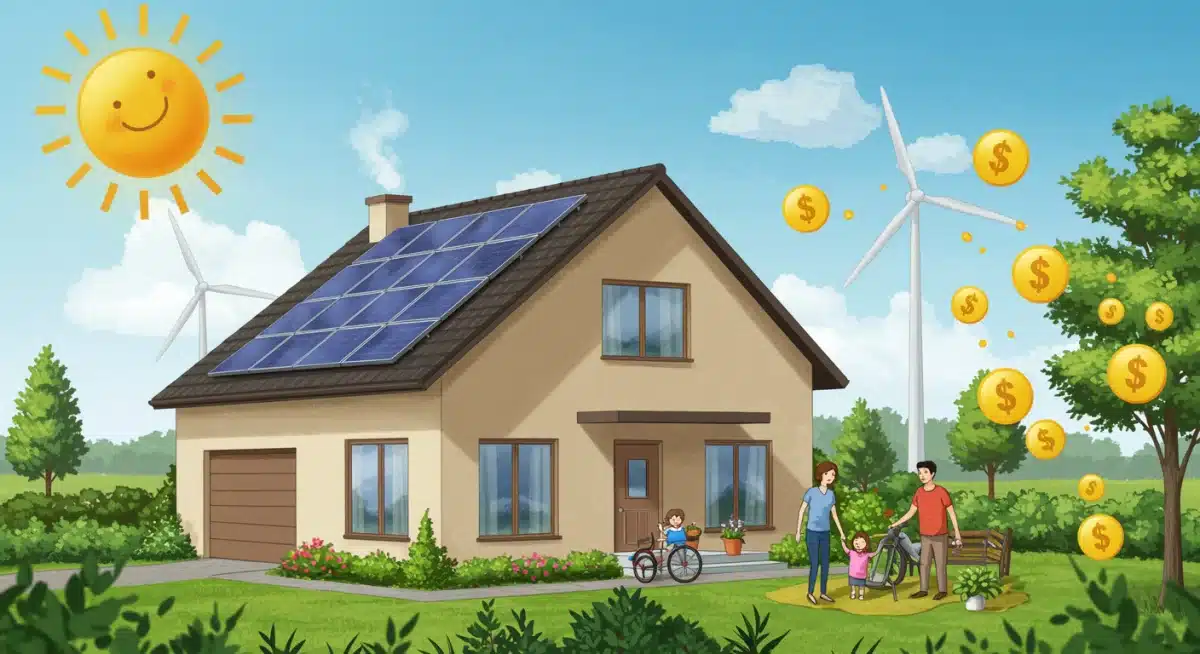
In an era where sustainability is not just a buzzword but a necessity, homeowners across the United States are increasingly looking for ways to reduce their carbon footprint and, in doing so, their utility bills. The good news is that both federal and state governments are stepping up, offering a plethora of incentives designed to make clean energy solutions more accessible and affordable for everyone. As we look towards 2026, understanding these programs is paramount for anyone considering an investment in their home’s energy future. This comprehensive guide will delve into the various clean energy benefits available, comparing federal and state initiatives to help you identify which programs offer the best returns on investment, potentially delivering an average of 15% annual savings.
The landscape of clean energy incentives is dynamic, with new programs emerging and existing ones evolving. For homeowners, navigating this complex web of tax credits, rebates, and grants can be challenging. However, the financial rewards are substantial, making the effort well worth it. From solar panel installations to energy-efficient appliance upgrades, there’s a wide array of opportunities to save money while contributing to a greener planet. Our goal is to demystify these options, providing a clear roadmap to maximizing your clean energy benefits.
Understanding the Federal Clean Energy Benefits Landscape in 2026
Federal programs form the cornerstone of clean energy incentives in the United States. These programs are typically broad in scope, aiming to encourage widespread adoption of renewable energy technologies and energy-efficient practices. The most prominent of these is often the federal tax credit, which directly reduces the amount of income tax you owe, dollar for dollar. For 2026, many of these credits are expected to remain robust, offering significant financial relief for homeowners making substantial clean energy investments.
The Residential Clean Energy Credit (Formerly the Investment Tax Credit)
One of the most impactful federal incentives is the Residential Clean Energy Credit, which homeowners can claim for installing eligible clean energy property. This credit covers a percentage of the cost of new, qualified clean energy property for your home. For installations completed through 2032, the credit is set at 30% of the cost of new, qualified clean energy property for your home. This includes solar electric property, solar water heating property, fuel cell property, small wind energy property, geothermal heat pump property, and battery storage technology with a capacity of at least 3 kilowatt hours. The consistency of this 30% rate through 2032 provides a clear and stable incentive for long-term planning, making it a cornerstone of clean energy benefits.
To illustrate the power of this credit, imagine you invest $30,000 in a new solar panel system. A 30% tax credit would equate to a $9,000 reduction in your federal tax liability. This isn’t a deduction from your taxable income; it’s a direct reduction of the tax you owe, making it incredibly valuable. It’s crucial to keep meticulous records of all expenses related to your clean energy installation to ensure you can claim the full credit. Consult with a tax professional to understand how this credit specifically applies to your financial situation.
Energy Efficient Home Improvement Credit (Section 25C)
Beyond renewable energy generation, the federal government also incentivizes improvements that boost your home’s overall energy efficiency. The Energy Efficient Home Improvement Credit, often referred to as the 25C credit, provides a tax credit for a variety of energy-efficient home improvements. For 2026, homeowners can claim a credit for 30% of the costs of certain qualified energy efficiency improvements, up to a maximum of $1,200 annually. This includes improvements like:
- Energy-efficient exterior windows, skylights, and exterior doors: These upgrades significantly reduce heat loss or gain, leading to lower heating and cooling costs.
- Insulation and air sealing materials or systems: Proper insulation is fundamental to maintaining a comfortable indoor temperature and reducing energy consumption.
- Energy-efficient heating and cooling equipment: This includes central air conditioners, furnaces, boilers, and heat pumps that meet specific energy efficiency standards.
- Home energy audits: The cost of a professional home energy audit, which identifies areas for improvement, is also eligible for a credit.
There are also specific annual limits for certain types of improvements within the $1,200 aggregate limit. For instance, a maximum of $600 applies to energy-efficient windows and skylights, and another $600 for energy-efficient exterior doors. Heat pumps, biomass stoves, and biomass boilers have a separate annual credit limit of $2,000. These credits, while smaller than the Residential Clean Energy Credit, can add up, especially when planning multiple energy-efficient upgrades. Understanding these thresholds is key to maximizing your clean energy benefits.
High-Efficiency Electric Home Rebate Program (HEEHRP)
The High-Efficiency Electric Home Rebate Program (HEEHRP) is another significant federal initiative, offering point-of-sale rebates for low- and moderate-income households to electrify their homes. While the exact implementation details and availability will vary by state and local administrators, this program is designed to cover up to 100% of project costs for low-income households and up to 50% for moderate-income households, with a maximum rebate of $14,000 per household. Eligible upgrades include:
- Heat pump water heaters: Up to $1,750
- Heat pumps for space heating and cooling: Up to $8,000
- Electric stoves, cooktops, ranges, and ovens: Up to $840
- Electric clothes dryers: Up to $840
- Upgraded electric panels: Up to $4,000
- Insulation, air sealing, and ventilation: Up to $1,600
- Electric wiring improvements: Up to $2,500
This program is particularly impactful as it directly reduces the upfront cost of these energy-efficient appliances, removing a significant barrier for many families. Unlike tax credits, which you claim later, rebates provide immediate savings at the point of purchase. Keeping an eye on your state’s energy office or local utility provider website will be essential to determine when and how these rebates become available in your area to access these crucial clean energy benefits.
Navigating State-Specific Clean Energy Benefits: A Comparative Analysis
While federal programs provide a strong foundation, state and local incentives often sweeten the deal, offering additional layers of financial support. These programs vary widely by location, reflecting the unique energy goals and resources of each state. It’s crucial for homeowners to research what’s available in their specific state and even their local municipality or utility company.
State Tax Credits and Rebates: Expanding Your Savings
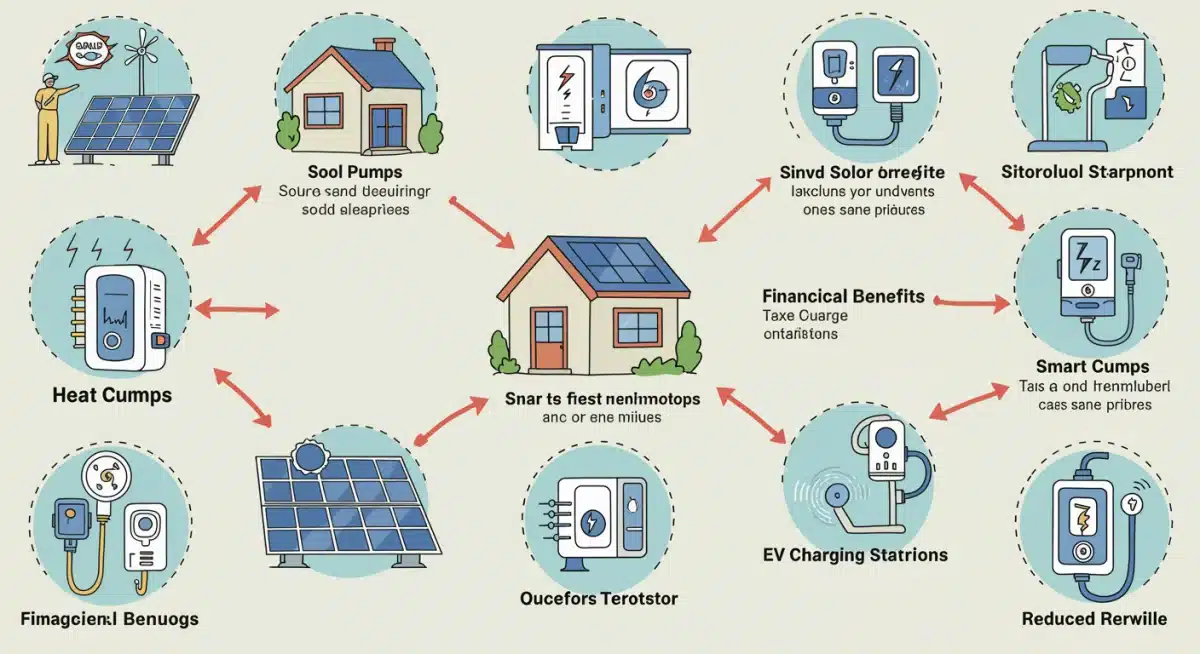
Many states offer their own versions of tax credits for renewable energy installations or energy efficiency upgrades. These can be stacked on top of federal credits, significantly increasing your overall savings. For example, some states offer a percentage-based tax credit for solar panel installations, similar to the federal credit, but applied to your state income tax. Others might offer flat-rate rebates for specific energy-efficient appliances, such as smart thermostats or high-efficiency water heaters.
Consider California, a leader in renewable energy. Beyond federal incentives, California homeowners can often benefit from programs like the Self-Generation Incentive Program (SGIP), which provides rebates for energy storage systems. Similarly, states like New York offer programs like NY-Sun, providing incentives for solar electric systems that can greatly reduce installation costs. These state-specific incentives are vital components of the broader clean energy benefits package.
Performance-Based Incentives and Net Metering
Beyond upfront financial assistance, some states and utility companies offer performance-based incentives. These programs pay homeowners for the clean energy their systems generate. Solar Renewable Energy Credits (SRECs) are a prime example. In states with SREC markets, homeowners who generate solar power earn one SREC for every megawatt-hour (MWh) of electricity produced. These SRECs can then be sold on a market, providing an ongoing revenue stream for solar panel owners. The value of an SREC fluctuates based on supply and demand within the state’s market.
Net metering is another critical state-level policy that allows homeowners with solar panels to send excess electricity generated back to the grid in exchange for credits on their utility bill. This effectively allows your electric meter to run backward, reducing or even eliminating your monthly electricity costs. While net metering policies vary from state to state, and are subject to change, they remain a powerful incentive for solar adoption, ensuring you get full value for the energy your system produces. Understanding net metering policies is crucial for calculating the long-term clean energy benefits of solar.
Low-Interest Loans and Grant Programs
For those who may not have the upfront capital for clean energy investments, many states and local entities offer low-interest loan programs or even grants. These programs are often targeted at specific income levels or for particular types of energy upgrades. For instance, some states might have programs that offer zero-interest loans for energy efficiency improvements, making it easier for homeowners to finance projects like new windows, insulation, or heat pump installations. Grants, while less common for general homeowner upgrades, are sometimes available for specific pilot programs or for very low-income households to address critical energy needs. Researching these options through your state’s energy office or local housing authority can uncover valuable opportunities to access clean energy benefits without significant upfront costs.
Comparing Federal and State Programs: Which Offers the Best Returns?
Determining which programs offer the ‘best’ returns on investment isn’t a one-size-fits-all answer. It largely depends on your specific location, income level, and the type of clean energy investment you’re considering. However, a strategic approach involves combining federal and state incentives to maximize your overall savings.
The Power of Stacking Incentives
The most effective strategy for homeowners is to stack federal tax credits with available state and local programs. For example, a homeowner installing solar panels might claim the 30% federal Residential Clean Energy Credit, benefit from a state-level solar rebate, and also participate in a net metering program. This multi-layered approach can significantly reduce the payback period for your investment and boost your annual savings well beyond the average 15%.
Let’s consider a practical example. A family in a state with strong solar incentives decides to install a $25,000 solar system. They immediately qualify for a $7,500 federal tax credit (30% of $25,000). Their state also offers a $2,000 rebate for solar installations. This brings their out-of-pocket cost down to $15,500. Furthermore, through net metering, they may eliminate their electricity bill, saving an average of $150-$200 per month. Over the lifetime of the system, these combined clean energy benefits lead to substantial financial gains.
Considering Your Individual Circumstances
It’s vital to assess your own financial situation and energy consumption patterns. If you have a high federal tax liability, the federal tax credits will be particularly beneficial. If you live in a state with high electricity rates, net metering and performance-based incentives will offer greater long-term savings. Low- and moderate-income households should prioritize programs like the High-Efficiency Electric Home Rebate Program, which directly reduces upfront costs. A thorough energy audit of your home can also pinpoint the most impactful upgrades for your specific property, guiding your investment decisions towards the most beneficial clean energy benefits.
Maximizing Your 15% Annual Savings: A Step-by-Step Guide
Achieving an average of 15% annual savings through clean energy investments is an attainable goal for many homeowners. Here’s a step-by-step guide to help you maximize your clean energy benefits:
- Conduct a Home Energy Audit: Start with a professional energy audit. This will identify where your home is losing energy and pinpoint the most effective improvements. Many audits are eligible for federal tax credits, making this a cost-effective first step.
- Research Federal Incentives: Familiarize yourself with the Residential Clean Energy Credit and the Energy Efficient Home Improvement Credit. Understand the eligibility requirements and documentation needed.
- Explore State and Local Programs: Visit your state’s energy office website, local utility company websites, and DSIRE (Database of State Incentives for Renewables & Efficiency) for a comprehensive list of state, local, and utility-specific incentives.
- Prioritize High-Impact Upgrades: Based on your audit and available incentives, prioritize upgrades that offer the greatest return on investment. This might be solar panels, a new heat pump, or comprehensive insulation and air sealing.
- Get Multiple Quotes: For major installations like solar or heat pumps, obtain quotes from several reputable contractors. Ensure they are knowledgeable about available incentives and can help you navigate the application process.
- Understand Stacking Rules: Confirm with your contractors and tax advisor how federal, state, and local incentives can be combined. Some programs may have limitations on stacking.
- Keep Meticulous Records: Save all receipts, invoices, certifications, and any other documentation related to your clean energy investments. This is crucial for claiming tax credits and rebates.
- Monitor Your Energy Usage: Once upgrades are complete, monitor your energy bills to track your savings. This reinforces the financial benefits and helps identify any further areas for improvement.
By following these steps, you can strategically leverage the various clean energy benefits available to significantly reduce your energy expenses and enhance your home’s value.
Future Outlook: What to Expect Beyond 2026
The commitment to clean energy and sustainability is only expected to grow, suggesting that federal and state support for homeowners will likely continue and potentially expand beyond 2026. While specific program details may evolve, the overarching trend points towards sustained efforts to promote renewable energy and energy efficiency. Policy makers are increasingly recognizing the economic and environmental advantages of transitioning to a clean energy economy, which bodes well for future incentives.

Homeowners should remain proactive in staying informed about new legislative developments and program announcements. Subscribing to newsletters from your state’s energy office, following reputable clean energy news sources, and consulting with energy professionals can help you stay ahead of the curve. The long-term trajectory for clean energy benefits is positive, offering sustained opportunities for savings and environmental impact.
Addressing Common Questions About Clean Energy Benefits
Are there income limits for all clean energy programs?
No, not all clean energy programs have income limits. Federal tax credits like the Residential Clean Energy Credit (for solar, etc.) and the Energy Efficient Home Improvement Credit are available to all eligible taxpayers, regardless of income. However, programs like the High-Efficiency Electric Home Rebate Program (HEEHRP) are specifically designed for low- and moderate-income households to ensure equitable access to clean energy upgrades. Many state and local rebate or loan programs also have income-based eligibility criteria. Always check the specific requirements for each program you are interested in.
Can I combine federal tax credits with state rebates for the same project?
In most cases, yes, you can combine federal tax credits with state rebates and other local incentives for the same project. This is often referred to as ‘stacking’ incentives and is highly encouraged to maximize your savings. For example, if you install solar panels, you can typically claim the federal Residential Clean Energy Credit on the total cost (before any rebates are applied) and then also receive a state rebate. However, it’s crucial to confirm the specific rules for each program, as some rare instances might have limitations on stacking. Your installer or a tax professional can provide guidance on how to best combine these clean energy benefits.
How do I find out about specific clean energy programs in my state?
The best resources for finding state-specific clean energy programs are:
- DSIRE (Database of State Incentives for Renewables & Efficiency): This is a comprehensive national resource that provides detailed information on federal, state, local, and utility-level incentives and policies.
- Your State’s Energy Office Website: Most states have a dedicated energy department or office that lists available programs, grants, and rebates.
- Your Local Utility Company Website: Many utility providers offer their own energy efficiency programs, rebates for smart thermostats, appliance upgrades, or participation in demand response programs.
- Local Government Websites: Some cities or counties offer specific incentives for their residents.
- Reputable Clean Energy Installers: Experienced contractors in solar, HVAC, or energy efficiency often have up-to-date knowledge of available incentives in your area.
What kind of annual savings can I realistically expect?
While an average of 15% annual savings is a reasonable target, your actual savings will depend on several factors: the type and scale of your clean energy investments, your pre-upgrade energy consumption, local electricity rates, and the specific combination of incentives you utilize. For instance, a homeowner who installs a full solar array, a heat pump, and significantly improves insulation in a region with high electricity costs and strong incentives might see savings well above 15%. Conversely, smaller, isolated upgrades might yield more modest, though still valuable, savings. The key is to make informed decisions and leverage as many clean energy benefits as possible.
Do I need to hire a professional for all clean energy upgrades?
For most major clean energy upgrades, such as solar panel installation, heat pump systems, or significant electrical work, hiring a certified professional is highly recommended and often required for warranty purposes, safety, and to ensure eligibility for incentives. DIY projects, while sometimes possible for minor upgrades like sealing air leaks or installing smart thermostats, typically do not qualify for the larger tax credits or rebates. Professionals ensure installations meet code requirements, are optimized for efficiency, and provide the necessary documentation for claiming your clean energy benefits.
Conclusion: Embracing a Sustainable and Economical Future
The journey towards a more sustainable home is not only environmentally responsible but also financially rewarding. With a robust framework of federal and state programs, homeowners in 2026 have unprecedented opportunities to invest in clean energy solutions and reap significant financial dividends. By diligently researching available incentives, strategically planning your upgrades, and combining federal tax credits with state-specific rebates and performance-based programs, you can unlock substantial savings, potentially averaging 15% or more annually on your energy bills.
The time to act is now. The long-term benefits of these investments extend beyond your personal finances, contributing to a cleaner environment, increased energy independence, and a more resilient national energy infrastructure. Embrace the future of home energy – a future powered by clean energy benefits, smart choices, and significant savings.