Unlock 2025 Clean Energy Tax Credits: Up to $7,500 Benefits

Understanding and claiming the 2025 Clean Energy Tax Credits can significantly offset costs for sustainable home improvements, potentially saving taxpayers up to $7,500 through various federal incentives.
Are you ready to transform your home into an energy-efficient haven while significantly reducing your tax burden? The opportunity to Unlock Your 2025 Clean Energy Tax Credits: A Practical Guide to Claiming Up To $7,500 in Benefits is more accessible than ever, offering substantial financial incentives for embracing sustainable living. This guide will walk you through the essential steps to maximize your savings and contribute to a greener future.
Understanding the Landscape of 2025 Clean Energy Tax Credits
The commitment to a sustainable future is reflected in the robust clean energy tax credits available in 2025. These incentives are designed to encourage homeowners to invest in energy-efficient upgrades and renewable energy systems, making eco-friendly choices more affordable and appealing. Navigating these credits requires a clear understanding of what’s available and how to qualify.
These credits are not merely deductions; they are direct reductions from your tax liability, meaning they can significantly lower the amount of tax you owe. The scope of eligible improvements is broad, encompassing everything from major renewable energy installations to smaller, yet impactful, energy-efficient home upgrades. Understanding the specific details for each type of credit is the first step toward maximizing your benefits.
The Inflation Reduction Act’s Impact on Clean Energy Incentives
The Inflation Reduction Act (IRA) of 2022 significantly expanded and extended many clean energy tax credits, making 2025 a pivotal year for homeowners. This landmark legislation aimed to accelerate the transition to a clean energy economy, providing long-term certainty for individuals and businesses investing in sustainable solutions. The IRA’s provisions are critical to understanding the generosity and longevity of these benefits.
- Extended Durations: Many credits, initially set to expire, have been extended for several years, providing ample time for planning and implementation of projects.
- Increased Caps: The IRA raised the maximum credit amounts for various improvements, allowing homeowners to claim higher savings than before.
- Broader Eligibility: Some updates broadened the types of qualified expenditures, making more energy-efficient products and systems eligible for credits.
The IRA’s enhancements mean that the financial incentives for adopting clean energy technologies are more substantial and accessible than ever before. This legislative push underscores the federal government’s dedication to combating climate change while simultaneously offering tangible financial relief to American households.
Key Tax Credits for Homeowners in 2025
For homeowners looking to make energy-efficient improvements, 2025 offers a suite of compelling tax credits. These incentives are designed to cover a wide range of upgrades, from major renewable energy installations to smaller, yet impactful, energy-saving enhancements. Knowing which credits apply to your planned projects is crucial for maximizing your financial return.
Two primary categories of credits stand out: the Residential Clean Energy Credit and the Energy Efficient Home Improvement Credit. Each has distinct qualifications, eligible expenses, and maximum benefit amounts. Understanding these differences will help you strategically plan your home improvements to align with the greatest tax advantages.
The Residential Clean Energy Credit: Solar, Wind, and Geothermal
The Residential Clean Energy Credit is perhaps the most significant incentive for homeowners investing in major renewable energy systems. This credit allows you to claim a percentage of the cost of new, qualified clean energy property for your home. For installations placed in service in 2025, the credit remains at 30% of the cost, with no maximum credit amount for most eligible expenses.
- Solar Electric Property: This includes solar panels that generate electricity for your home.
- Solar Water Heating Property: Systems that use solar energy to heat water for use in your home.
- Wind Energy Property: Small wind turbines that generate electricity for residential use.
- Geothermal Heat Pump Property: Systems that use the earth’s natural heat to warm and cool your home.
- Battery Storage Technology: New battery storage systems with a capacity of at least 3 kilowatt-hours.
This credit is non-refundable, meaning it can reduce your tax liability to zero, but you won’t get a refund for any excess credit. However, any unused credit can be carried forward to future tax years, making it a powerful long-term incentive for substantial investments in renewable energy. It’s an excellent opportunity to significantly offset the upfront costs of these valuable systems.
Maximizing Your Energy Efficient Home Improvement Credit
Beyond major renewable energy installations, many smaller, yet equally important, home improvements can also qualify for significant tax benefits. The Energy Efficient Home Improvement Credit (formerly known as the Nonbusiness Energy Property Credit) received a substantial boost from the Inflation Reduction Act, making it a powerful tool for enhancing your home’s energy performance.
This credit covers a broader array of energy-saving upgrades, from insulation to energy-efficient doors and windows. Unlike the Residential Clean Energy Credit, this credit has annual limits, but these limits are generous and reset each year, allowing for phased improvements over time. Strategic planning can help you leverage these annual caps effectively.
Eligible Upgrades and Annual Limits
The Energy Efficient Home Improvement Credit provides a credit for 30% of the cost of eligible home improvements, up to a maximum annual credit of $1,200 for most improvements. There are also specific higher annual limits for certain types of equipment, allowing for greater savings on particular investments.
- General Home Energy Audits: Up to $150 credit.
- Exterior Doors: Up to $250 per door, with an annual limit of $500.
- Exterior Windows and Skylights: Up to $600.
- Insulation and Air Sealing Materials: Up to $1,200.
- Heat Pumps and Biomass Stoves: Up to $2,000 (this is a separate annual limit, allowing you to claim this in addition to the $1,200 general limit).
It’s important to note that these annual limits reset each year. This means you could undertake a series of improvements over several years and claim the credit annually, potentially accumulating significant savings. Keep meticulous records of all expenses and certifications to ensure you meet the eligibility requirements for each upgrade you make.
Navigating the Specifics: What Qualifies for Up to $7,500
Achieving the maximum benefit of up to $7,500 in clean energy tax credits requires a strategic approach, often combining different eligible improvements. While no single credit directly offers $7,500 for a single item (except for very large-scale renewable projects with no cap), the cumulative effect of various credits can easily reach or exceed this amount. Understanding the interplay between these credits is key to unlocking the full potential for savings.
The $7,500 figure is a powerful illustration of the combined benefits available to homeowners who undertake comprehensive energy efficiency and renewable energy projects. It emphasizes the importance of looking at your home’s energy needs holistically, rather than focusing on isolated improvements. This integrated approach can lead to both significant tax savings and a more sustainable, comfortable home.
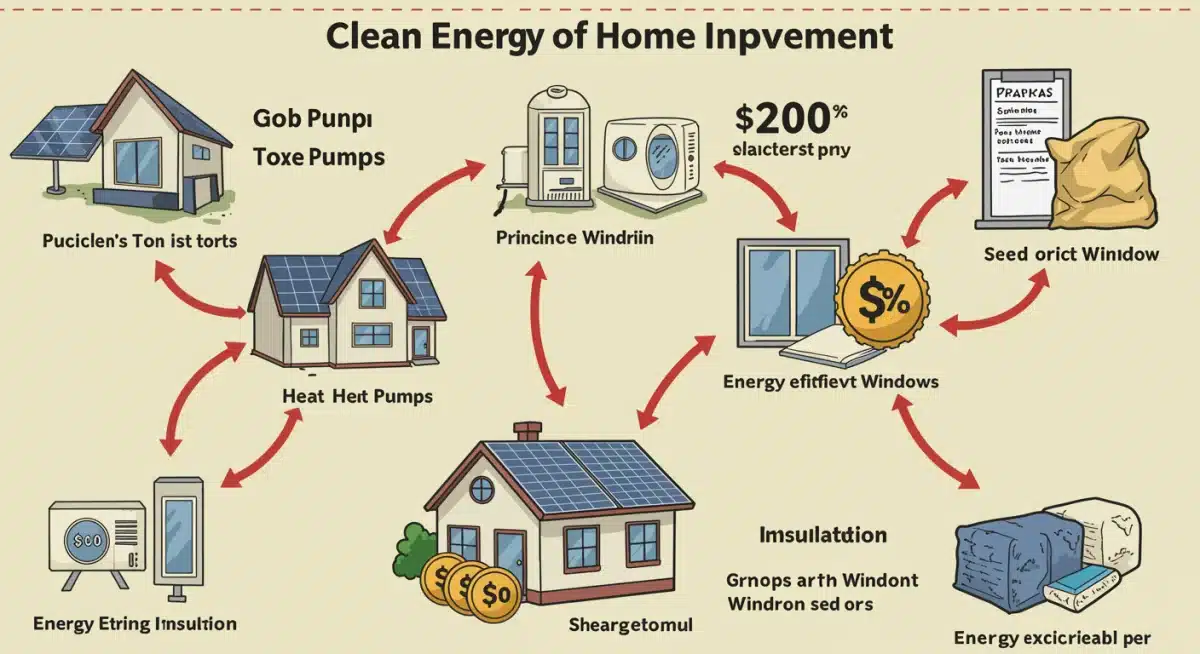
For instance, a homeowner might install solar panels (qualifying for the 30% Residential Clean Energy Credit with no cap), then upgrade to an energy-efficient heat pump ($2,000 credit), and also replace old windows ($600 credit). The total savings from these combined efforts can quickly accumulate, easily reaching the $7,500 benchmark or even surpassing it, depending on the scale and cost of the projects involved.
Combining Credits for Maximum Impact
To reach the $7,500 or more in savings, homeowners should consider a multi-faceted approach. This often involves leveraging both the uncapped Residential Clean Energy Credit for major installations and the annual limits of the Energy Efficient Home Improvement Credit for smaller upgrades.
- Start with Major Renewable Energy: Investing in solar, wind, or geothermal systems provides the largest credit potential due to the 30% uncapped credit. This forms the foundation of significant savings.
- Layer in Energy Efficiency: Once major systems are addressed, focus on improvements like heat pumps, insulation, and high-efficiency windows and doors. These upgrades, while having annual caps, add up quickly and complement the renewable energy installations by further reducing your home’s overall energy demand.
- Plan Across Tax Years: For improvements covered by annual caps, consider spreading projects across multiple years to maximize the annual credit availability. This allows you to claim the maximum for each eligible category over time.
Careful planning and documentation are paramount. Keep receipts, manufacturer certifications, and records of installation dates for all eligible improvements. Consulting with a tax professional experienced in clean energy credits can also provide invaluable guidance on optimizing your claims and ensuring compliance with IRS regulations.
The Process of Claiming Your 2025 Clean Energy Tax Credits
Claiming your 2025 clean energy tax credits doesn’t have to be a daunting task, but it does require attention to detail and proper documentation. The process typically involves filing specific IRS forms with your annual tax return. Understanding these steps in advance can help ensure a smooth and successful claim, allowing you to fully realize your deserved benefits.
The key to a successful claim lies in meticulous record-keeping and a clear understanding of the relevant forms. Don’t wait until tax season to gather your documents; start collecting them as soon as your eligible improvements are completed. This proactive approach will save you time and potential headaches down the line.
Required Documentation and IRS Forms
To claim the Residential Clean Energy Credit and the Energy Efficient Home Improvement Credit, you will generally need to file Form 5695, Residential Energy Credits, with your tax return. This form is used to calculate and report your eligible expenses and the resulting credit amount. It’s essential to have all supporting documentation readily available.
- Receipts and Invoices: Detailed records of all expenses related to the purchase and installation of eligible property. These should clearly show the cost of materials and labor.
- Manufacturer Certifications: For certain products, like energy-efficient windows or heat pumps, you may need a Manufacturer Certification Statement to verify that the product meets the specified energy efficiency standards.
- Proof of Installation Date: Documentation confirming when the property was placed in service. This is crucial for determining the correct tax year for your claim.
While Form 5695 is the primary document, it’s always advisable to consult the latest IRS instructions and publications for any updates or additional requirements. Tax software programs typically guide you through the process, but having your documentation organized beforehand will make the experience much smoother. Remember, accuracy in reporting is vital to avoid delays or issues with your claim.
Future Outlook and Long-Term Benefits of Clean Energy Investments
Investing in clean energy and energy-efficient home improvements extends far beyond immediate tax savings. These upgrades offer a multitude of long-term benefits, contributing to financial stability, environmental stewardship, and enhanced home comfort. The 2025 clean energy tax credits serve as a powerful catalyst for initiating these beneficial changes, setting the stage for a more sustainable future.
Beyond the direct financial incentives, consider the broader impact of your choices. A home that is more energy-efficient and powered by renewable sources is not only cheaper to run but also contributes to a healthier planet. This holistic view underscores the enduring value of these investments.
Beyond Tax Credits: Savings, Value, and Environmental Impact
The financial advantages of clean energy investments continue long after you’ve claimed your tax credits. Reduced utility bills are often the most immediate and tangible benefit, providing ongoing savings year after year. Homes with solar panels or advanced insulation typically see significantly lower heating, cooling, and electricity costs, freeing up household income for other priorities.
- Increased Home Value: Energy-efficient homes are increasingly attractive to buyers, often commanding higher resale values. Features like solar panels, new windows, and modern insulation are seen as valuable assets.
- Reduced Carbon Footprint: By generating your own clean energy or significantly reducing your energy consumption, you directly contribute to lowering greenhouse gas emissions, playing a part in combating climate change.
- Enhanced Home Comfort: Upgrades like improved insulation, sealed windows, and efficient HVAC systems lead to a more comfortable living environment, with fewer drafts and more consistent temperatures throughout your home.
Furthermore, the decreasing cost of renewable energy technologies, coupled with ongoing government support, makes these investments increasingly accessible and impactful. The 2025 tax credits are a fantastic starting point, but the true return on investment unfolds over the lifetime of your clean energy systems and energy-efficient upgrades, delivering both personal and planetary benefits.
| Key Point | Brief Description |
|---|---|
| Residential Clean Energy Credit | 30% credit for solar, wind, geothermal, and battery storage with no maximum for most expenses. |
| Energy Efficient Home Improvement Credit | 30% credit for various upgrades (insulation, windows, heat pumps) with annual limits up to $3,200 total. |
| Claiming Process | Requires Form 5695 and meticulous documentation like receipts and manufacturer certifications. |
| Long-Term Benefits | Includes reduced utility bills, increased home value, and a smaller carbon footprint. |
Frequently Asked Questions About 2025 Clean Energy Tax Credits
For the Residential Clean Energy Credit (solar, wind, geothermal), there is generally no maximum credit amount, allowing for significant savings. For the Energy Efficient Home Improvement Credit, there’s a $1,200 annual cap for most upgrades, with a separate $2,000 limit for heat pumps and biomass stoves, totaling up to $3,200 annually.
Both existing homes and new constructions can qualify for these clean energy tax credits. The credits are primarily aimed at improvements made to a taxpayer’s principal residence. For new homes, certain energy-efficient features or renewable energy systems installed during construction can also be eligible, depending on the specific credit requirements.
Yes, you can often combine different clean energy tax credits. For example, you can claim the Residential Clean Energy Credit for solar panel installation and also claim the Energy Efficient Home Improvement Credit for upgrading to an energy-efficient heat pump in the same tax year, maximizing your total savings across various improvements.
To claim your clean energy tax credits, you will need to keep detailed records of all expenses, including receipts and invoices for materials and labor. For certain products, manufacturer certification statements proving energy efficiency standards are met are also required. These documents support your claim when filing Form 5695 with the IRS.
Generally, the residential clean energy tax credits do not have specific income limitations, meaning most homeowners can qualify regardless of their adjusted gross income. However, the credits are non-refundable, so they can reduce your tax liability to zero, but you won’t receive a refund for any credit exceeding your tax due.
Conclusion
The 2025 Clean Energy Tax Credits present an exceptional opportunity for homeowners across the United States to invest in sustainable living while enjoying significant financial benefits. By understanding the various credits available, meticulously documenting expenses, and strategically planning improvements, you can unlock substantial savings, potentially reaching up to $7,500 or more. Beyond the immediate tax advantages, these investments pave the way for long-term utility bill reductions, increased home value, and a tangible contribution to a cleaner, greener environment. Embrace this moment to transform your home and secure a more sustainable future.