2026 Clean Electricity Credit: 10-Year Developer Benefits
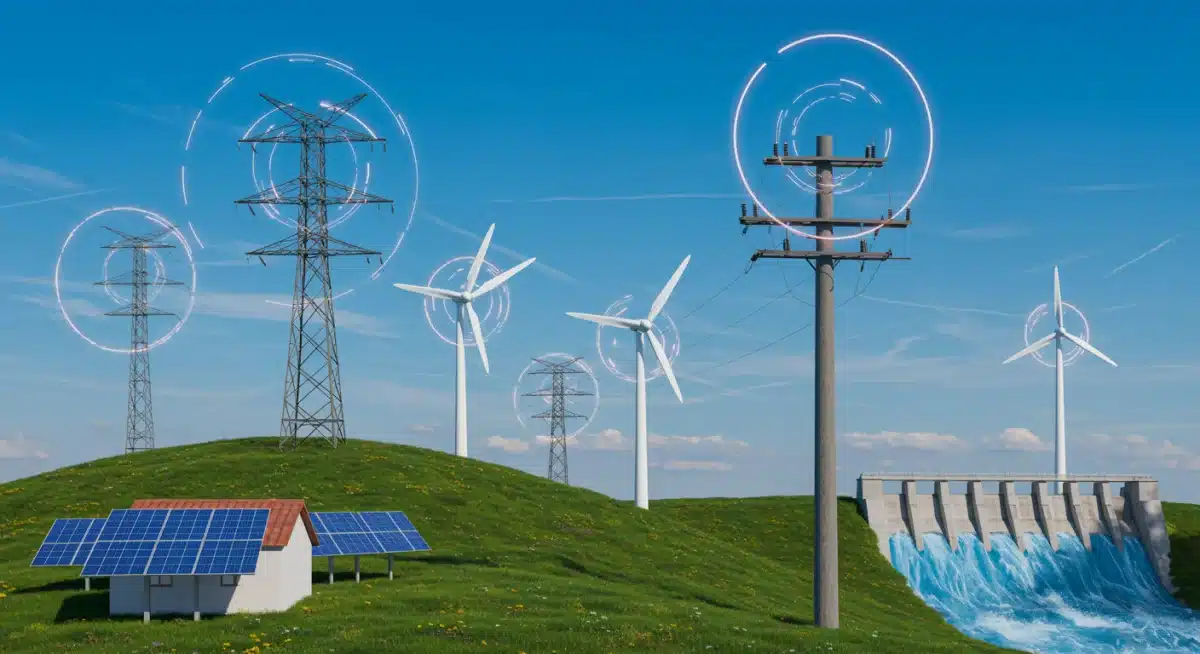
The 2026 Clean Electricity Production Credit is poised to offer renewable energy developers substantial financial incentives over a decade, significantly accelerating the transition to a sustainable energy future in the United States.
As we step into 2026, a pivotal shift in energy policy is set to redefine the landscape for sustainable development. The new provisions for the Clean Electricity Production Credit are designed to provide unprecedented, long-term stability and financial incentives for renewable energy developers, promising a decade of transformative growth. This isn’t just about tax breaks; it’s about fostering innovation, reducing carbon footprints, and securing a greener future for America.
Understanding the Clean Electricity Production Credit (CEPC) in 2026
The Clean Electricity Production Credit (CEPC), as it stands in 2026, represents a cornerstone of the nation’s commitment to decarbonization. This credit is not merely an extension of previous incentives; it’s a refined and robust mechanism designed to provide predictable financial support for projects generating clean electricity. It offers a per-kilowatt-hour (kWh) tax credit for electricity produced from eligible renewable sources, a benefit that can be claimed for a full ten years once a facility begins operation.
The intent behind the CEPC is clear: to de-risk investments in renewable energy and incentivize the rapid deployment of clean power generation technologies. This long-term horizon of ten years is particularly attractive to developers, as it allows for more accurate financial modeling and provides a stable revenue stream, crucial for securing project financing and attracting private capital. It signals a strong governmental endorsement of the renewable energy sector, fostering an environment where innovation and expansion can thrive.
Eligibility and Project Scope
Understanding which projects qualify for the CEPC is paramount for developers planning their ventures. The credit broadly covers most forms of clean electricity generation, moving beyond earlier, more restrictive definitions. This expanded scope is a direct response to the evolving technological landscape and the urgent need for diverse clean energy solutions.
- Solar Photovoltaic (PV) Systems: Both utility-scale and distributed generation projects are eligible, provided they meet specific domestic content and wage requirements.
- Wind Energy Projects: Onshore and offshore wind farms are significant beneficiaries, with the credit supporting their substantial capital investments and operational costs.
- Geothermal Energy: Projects harnessing the Earth’s internal heat for electricity generation are also included, recognizing their consistent, baseload power capabilities.
- Hydroelectric Power: While often overlooked, new and upgraded hydroelectric facilities that meet environmental standards can also claim the credit.
- Other Emerging Technologies: The CEPC is designed to be technology-neutral, encompassing other zero-emission electricity sources as they become commercially viable, such as advanced nuclear or certain types of clean hydrogen production.
The eligibility criteria emphasize not only the type of energy source but also factors like domestic content sourcing and adherence to prevailing wage and apprenticeship requirements. These provisions are intended to ensure that the economic benefits of the clean energy transition are broadly shared, creating high-quality jobs and bolstering domestic manufacturing capabilities. Developers must carefully navigate these requirements to maximize their credit value.
In essence, the 2026 CEPC is a powerful tool designed to accelerate the growth of the clean energy sector by providing a sustained financial incentive for a wide array of eligible projects. Its ten-year duration offers a level of predictability that is invaluable in the capital-intensive world of energy development, making it a cornerstone for future renewable energy strategies.
The 10-Year Horizon: Unlocking Long-Term Investment
The ten-year duration of the Clean Electricity Production Credit is perhaps its most impactful feature for renewable energy developers. This extended period of guaranteed financial support fundamentally alters the risk-reward calculus for clean energy projects, making them significantly more attractive to investors and easier to finance. Unlike shorter-term incentives that can create market volatility and uncertainty, a decade-long credit provides a robust foundation for strategic planning and sustained growth.
For large-scale infrastructure projects, which often have development cycles spanning several years and operational lives measured in decades, the assurance of a ten-year credit is transformative. It allows for the amortization of significant upfront capital costs over a longer, more predictable revenue stream, thereby improving project internal rates of return (IRR) and reducing the payback period. This predictability is paramount in drawing in institutional investors who seek stable, long-term assets.
Enhanced Project Viability and Financial Modeling
The extended credit period directly contributes to enhanced project viability. Developers can model their financial returns with greater confidence, leading to more favorable lending terms and lower costs of capital. This makes even projects with higher initial investment costs, or those in less established technologies, more financially feasible. The market signal sent by a ten-year commitment is incredibly strong, indicating a stable policy environment for renewable energy.
- Reduced Financial Risk: A decade of credits mitigates fluctuations in energy prices and policy changes, providing a buffer against market uncertainties.
- Improved Debt Financing: Lenders are more willing to offer competitive rates and longer terms when project revenues are bolstered by a guaranteed tax credit.
- Attraction of Equity Investors: Predictable cash flows over a long period are highly attractive to equity investors seeking stable, sustainable returns.
- Support for Innovation: The stability allows developers to invest in cutting-edge technologies and larger-scale projects that might otherwise be deemed too risky.
This long-term financial stability also encourages developers to think beyond immediate returns, fostering a focus on operational efficiency, technological advancements, and community engagement. The ability to plan for a full decade under a supportive policy framework allows for more robust project design, better integration into the grid, and a greater emphasis on long-term sustainability rather than short-term gains. It ensures that the benefits of clean energy production are not just transient but deeply embedded in the nation’s energy infrastructure for years to come.
In conclusion, the ten-year duration of the Clean Electricity Production Credit is a game-changer. It transforms renewable energy projects into highly attractive, stable investments, paving the way for unprecedented growth and ensuring that the United States remains at the forefront of the global clean energy transition.
Direct Financial Benefits for Developers
The Clean Electricity Production Credit in 2026 delivers substantial direct financial benefits that can significantly boost the profitability and sustainability of renewable energy projects. At its core, the CEPC provides a per-kilowatt-hour (kWh) tax credit, which translates into a direct reduction of a developer’s tax liability or, through transferability provisions, a source of cash flow. This direct financial injection is crucial for offsetting the often-high upfront capital expenditures associated with renewable energy infrastructure.
The value of the credit is designed to be impactful, often adjusted for inflation, ensuring its relevance over the ten-year period. This means that for every unit of clean electricity produced and sold, developers receive a tangible financial incentive. This mechanism effectively lowers the levelized cost of electricity (LCOE) from renewable sources, making them more competitive with traditional fossil fuel-based generation, even without factoring in environmental benefits.
Monetization and Transferability Options
One of the most innovative and beneficial aspects of the 2026 CEPC is its enhanced monetization options, particularly the provisions for transferability. Historically, tax credits could only be utilized by entities with sufficient tax appetite, which often excluded many project developers. The new rules address this challenge directly.
- Direct Pay: For certain entities, such as governmental bodies and non-profits, the credit can be received as a direct cash payment from the Treasury, effectively making it a grant.
- Transferability: Developers can now sell their tax credits to unrelated third parties for cash. This market-based mechanism allows developers without sufficient tax liability to monetize the full value of the credit, attracting a broader base of investors.
- Basis Reduction: The credit can also reduce the tax basis of the property, offering another avenue for financial benefit.
The transferability option is a particularly powerful tool, democratizing access to the credit’s benefits. It creates a secondary market for tax credits, enabling developers to receive immediate cash payments, which can then be reinvested into new projects, used to pay down debt, or improve project returns. This flexibility ensures that the financial benefits of the CEPC are accessible to a wider range of project sizes and developer profiles, from large utility-scale operators to smaller, community-focused projects.
These direct financial benefits, coupled with the ability to monetize the credit effectively, make the Clean Electricity Production Credit a cornerstone of renewable energy project finance in 2026. It provides a clear, measurable incentive that directly improves the economic outlook for clean energy development, driving investment and accelerating the transition to a sustainable energy grid.
Driving Innovation and Technological Advancement
Beyond direct financial incentives, the Clean Electricity Production Credit in 2026 plays a crucial role in fostering innovation and accelerating technological advancement within the renewable energy sector. By providing long-term financial certainty, the CEPC reduces the risk associated with investing in new and emerging clean energy technologies. This encouragement to innovate is vital for pushing the boundaries of what’s possible in sustainable power generation, leading to more efficient, cost-effective, and reliable solutions.
Developers are incentivized to explore next-generation technologies that might have higher upfront costs but promise greater long-term efficiency or new applications. The ten-year credit period allows these nascent technologies to mature and achieve economies of scale, moving them from research and development phases into commercial deployment. This policy framework acts as a catalyst, transforming theoretical breakthroughs into practical, grid-scale solutions.

Research & Development Boost
The stability offered by the CEPC indirectly supports increased investment in research and development (R&D). Companies and academic institutions, aware of the favorable market conditions, are more likely to dedicate resources to improving existing technologies and developing entirely new ones. This continuous cycle of innovation is essential for addressing the evolving challenges of grid integration, energy storage, and materials science.
- Advanced Materials: Development of more efficient solar cells, lighter and stronger wind turbine blades, and more durable components.
- Grid Modernization: Investment in smart grid technologies, artificial intelligence for energy management, and enhanced cybersecurity for energy infrastructure.
- Energy Storage Solutions: Breakthroughs in battery technology, hydrogen storage, and other long-duration energy storage systems crucial for grid stability.
- New Generation Methods: Exploration of tidal, wave, and enhanced geothermal systems that could unlock vast new sources of clean power.
Furthermore, the CEPC’s technology-neutral approach ensures that support is not limited to a select few established renewable sources. This encourages a diverse portfolio of clean energy solutions, fostering healthy competition and driving down costs across the board. As technologies become more efficient and affordable, the overall cost of the energy transition decreases, making clean electricity more accessible to all.
In summary, the Clean Electricity Production Credit is more than just a financial incentive; it’s a strategic investment in the future of clean energy innovation. By providing a stable and supportive environment, it empowers developers to push the boundaries of technology, leading to a more robust, diversified, and sustainable energy landscape for 2026 and beyond.
Impact on Job Creation and Economic Growth
The implementation of the Clean Electricity Production Credit in 2026 is poised to be a significant engine for job creation and broad economic growth across the United States. Investments in renewable energy projects are inherently labor-intensive, requiring a diverse workforce across various stages, from manufacturing and installation to operations and maintenance. The ten-year stability offered by the CEPC provides the certainty needed to spur long-term hiring and foster the development of a skilled green energy workforce.
As developers embark on new projects or expand existing ones, the demand for engineers, construction workers, technicians, project managers, and administrative staff will surge. This growth is not confined to urban centers; many renewable energy projects are located in rural areas, bringing much-needed economic development and employment opportunities to communities that may have historically faced economic challenges. This localized economic injection can revitalize regional economies and create sustainable career paths.
Supply Chain Development and Domestic Manufacturing
A critical component of the CEPC’s economic impact lies in its emphasis on domestic content and prevailing wage requirements. These provisions are designed to strengthen the domestic supply chain for renewable energy components, encouraging manufacturers to locate or expand their operations within the United States. This leads to a virtuous cycle of investment, job creation, and technological advancement.
- Manufacturing Jobs: Increased demand for solar panels, wind turbine components, battery storage systems, and other clean energy technologies stimulates factory jobs.
- Construction Sector Growth: Large-scale infrastructure projects require extensive civil engineering, electrical work, and specialized construction skills.
- Operations & Maintenance Roles: Once operational, renewable energy facilities require ongoing staffing for monitoring, repair, and upkeep, providing stable, long-term employment.
- Ancillary Services: The growth of the clean energy sector also boosts demand for legal, financial, consulting, and logistics services, creating jobs in supporting industries.
The focus on domestic manufacturing also enhances energy independence and resilience, reducing reliance on foreign supply chains and bolstering national security. By creating a robust domestic industry, the U.S. can better control the quality, cost, and availability of critical components needed for its energy transition. This fosters a self-sustaining ecosystem where economic growth and environmental stewardship go hand in hand, cementing the United States’ leadership in the global clean energy economy.
Ultimately, the Clean Electricity Production Credit is not just an environmental policy; it’s a powerful economic development tool. By incentivizing clean energy projects, it generates a cascade of positive economic effects, from direct job creation to the strengthening of domestic industries, contributing significantly to the nation’s prosperity in 2026 and beyond.
Navigating Compliance and Maximizing Credit Value
While the Clean Electricity Production Credit offers substantial benefits, developers must navigate a complex landscape of compliance requirements to fully maximize its value. The 2026 framework includes specific stipulations regarding domestic content, prevailing wages, and apprenticeship programs, all of which are critical for earning the full credit amount. Understanding and adhering to these rules from the outset of project planning is paramount to avoid potential reductions in credit value or delays.
The domestic content requirement, for instance, mandates that a certain percentage of the project’s components be manufactured in the United States. This encourages developers to source materials and equipment from domestic suppliers, but also necessitates careful supply chain management and verification processes. Similarly, prevailing wage requirements ensure that workers involved in the construction and maintenance of projects are paid fair wages, while apprenticeship provisions aim to build a skilled workforce for the future.
Strategic Planning for Optimization
Maximizing the CEPC’s value requires more than just meeting the minimum requirements; it demands strategic planning and proactive engagement with the regulatory framework. Developers should integrate compliance considerations into every phase of project development, from initial feasibility studies to long-term operational strategies.
- Early Engagement with Experts: Consulting with tax advisors, legal counsel, and supply chain specialists experienced in clean energy incentives can prevent costly errors and identify optimization opportunities.
- Detailed Documentation: Maintaining meticulous records of all expenditures, labor hours, and material sourcing is essential for substantiating credit claims during audits.
- Supply Chain Audits: Conducting thorough audits of suppliers to ensure compliance with domestic content rules and ethical labor practices.
- Workforce Development: Establishing or partnering with apprenticeship programs not only meets compliance but also contributes to a pipeline of skilled labor.
Furthermore, developers should stay abreast of any potential updates or clarifications to the CEPC guidelines. The regulatory environment for tax credits can evolve, and proactive monitoring ensures that projects remain in full compliance and can adapt to any changes. Engaging with industry associations and government agencies can also provide valuable insights and opportunities for feedback on implementation.
In conclusion, the Clean Electricity Production Credit offers an unparalleled opportunity for renewable energy developers. However, realizing its full potential hinges on a deep understanding of its compliance requirements and a commitment to strategic planning. By meticulously navigating these complexities, developers can ensure they fully capitalize on the credit’s benefits, contributing to both their financial success and the nation’s clean energy goals.
The Broader Vision: A Sustainable Energy Future
The Clean Electricity Production Credit for 2026 is not merely a financial instrument; it is a critical component of a broader vision for a sustainable energy future in the United States. By incentivizing the generation of clean electricity over a ten-year period, the CEPC accelerates the nation’s transition away from fossil fuels, significantly contributing to climate change mitigation and enhancing energy independence. This long-term policy commitment signals a decisive move towards a decarbonized economy, aligning economic growth with environmental responsibility.
The shift to clean electricity has profound environmental benefits, including reduced greenhouse gas emissions, improved air quality, and conservation of natural resources. These benefits extend beyond climate change, impacting public health and ecological systems positively. The CEPC directly supports this transition by making clean energy projects more competitive and pervasive across the energy landscape.
Strengthening Energy Independence and Resilience
A diversified energy portfolio, heavily weighted towards domestic renewable sources, significantly enhances energy independence. By reducing reliance on volatile global fossil fuel markets, the U.S. can achieve greater price stability and security of supply. The CEPC plays a vital role in building this resilient energy infrastructure.
- Reduced Fuel Imports: Less dependence on imported oil and gas, bolstering national economic security.
- Decentralized Generation: More distributed energy sources reduce the vulnerability of the grid to large-scale disruptions.
- Grid Modernization: Investment in smart grid technologies supported by renewable growth leads to a more robust and adaptable electrical system.
- Long-Term Stability: Domestically produced clean energy provides a stable, predictable energy supply for decades to come, insulating consumers from global energy shocks.
Furthermore, the development of a strong domestic clean energy industry, fostered by the CEPC, creates a strategic advantage for the United States on the global stage. It positions the nation as a leader in clean technology, innovation, and sustainable development, driving exports and influencing international energy policy. This leadership is not just about economic power but also about setting a global example for environmental stewardship.
In essence, the Clean Electricity Production Credit is an investment in a future where energy is clean, affordable, and secure. It empowers renewable energy developers to build the infrastructure necessary for this future, creating jobs, stimulating innovation, and ensuring that the United States remains at the forefront of the global effort to combat climate change and build a sustainable world. The benefits extend far beyond the balance sheets of developers, touching every aspect of American life for generations to come.
| Key Benefit | Description |
|---|---|
| 10-Year Financial Predictability | Guaranteed tax credit for a decade, improving project ROI and attracting long-term investment. |
| Enhanced Monetization Options | Includes direct pay and credit transferability, allowing developers to convert credits to cash more easily. |
| Job Creation & Economic Boost | Stimulates employment in manufacturing, construction, and operations, strengthening domestic supply chains. |
| Technological Innovation | Reduces risk for new technologies, fostering R&D and deployment of advanced clean energy solutions. |
Frequently Asked Questions About the 2026 Clean Electricity Production Credit
The primary benefit is long-term financial predictability for renewable energy projects. This decade-long incentive significantly de-risks investments, making it easier for developers to secure financing, improve project returns, and plan for sustained growth in the clean energy sector.
The CEPC is broadly technology-neutral, covering solar, wind, geothermal, and hydroelectric projects. It also extends to other emerging zero-emission electricity sources, provided they meet specific domestic content, prevailing wage, and apprenticeship requirements to qualify for the full credit.
Developers can monetize the credit through direct pay options for eligible entities or, more broadly, through transferability. Transferability allows developers to sell their tax credits to unrelated third parties for cash, providing immediate liquidity and expanding access to the credit’s financial benefits.
The CEPC stimulates job creation across manufacturing, construction, operations, and maintenance sectors. Its domestic content and wage requirements strengthen the US supply chain, fostering local economic development and creating skilled green energy jobs, particularly in rural areas.
Key considerations include adhering to domestic content thresholds, paying prevailing wages, and implementing apprenticeship programs. Developers must maintain detailed documentation and engage with experts to ensure full compliance and maximize the credit’s value, avoiding potential reductions or delays.
Conclusion
The Clean Electricity Production Credit, as refined for 2026, stands as a monumental policy initiative poised to redefine the renewable energy landscape in the United States. Its ten-year duration provides an unprecedented level of financial certainty, acting as a powerful catalyst for long-term investment, technological innovation, and robust economic growth. By offering predictable incentives, facilitating monetization, and fostering domestic manufacturing and job creation, the CEPC empowers renewable energy developers to accelerate the transition to a sustainable, independent, and resilient energy future. This credit is not merely a transient boost but a foundational pillar for a greener, more prosperous America for decades to come, ensuring that the benefits of clean electricity production are deeply woven into the fabric of the nation’s progress.