Curriculum Standards Impact Clean Energy Job Skills by 2025

New curriculum standards are critically influencing the development of clean energy job skills by 2025, highlighting significant educational gaps and the urgent need for aligned training to meet rapidly evolving industry demands in the United States.
The landscape of energy is undergoing a profound transformation, driven by an urgent global need for sustainable solutions. This shift directly impacts the demand for specialized talent, making the question of how new curriculum standards impact clean energy job skills by 2025 a critical one. As the clean energy sector expands rapidly, educational institutions face the challenge of equipping the workforce with the precise competencies required, often revealing significant gaps between current offerings and future industry needs.
The evolving landscape of clean energy jobs
The clean energy sector is not static; it is a dynamic and rapidly expanding field that encompasses a wide array of technologies and services. From solar and wind power generation to advanced battery storage and smart grid management, the industry’s growth trajectory is steep. This expansion naturally leads to a surge in demand for a skilled workforce capable of innovating, installing, maintaining, and managing these complex systems.
The nature of these jobs is also evolving. What once might have been a purely mechanical role now often requires a blend of technical expertise, digital literacy, and problem-solving skills. The push towards decarbonization and energy independence in the United States amplifies this need, creating a unique set of challenges and opportunities for both educators and future employees. Understanding these shifts is the first step in addressing the educational requirements.
Key growth areas in clean energy employment
Several segments within the clean energy sector are experiencing particularly robust growth. These areas are not only creating new jobs but also redefining existing ones, demanding a more sophisticated skill set from workers. The demand spans across various levels, from entry-level technicians to highly specialized engineers and data analysts.
- Renewable energy generation: This includes significant expansion in solar photovoltaic (PV) installation and maintenance, as well as wind turbine technology, requiring electricians, engineers, and specialized technicians.
- Energy storage: The proliferation of battery storage systems, both grid-scale and residential, creates demand for manufacturing, installation, and management professionals.
- Smart grid and digitalization: Modernizing electricity grids with digital technologies requires experts in data analytics, cybersecurity, and control systems to optimize energy distribution and consumption.
- Energy efficiency and conservation: Roles focused on reducing energy consumption in buildings and industrial processes, including energy auditors, building performance specialists, and HVAC technicians with green credentials.
As these areas mature, the need for a workforce that can adapt to new technologies and methodologies becomes paramount. Educational programs must therefore be agile, incorporating the latest advancements and foreseeing future trends to remain relevant.
The continuous evolution of the clean energy sector necessitates a proactive approach to workforce development. Without adequately prepared professionals, the ambitious goals for renewable energy deployment and carbon reduction in the US will be difficult to achieve. This underscores the critical role of education in bridging the gap between industry needs and available talent.
Current curriculum standards and their limitations
Existing educational frameworks, while foundational, often struggle to keep pace with the rapid technological advancements in the clean energy sector. Traditional vocational training and engineering programs may provide strong theoretical bases, but they can fall short in delivering the specific, hands-on skills required by modern clean energy employers. This lag creates a disconnect, as graduates may possess general knowledge but lack the specialized competencies immediately applicable in the field.
Many current curricula were designed for an industrial landscape that is quickly becoming outdated. They might emphasize fossil fuel technologies or neglect emerging areas like advanced grid integration, energy storage solutions, or the critical role of data science in energy management. This leads to an educational gap where new entrants to the workforce require extensive on-the-job training, which can be costly and time-consuming for employers.
Gaps in technical and soft skills
The deficiencies in current curriculum standards are not limited to just technical knowledge. While specific technical skills are crucial, the clean energy industry also increasingly values a range of soft skills that enable effective collaboration, problem-solving, and adaptability. These often receive less emphasis in traditional educational settings.
- Digital literacy and data analytics: Understanding how to interpret and utilize data from smart grids, renewable energy systems, and energy efficiency platforms is becoming essential for many roles.
- Problem-solving and critical thinking: Clean energy challenges are often multidisciplinary and require innovative solutions, demanding strong analytical and critical thinking abilities.
- Project management: As clean energy projects grow in complexity and scale, effective project management skills are vital for successful implementation and timely completion.
- Communication and teamwork: Collaboration across diverse teams, including engineers, technicians, policymakers, and community stakeholders, is fundamental for project success and industry growth.
Addressing these gaps requires a holistic approach to curriculum development, integrating both advanced technical training and robust soft skill development. Without this balanced approach, the workforce will remain underprepared for the multifaceted demands of the clean energy economy.
The limitations of current curriculum standards highlight an urgent need for reform. Educational institutions must engage deeply with industry partners to understand evolving skill requirements and adapt their programs accordingly. This proactive engagement is essential for ensuring that future graduates are not only knowledgeable but also highly employable within the clean energy sector.
Emerging curriculum standards and their focus
In response to the identified gaps, new curriculum standards are beginning to emerge, designed to better align educational outcomes with the specific demands of the clean energy sector. These updated frameworks often emphasize interdisciplinary learning, practical application, and the integration of cutting-edge technologies. The goal is to produce graduates who are not only technically proficient but also adaptable and innovation-ready, capable of contributing immediately to the industry.
These new standards are often developed through collaborations between educational institutions, industry leaders, and government agencies. This collaborative approach ensures that the curricula reflect real-world requirements and anticipate future trends, moving beyond theoretical knowledge to practical competencies. The focus is on creating a workforce that can drive the clean energy transition forward effectively.
Key areas of emphasis in new standards
The revised curriculum standards typically highlight several critical areas, aiming to provide a comprehensive and relevant education for clean energy professionals. These areas reflect the evolving technological landscape and the increasing complexity of clean energy projects.
- Renewable energy systems integration: Training in how to integrate various renewable energy sources (solar, wind, hydro) with existing grids and energy storage solutions.
- Digital twins and AI for energy: Incorporating concepts of digital modeling, artificial intelligence, and machine learning for optimizing energy production, distribution, and consumption.
- Cybersecurity in energy infrastructure: Addressing the growing need to protect smart grids and renewable energy systems from cyber threats, a crucial skill for modern energy networks.
- Sustainable materials and circular economy principles: Educating on the use of environmentally friendly materials and the principles of reducing waste and maximizing resource efficiency in energy projects.
These areas underscore a shift towards a more integrated and technologically advanced approach to clean energy education. The emphasis is on developing skills that are not only relevant today but also future-proof, allowing professionals to adapt to subsequent technological shifts.
The emergence of these new curriculum standards represents a significant step forward in addressing the workforce needs of the clean energy sector. By focusing on practical, interdisciplinary, and technologically advanced training, these standards aim to bridge the existing skill gaps and ensure a steady supply of qualified professionals for the industry’s continued growth.
Comparison of educational gaps by 2025
As we look towards 2025, a critical comparison reveals persistent and evolving educational gaps between current curriculum outputs and the projected demands of the clean energy job market. While new standards are emerging, their full implementation and widespread impact will take time, leaving a transitional period where certain skills will be acutely scarce. This analysis is crucial for policymakers, educators, and industry stakeholders to strategically allocate resources and develop targeted interventions.
The pace of technological innovation in clean energy often outstrips the speed at which educational systems can adapt. This disparity means that even with updated curricula, there will likely be a lag in producing a workforce fully equipped with the latest skills. Understanding where these gaps are most pronounced allows for more effective planning and resource deployment.
Specific skill deficits projected for 2025
Several specific skill areas are anticipated to experience notable deficits by 2025, posing challenges for the clean energy sector’s growth. These deficits often stem from a combination of rapid technological change and insufficient educational pipeline development.
- Advanced battery technology specialists: With the surge in electric vehicles and grid-scale storage, expertise in battery chemistry, manufacturing, and management will be in high demand.
- Grid modernization engineers: Professionals capable of designing, implementing, and managing smart grid technologies, including microgrids and distributed energy resources, will be essential.
- Renewable energy project developers with policy acumen: Individuals who understand both the technical aspects of renewable projects and the complex regulatory and financial landscapes will be highly sought after.
- HVAC technicians with heat pump expertise: As heat pumps become a cornerstone of building decarbonization, technicians skilled in their installation, maintenance, and optimization will be critical.
These projected deficits highlight the need for accelerated training programs and greater investment in vocational and higher education pathways that specifically target these emerging areas. Without these interventions, the clean energy industry may face significant bottlenecks in its expansion.
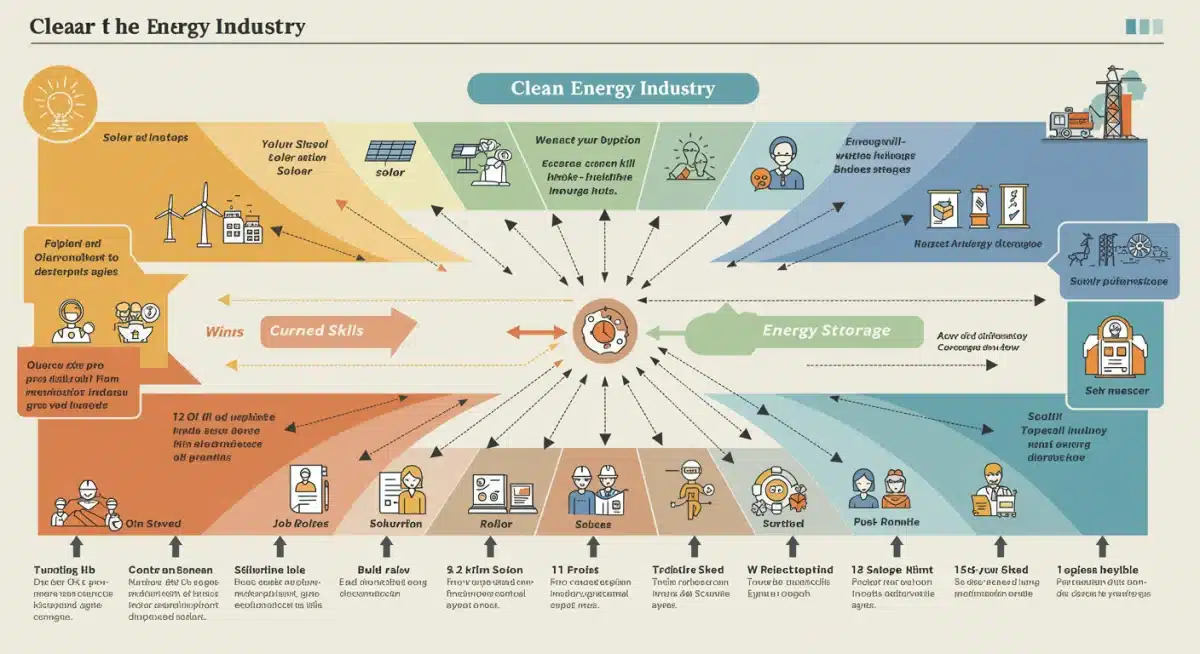
The comparison of educational gaps leading up to 2025 underscores the dynamic nature of the clean energy sector’s workforce requirements. While progress is being made with new curriculum standards, continuous vigilance and adaptive strategies are necessary to ensure that the educational system can adequately prepare the next generation of clean energy professionals.
Strategies for bridging the educational divide
Bridging the educational divide in clean energy job skills requires a multi-faceted approach involving collaboration among various stakeholders. No single entity can solve this challenge alone; rather, it demands a concerted effort from educational institutions, industry, government, and even non-profit organizations. The goal is to create a seamless pipeline from education to employment, ensuring that graduates are job-ready and that employers have access to the talent they need.
Effective strategies must focus on both immediate needs and long-term sustainability. This means not only updating existing curricula but also fostering innovation in teaching methodologies, expanding access to training, and creating pathways for continuous professional development. The complexity of the clean energy transition necessitates equally robust and innovative educational responses.
Key initiatives and collaborations
Several crucial initiatives and collaborative models are proving effective in addressing the educational gaps in clean energy. These approaches emphasize practical experience, industry relevance, and accessibility.
- Industry-academic partnerships: Collaborations between universities, community colleges, and clean energy companies to co-develop curricula, offer internships, and provide real-world project experience for students.
- Apprenticeship programs: Expanding registered apprenticeship programs that combine on-the-job training with classroom instruction, providing a direct pathway to skilled employment.
- Micro-credentials and specialized certifications: Offering shorter, focused training programs that allow individuals to quickly gain specific skills needed for emerging clean energy roles, often targeting upskilling or reskilling existing workers.
- STEM education emphasis: Strengthening K-12 STEM education to build a foundational understanding of science, technology, engineering, and mathematics, which are critical for future clean energy careers.
These initiatives are vital for creating a responsive and agile educational ecosystem. By fostering strong links between learning and earning, they help ensure that the workforce is continuously evolving to meet the clean energy sector’s demands.
Ultimately, successfully bridging the educational divide will depend on sustained commitment and proactive engagement from all parties. The strategies implemented today will determine the readiness of the workforce to power the clean energy economy of tomorrow, making these efforts not just beneficial but essential for national progress.
Policy implications and government’s role
Government policies play a pivotal role in shaping the educational landscape and, consequently, the readiness of the workforce for the clean energy sector. Strategic policy decisions can accelerate curriculum reform, provide funding for critical training programs, and incentivize collaboration between academia and industry. Without supportive government frameworks, even the best educational initiatives may struggle to achieve widespread impact and scalability.
Effective policies can create an enabling environment for innovation in education, ensuring that resources are directed towards areas of greatest need and that barriers to access are minimized. This includes everything from funding research into future skill requirements to establishing national standards for clean energy certifications. The government’s leadership is indispensable in coordinating efforts across various sectors.
Key policy recommendations for workforce development
To effectively address the clean energy skills gap, several policy recommendations stand out as critical for government action. These recommendations aim to create a more robust and responsive educational and training infrastructure.
- Increased funding for vocational and technical schools: Direct investment in community colleges and trade schools to equip them with modern clean energy training facilities and qualified instructors.
- Tax incentives for industry training: Offering tax breaks or grants to companies that invest in upskilling their workforce for clean energy roles or provide internships and apprenticeships.
- National clean energy curriculum guidelines: Developing federal guidelines or models for clean energy education that states and institutions can adopt to ensure consistency and quality across programs.
- Support for STEM and vocational pathways: Implementing policies that encourage students from diverse backgrounds to pursue STEM and vocational careers related to clean energy from an early age.
These policy interventions are designed to stimulate growth in the clean energy workforce, making education more accessible, relevant, and aligned with industry needs. By investing in human capital, the government can significantly bolster the nation’s transition to a sustainable energy future.
The government’s role extends beyond mere funding; it involves strategic planning, regulatory support, and fostering a culture of continuous learning. By implementing forward-thinking policies, the US government can ensure that its workforce is not just prepared for but can also lead the global clean energy revolution.
Future outlook: 2025 and beyond
Looking ahead to 2025 and beyond, the trajectory of clean energy job skills will be profoundly shaped by ongoing technological advancements, evolving policy landscapes, and the adaptability of educational systems. The clean energy sector is poised for continued exponential growth, driven by increasing environmental awareness, economic incentives, and geopolitical considerations. This growth will undoubtedly bring new challenges and opportunities for workforce development.
The future workforce will need to be more agile, digitally literate, and proficient in interdisciplinary problem-solving than ever before. As automation and artificial intelligence become more integrated into clean energy operations, the demand for human skills will shift towards areas that require creativity, critical thinking, and complex social interactions. Preparing for this future requires foresight and continuous innovation in education.
Anticipated shifts in skill requirements
Several key shifts in skill requirements are anticipated as the clean energy sector matures and new technologies emerge. These changes will necessitate a proactive approach to curriculum development and professional training.
- Advanced data science and AI expertise: For optimizing grid performance, predicting energy demand, and managing complex renewable energy assets.
- Cyber-physical systems security: Protecting integrated energy systems from digital and physical threats will become a top priority, requiring specialized security professionals.
- Circular economy engineering: Skills in designing for recyclability, waste reduction, and resource efficiency across the entire lifecycle of clean energy technologies.
- Green hydrogen and advanced nuclear technologies: As these technologies scale, specialized engineers, operators, and maintenance technicians will be needed to support their deployment.
These evolving demands underscore the importance of flexible and adaptable educational frameworks. Lifelong learning will not just be an advantage but a necessity for professionals in the clean energy sector, requiring continuous upskilling and reskilling throughout their careers.
The outlook for clean energy job skills by 2025 and beyond is one of dynamic change and immense opportunity. While challenges remain in bridging existing educational gaps, a concerted effort from all stakeholders can ensure that the workforce is well-prepared to meet the demands of a sustainable and prosperous energy future.
| Key Point | Brief Description |
|---|---|
| Evolving Job Landscape | Clean energy sector growth demands new technical and digital skills. |
| Current Curriculum Gaps | Traditional education lags behind rapid tech advancements and soft skill needs. |
| New Standards Focus | Emerging curricula emphasize interdisciplinary, practical, and tech-integrated learning. |
| Bridging Strategies | Industry-academic partnerships, apprenticeships, and policy support are crucial. |
Frequently asked questions about clean energy job skills
By 2025, highly sought-after skills include expertise in solar and wind technology, battery storage systems, smart grid management, data analytics for energy, and cybersecurity for energy infrastructure. Digital literacy and project management are also increasingly critical for various roles across the sector.
New curriculum standards are focusing on interdisciplinary approaches, practical application, and integrating advanced technologies like AI and digital twins into training. They emphasize hands-on experience and collaboration with industry to ensure relevance and prepare students for real-world clean energy challenges.
Vocational schools are crucial for clean energy workforce development by providing specialized, hands-on training for technical roles such as installers, technicians, and maintenance staff. They often partner with local industries to offer practical experience and certifications, directly addressing immediate job market needs.
Individuals can upskill through micro-credentials, specialized certifications, and online courses. Participating in apprenticeship programs, attending industry workshops, and pursuing continuous professional development are also effective ways to acquire new competencies aligned with clean energy sector demands.
Government policies include increased funding for vocational training, tax incentives for industry-led training programs, and the development of national curriculum guidelines. Support for STEM education and initiatives promoting apprenticeships also play a significant role in fostering a skilled clean energy workforce.
Conclusion
The intricate relationship between new curriculum standards and the evolving demands for clean energy job skills by 2025 is a defining factor in the United States’ transition to a sustainable future. While significant educational gaps currently exist, proactive measures through updated curricula, robust industry-academic partnerships, and supportive government policies are gradually bridging this divide. The continuous adaptation of education and training programs will be paramount to cultivate a workforce equipped not only with current technical prowess but also with the foresight and adaptability to navigate the dynamic clean energy landscape for years to come. Ensuring a skilled workforce is not just an educational challenge but a strategic imperative for economic growth and environmental stewardship.