Clean Energy Jobs 2026: Education & Career Pathways
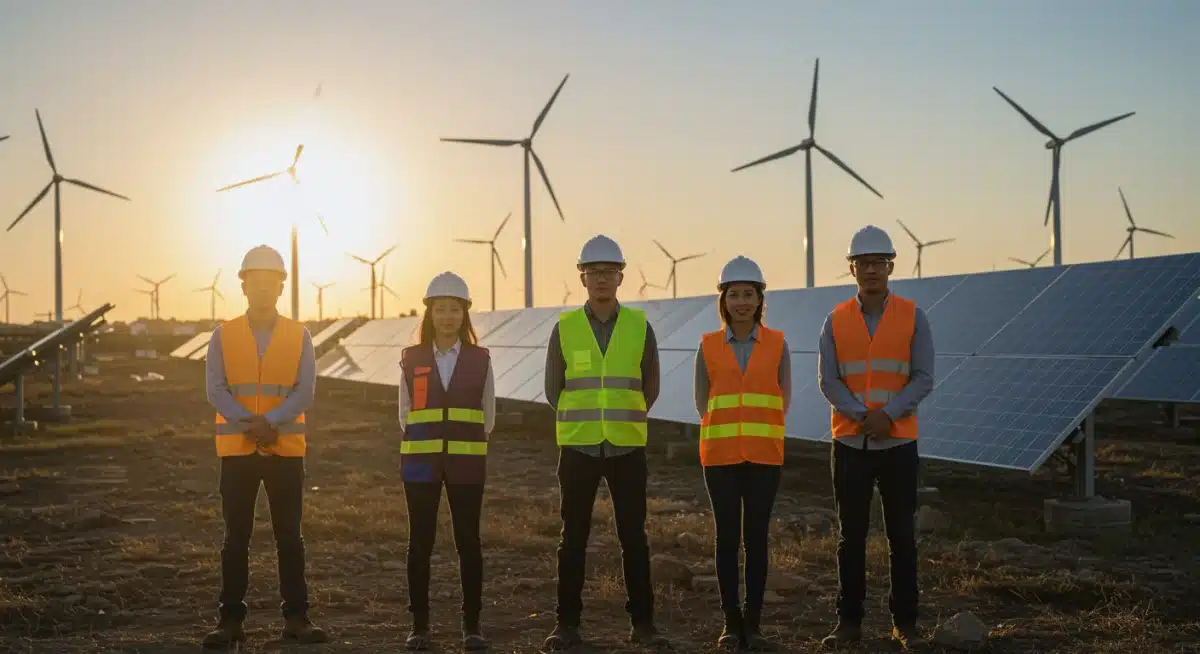
The 2026 clean energy job market is experiencing rapid growth, demanding specialized skills and offering diverse career pathways across various sectors like solar, wind, and energy storage, presenting significant opportunities for individuals with relevant education and training.
Are you considering a future-proof career, one that not only offers stability but also contributes positively to the planet? The 2026 clean energy job market is booming, presenting an incredible landscape of opportunities for those ready to embrace the shift towards sustainable power. This article will guide you through the essential educational requirements and diverse career pathways available.
Understanding the Growth of the Clean Energy Sector
The clean energy sector in the United States is undergoing unprecedented expansion, driven by technological advancements, supportive government policies, and increasing public demand for sustainable solutions. This growth isn’t just about environmental benefits; it’s a significant economic driver, creating millions of jobs across various disciplines.
As 2026 approaches, projections indicate a continuous upward trajectory for green jobs, with particular emphasis on renewable energy generation, energy efficiency, and sustainable transportation. The federal commitment to decarbonization and the influx of private investment are solidifying clean energy as a cornerstone of the national economy.
Key Growth Drivers
- Technological innovation in solar, wind, and battery storage.
- Government incentives and regulatory frameworks supporting renewables.
- Increasing corporate and consumer demand for sustainable practices.
This rapid growth translates directly into a high demand for a skilled workforce. Understanding these drivers is the first step in identifying where your skills and interests might best align within this dynamic industry. The sector is not just for engineers; it encompasses a wide array of roles from finance to marketing, and from research to on-site technicians.
The commitment to net-zero emissions by mid-century has accelerated investment in renewable energy projects, creating a robust ecosystem that requires diverse talents. From utility-scale solar farms to residential energy efficiency retrofits, the sheer scale of ongoing and planned projects guarantees a vibrant job market for years to come. This foundational understanding is crucial for anyone looking to enter or transition into this field.
Essential Educational Requirements for Entry-Level Positions
Entering the clean energy job market in 2026 often requires a foundational level of education, though the specific credentials can vary widely depending on the role. For many entry-level technical positions, vocational training or an associate’s degree can be highly effective. These programs typically focus on practical skills directly applicable to installation, maintenance, and operational roles.
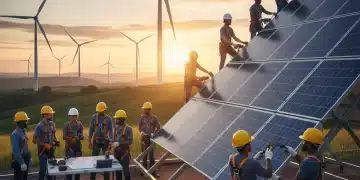
For instance, roles in solar panel installation or wind turbine maintenance frequently prefer candidates with certifications from accredited technical schools. These programs often include hands-on experience, preparing individuals for the specific challenges of the field. Strong mathematical and scientific aptitudes are beneficial, even for roles not requiring a four-year degree.
Common Entry-Level Qualifications
- Vocational certifications in electrical work or mechanics.
- Associate’s degrees in renewable energy technology or related engineering fields.
- Apprenticeships combining on-the-job training with classroom instruction.
Beyond formal education, a willingness to learn and adapt to new technologies is paramount. The clean energy sector is constantly evolving, meaning continuous learning is a requirement for career progression. Safety training and certifications, such as OSHA certifications, are also often mandatory for on-site positions, ensuring a safe working environment.
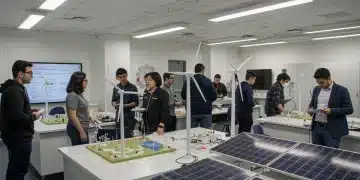
Many companies also offer internal training programs for new hires, recognizing the unique skill sets required. These programs can provide an excellent pathway for individuals with a strong work ethic and a basic technical background to gain specialized knowledge. Therefore, while formal education is a strong asset, practical experience and a proactive approach to learning are equally valued.
Specialized Degrees and Advanced Certifications
For those aspiring to leadership, research, or highly technical roles within the clean energy sector, specialized degrees and advanced certifications are often a prerequisite. Bachelor’s and master’s degrees in engineering disciplines, environmental science, and energy policy are becoming increasingly sought after as the industry matures and demands more sophisticated problem-solving capabilities.
Electrical engineering, mechanical engineering, and chemical engineering programs with a focus on renewable energy are particularly valuable. These degrees equip graduates with the theoretical knowledge and analytical skills needed to design, optimize, and manage complex clean energy systems. Moreover, a growing number of universities offer specialized master’s programs in renewable energy management or sustainable systems engineering.

Certifications from professional organizations can also significantly enhance a candidate’s profile, demonstrating expertise in specific areas such as energy auditing, project management, or specific renewable technologies. These certifications often require a combination of education, experience, and passing a rigorous exam.
Advanced Educational Paths
- Bachelor’s degrees in Electrical, Mechanical, or Environmental Engineering.
- Master’s degrees in Renewable Energy Systems, Energy Policy, or Sustainable Development.
- Professional certifications like Certified Energy Manager (CEM) or NABCEP certifications for solar professionals.
The demand for data scientists and analysts with a background in energy is also on the rise, as the sector becomes more reliant on data-driven decision-making for grid optimization, forecasting, and resource management. These advanced roles require a strong quantitative background and often involve complex modeling and simulation. Pursuing higher education in these specialized areas can open doors to innovative and impactful career paths.
Diverse Career Pathways in Clean Energy
The clean energy job market in 2026 is incredibly diverse, offering a wide array of career pathways beyond what many might initially imagine. While technical roles in installation and maintenance are crucial, the sector also requires professionals in research and development, policy and advocacy, finance, project management, and sales.
For those with a passion for innovation, careers in research and development focus on improving existing technologies and developing new ones, from advanced battery storage solutions to more efficient solar cells. Policy analysts and advocates work to shape the regulatory landscape, promoting policies that support clean energy growth and adoption at local, state, and federal levels.
Key Career Areas
- Engineering and Technical Roles: Solar installers, wind turbine technicians, electrical engineers, civil engineers.
- Research and Development: Scientists, material engineers, data analysts.
- Business and Finance: Project developers, financial analysts, policy advisors, sales managers.
- Operations and Maintenance: Grid operators, facility managers, environmental compliance specialists.
Project managers are essential for overseeing the planning, execution, and completion of clean energy projects, ensuring they are delivered on time and within budget. Financial analysts assess the viability of projects, secure funding, and manage investments in renewable energy infrastructure. The sales and marketing sector, meanwhile, focuses on bringing clean energy solutions to consumers and businesses.
This breadth of opportunities means that individuals from various academic and professional backgrounds can find a rewarding career in clean energy. The key is to identify how existing skills can be transferred or adapted to meet the sector’s specific needs, or to pursue further education that aligns with a desired career path. The clean energy sector truly offers something for everyone, from hands-on work to high-level strategic planning.
Impact of Technology on Clean Energy Jobs
Technological advancements are not only driving the growth of the clean energy sector but are also fundamentally reshaping the nature of jobs within it. Automation, artificial intelligence (AI), and advanced analytics are becoming integral to every stage of the clean energy lifecycle, from resource assessment to grid management. This integration creates new roles and demands new skills from the workforce.
For example, AI is being used to optimize wind turbine performance, predict solar output more accurately, and manage energy storage systems more efficiently. This means that technicians and engineers need to be proficient not only in mechanical and electrical systems but also in data interpretation and software applications. Robotics are increasingly used for inspection and maintenance in hazardous environments, reducing risks and improving efficiency.
Emerging Technological Skills
- Data analytics and machine learning for energy forecasting and optimization.
- Proficiency in IoT (Internet of Things) for smart grid management.
- Robotics and automation for advanced inspection and maintenance.
The rise of smart grids, which integrate renewable energy sources with traditional power infrastructure, requires professionals with expertise in cybersecurity and complex network management. These roles are critical for ensuring the reliability and security of energy supply in an increasingly interconnected system. The digital transformation of the energy sector is creating a demand for a hybrid skill set, combining traditional engineering knowledge with digital literacy.
Therefore, continuous upskilling and reskilling are vital for staying competitive in the 2026 clean energy job market. Educational institutions and industry training programs are adapting to provide these new competencies, offering specialized courses in areas like renewable energy data analytics or smart grid operations. Embracing these technological shifts is essential for both individuals and the industry as a whole.
Navigating the Job Market: Tips for Success
Successfully navigating the 2026 clean energy job market requires more than just the right education; it demands strategic planning and proactive engagement. Networking, gaining practical experience, and tailoring applications are critical steps for securing a desirable position in this competitive and rapidly expanding field.
Attending industry conferences, workshops, and career fairs provides invaluable opportunities to connect with professionals, learn about emerging trends, and discover unadvertised job openings. Many clean energy companies actively recruit at these events, making them excellent platforms for making a strong first impression. Online professional networks, such as LinkedIn, also play a crucial role in building connections and staying informed about industry developments.
Strategies for Job Seekers
- Networking: Attend industry events, join professional associations, and leverage online platforms.
- Gaining Experience: Pursue internships, co-op programs, volunteer projects, or entry-level roles.
- Tailoring Applications: Customize resumes and cover letters to highlight relevant skills and show an understanding of the specific company and role.
- Continuous Learning: Stay updated on new technologies, policies, and market trends through online courses or certifications.
Internships and co-op programs offer hands-on experience, which is highly valued by employers. Even volunteer work on sustainable projects can demonstrate commitment and provide practical skills. These experiences not only build your resume but also help you clarify your career interests and build a professional network. A well-crafted resume and cover letter that clearly articulate your relevant skills, experiences, and passion for clean energy can significantly increase your chances of getting an interview.
Finally, demonstrating a genuine interest in sustainability and an understanding of the broader clean energy landscape can set you apart. Employers are often looking for individuals who are not just technically competent but also deeply committed to the mission of the clean energy sector. By combining solid education with strategic job search techniques, aspiring clean energy professionals can successfully launch and advance their careers.
| Key Point | Brief Description |
|---|---|
| Market Growth | Rapid expansion due to policy, tech, and demand, creating millions of jobs. |
| Educational Paths | Vocational training, associate’s, bachelor’s, and master’s degrees are all valuable. |
| Career Diversity | Roles range from technical and engineering to finance, policy, and R&D. |
| Tech Impact | AI, IoT, and automation are reshaping job roles and skill requirements. |
Frequently Asked Questions
Solar photovoltaic installers, wind turbine technicians, energy auditors, electrical engineers specializing in renewables, and battery storage engineers are among the most sought-after roles in the 2026 clean energy market. Data scientists and project managers are also seeing increased demand.
No, not always. Many hands-on technical roles, such as installers and technicians, can be accessed with vocational training, associate’s degrees, or specialized certifications. A four-year degree becomes more critical for engineering, research, and managerial positions.
Identify transferable skills from your current role, such as project management or technical expertise. Consider pursuing short-term certification programs or online courses to gain specific clean energy knowledge. Networking and internships can also facilitate a smooth transition.
AI is crucial for optimizing energy forecasting, managing smart grids, and improving the efficiency of renewable energy systems. This creates a demand for professionals skilled in data analytics, machine learning, and cybersecurity to support these advanced technological applications.
The long-term prospects are very strong. Driven by global climate goals and technological innovation, the clean energy sector is expected to grow continuously. This ensures sustained demand for skilled professionals across various disciplines for decades to come, offering stable and impactful careers.
Conclusion
The 2026 clean energy job market represents a significant and expanding frontier for career development in the United States. With robust growth propelled by policy, technology, and societal demand, the sector offers diverse pathways for individuals from various educational backgrounds. Whether through vocational training for hands-on roles or advanced degrees for leadership and innovation, the opportunities are abundant. Embracing continuous learning and strategic networking will be key to unlocking a fulfilling and impactful career in this vital industry, contributing to a sustainable future while building a resilient professional life.