Financing Electric Vehicle Fleets: New 2026 Incentives and Cost-Benefit Analysis
The global shift towards sustainability has accelerated the adoption of electric vehicles (EVs) across various sectors. For businesses, transitioning to an electric vehicle (EV) fleet is no longer just an environmental aspiration; it’s a strategic imperative driven by economic benefits, evolving regulations, and compelling new incentives. As we approach 2026, the landscape for EV Fleet Financing is becoming increasingly robust, offering unprecedented opportunities for companies to electrify their operations. This comprehensive guide will delve into the latest incentives, provide a thorough cost-benefit analysis, and equip you with the knowledge to make informed decisions about financing your electric vehicle fleet.
The move to electrify fleets is multifaceted. It involves not only the procurement of electric vehicles but also the establishment of charging infrastructure, training for personnel, and a complete re-evaluation of operational logistics. Understanding the financial implications and leveraging available support mechanisms are crucial for a successful transition. This article aims to demystify the complexities of EV Fleet Financing by breaking down the key elements that businesses need to consider.
In recent years, governments worldwide have recognized the immense potential of EVs in combating climate change and have, therefore, introduced a plethora of incentives to encourage their adoption. These incentives are continually evolving, with 2026 promising a new wave of programs designed to make fleet electrification even more accessible and financially viable. Staying abreast of these changes is paramount for any business looking to optimize its investment in electric vehicles.
Beyond the direct financial incentives, the long-term cost benefits of operating an EV fleet are substantial. Reduced fuel costs, lower maintenance expenses, and potential revenue generation from vehicle-to-grid (V2G) technologies are just a few of the advantages that contribute to a compelling return on investment (ROI). However, the initial capital outlay can be a significant barrier for many businesses. This is where strategic EV Fleet Financing comes into play, utilizing a combination of grants, tax credits, leases, and innovative financing models to mitigate upfront costs.
This article will explore the various facets of EV Fleet Financing, from understanding the different types of incentives to conducting a detailed cost-benefit analysis. We will also touch upon the operational considerations and technological advancements that are shaping the future of electric fleets. By the end of this read, you will have a clear roadmap for navigating the transition to an electric fleet, ensuring both environmental responsibility and financial prudence.
The Evolving Landscape of EV Fleet Incentives in 2026
The year 2026 is poised to bring significant advancements and expansions in incentives designed to accelerate EV Fleet Financing. These incentives typically fall into several categories: federal tax credits, state and local rebates, grants, and utility programs. Understanding the nuances of each is vital for maximizing financial benefits.
Federal Tax Credits and Rebates
Federal governments are increasingly offering substantial tax credits for the purchase of new and, in some cases, used electric vehicles. For fleets, these credits often apply to commercial vehicles, including light-duty trucks, vans, and even heavy-duty vehicles. The exact amounts and eligibility criteria can vary, often depending on the vehicle’s battery capacity, gross vehicle weight rating (GVWR), and the percentage of domestic content in its manufacturing. It’s crucial for businesses to monitor these regulations closely, as they are subject to change and periodic updates. The 2026 outlook suggests a continued focus on encouraging domestic manufacturing and supply chains, potentially leading to higher incentives for vehicles meeting specific ‘Made in X’ requirements.
Beyond direct purchase credits, some federal programs might offer tax deductions for charging infrastructure installation. This is a critical component of EV Fleet Financing, as the upfront cost of chargers can be substantial. These deductions can significantly reduce the total cost of ownership over the lifespan of the charging equipment.
State and Local Programs
Many states and municipalities have their own robust incentive programs that complement federal offerings. These can include point-of-sale rebates, grants for specific fleet types (e.g., school buses, public transit, delivery services), and preferential treatment in procurement processes. For instance, some states offer significant rebates per vehicle, which can drastically lower the initial purchase price. Local air quality districts often provide grants for replacing older, high-emission vehicles with electric alternatives, funding not just the vehicles but also the charging infrastructure. Navigating these diverse programs requires diligent research and often, expert consultation, to ensure all eligible benefits are claimed for effective EV Fleet Financing.
In 2026, we anticipate an increase in localized incentives, driven by specific regional environmental goals and urban planning initiatives. These might include incentives for fleets operating within designated low-emission zones or those serving specific community needs. Businesses should actively engage with their local government and utility providers to identify all available opportunities.
Utility and Private Sector Incentives
Electric utilities play a crucial role in promoting EV adoption. Many utilities offer incentives for commercial customers to install EV charging infrastructure, sometimes covering a significant portion of the equipment and installation costs. These programs often come in the form of rebates, grants, or discounted electricity rates for off-peak charging. Some utilities even offer ‘make-ready’ programs, where they cover the costs of upgrading electrical infrastructure to support large-scale charging depots. These utility programs are an often-underestimated but powerful tool in EV Fleet Financing.
Furthermore, private sector initiatives, such as partnerships with EV manufacturers or charging network providers, can offer bundled deals that include vehicle leases, charging solutions, and maintenance packages at competitive rates. These partnerships can streamline the transition process and provide integrated solutions for businesses seeking comprehensive EV Fleet Financing options.
Key Trends for 2026 Incentives
- Increased Focus on Commercial Vehicles: Expect more targeted incentives for medium and heavy-duty EVs, recognizing their larger impact on emissions and fuel consumption.
- Performance-Based Incentives: Some programs might shift towards performance-based incentives, rewarding fleets that achieve specific emission reduction targets or utilize smart charging technologies.
- Equity and Access: There will likely be a greater emphasis on ensuring incentives benefit a broader range of businesses, including small and medium-sized enterprises (SMEs) and those in underserved communities.
- Charging Infrastructure Emphasis: Expect continued and potentially expanded support for charging infrastructure, recognizing it as a critical enabler for widespread EV adoption.
By staying informed about these evolving incentives, businesses can significantly reduce the financial burden of electrifying their fleets, making EV Fleet Financing a more attractive and viable proposition.
Cost-Benefit Analysis: The Economic Case for EV Fleets
While the environmental benefits of electric vehicles are widely acknowledged, the economic arguments for EV Fleet Financing are equally compelling. A thorough cost-benefit analysis reveals significant long-term savings and operational advantages that can outweigh the initial investment.
Reduced Fuel Costs
This is perhaps the most obvious and impactful benefit. Electricity is generally cheaper and more stable in price than gasoline or diesel. The ‘fuel’ cost per mile for an EV is significantly lower, especially when fleets can leverage off-peak charging rates. For high-mileage fleets, these savings can accumulate rapidly, leading to substantial reductions in operational expenses. The volatility of fossil fuel prices also adds an element of financial risk that is largely mitigated with electric power, providing greater predictability in budgeting for EV Fleet Financing.
Lower Maintenance Expenses
Electric vehicles have fewer moving parts than internal combustion engine (ICE) vehicles. There’s no engine oil to change, no spark plugs to replace, no transmission fluid, and significantly less wear and tear on brake pads due to regenerative braking. This translates into lower routine maintenance costs and reduced downtime for repairs. While specialized EV maintenance might be required, the overall frequency and complexity of servicing are typically lower, contributing positively to the total cost of ownership and making EV Fleet Financing more attractive.
Incentives and Tax Benefits
As discussed, the array of federal, state, local, and utility incentives can drastically reduce the upfront capital expenditure for vehicles and charging infrastructure. These include direct rebates, tax credits, and grants. These financial aids are critical in bridging the initial cost gap between EVs and traditional vehicles, making the economic case for EV Fleet Financing much stronger.

Residual Value and Depreciation
The residual value of electric vehicles is an evolving area. As EV technology matures and adoption increases, the demand for used EVs is expected to remain strong, potentially leading to higher residual values compared to equivalent ICE vehicles. This can positively impact lease rates and overall depreciation costs, which are crucial factors in long-term EV Fleet Financing strategies.
Operational Efficiencies and Productivity
EVs offer a quieter and smoother driving experience, which can reduce driver fatigue and improve overall productivity. The instant torque of electric motors can also improve acceleration and responsiveness, particularly beneficial for urban delivery fleets. Furthermore, smart charging solutions and fleet management software can optimize charging schedules, minimize energy costs, and provide valuable data for operational enhancements, further supporting the economic viability of EV Fleet Financing.
Reduced Emissions and Brand Image
While not directly a financial saving, the reduction in greenhouse gas emissions and local air pollutants is a significant benefit. This improves a company’s environmental, social, and governance (ESG) profile, enhances brand image, and can attract environmentally conscious customers and talent. In an increasingly green-conscious market, this can translate into competitive advantages and increased revenue, indirectly supporting the business case for EV Fleet Financing.
Potential Revenue Streams (V2G)
Vehicle-to-grid (V2G) technology allows EV batteries to discharge electricity back into the grid during peak demand times, potentially generating revenue for fleet operators. While still in its nascent stages, V2G offers a promising future revenue stream that could significantly offset operating costs and enhance the ROI of EV Fleet Financing. As grid infrastructure evolves, V2G will become an increasingly important consideration.
Total Cost of Ownership (TCO)
When all these factors are considered, the total cost of ownership (TCO) for an electric fleet often proves to be lower than that of a comparable ICE fleet over the vehicle’s lifespan. The initial higher purchase price is frequently offset by lower operational costs, incentives, and potentially higher residual values. Businesses performing a comprehensive TCO analysis will find a strong economic justification for embracing EV Fleet Financing.
Strategic Approaches to EV Fleet Financing
Successfully transitioning to an electric fleet requires more than just understanding incentives and costs; it demands a strategic approach to financing. Several options are available, each with its own advantages and considerations for EV Fleet Financing.
Traditional Loans and Leases
Similar to ICE vehicles, businesses can finance EV purchases through traditional commercial loans. These loans typically involve a down payment and regular payments over a set period. However, given the higher upfront cost of EVs, loans might result in higher monthly payments. Leasing, on the other hand, can offer lower monthly payments and greater flexibility. Operating leases, in particular, can be beneficial as they keep the assets off the company’s balance sheet, improving financial ratios. Many financial institutions are now offering specialized EV fleet financing options, often with more favorable terms to encourage adoption.
Green Bonds and Sustainable Financing
For larger corporations, issuing green bonds or tapping into sustainable financing instruments can be an attractive option. Green bonds are specifically designed to fund environmentally friendly projects, and the investor base for these instruments is growing. This can provide access to capital at potentially lower interest rates, reflecting the positive ESG impact of fleet electrification. These specialized financial products are becoming increasingly relevant for large-scale EV Fleet Financing initiatives.
Power Purchase Agreements (PPAs) for Charging Infrastructure
The charging infrastructure is a significant upfront cost. Power Purchase Agreements (PPAs) can mitigate this. In a PPA, a third-party developer designs, installs, owns, and maintains the charging equipment, selling the electricity to the fleet operator at a fixed or escalating rate. This eliminates the upfront capital expenditure for charging infrastructure, making EV Fleet Financing more manageable. This model is particularly beneficial for businesses that prefer to conserve capital for their core operations.
Fleet-as-a-Service (FaaS) Models
Emerging Fleet-as-a-Service (FaaS) models offer a comprehensive solution where a provider supplies the EVs, charging infrastructure, maintenance, and even fleet management software for a single monthly fee. This ‘all-inclusive’ approach can simplify the transition and reduce financial risk, as the provider handles many of the complexities. FaaS can be an excellent option for businesses looking for a complete, hassle-free EV Fleet Financing and operational solution.
Government Grants and Rebates Integration
A crucial strategy is to integrate all available government grants and rebates directly into the financing plan. This might involve applying for grants before committing to purchases or structuring leases to account for anticipated rebates. Working with financial partners who are knowledgeable about these incentive programs can ensure maximum benefit realization for your EV Fleet Financing.
Internal Capital Allocation and Budgeting
For some businesses, internal capital allocation might be a viable option, especially if the long-term TCO savings are significant. This requires careful budgeting and a clear strategic vision, demonstrating how the investment in an EV fleet aligns with the company’s broader sustainability and financial goals. Presenting a robust business case, including the TCO and ROI, is essential for securing internal approval for EV Fleet Financing.
Overcoming Challenges in EV Fleet Transition
While the benefits of EV Fleet Financing are clear, businesses often face several challenges during the transition. Addressing these proactively is key to a successful electrification strategy.
Charging Infrastructure Planning
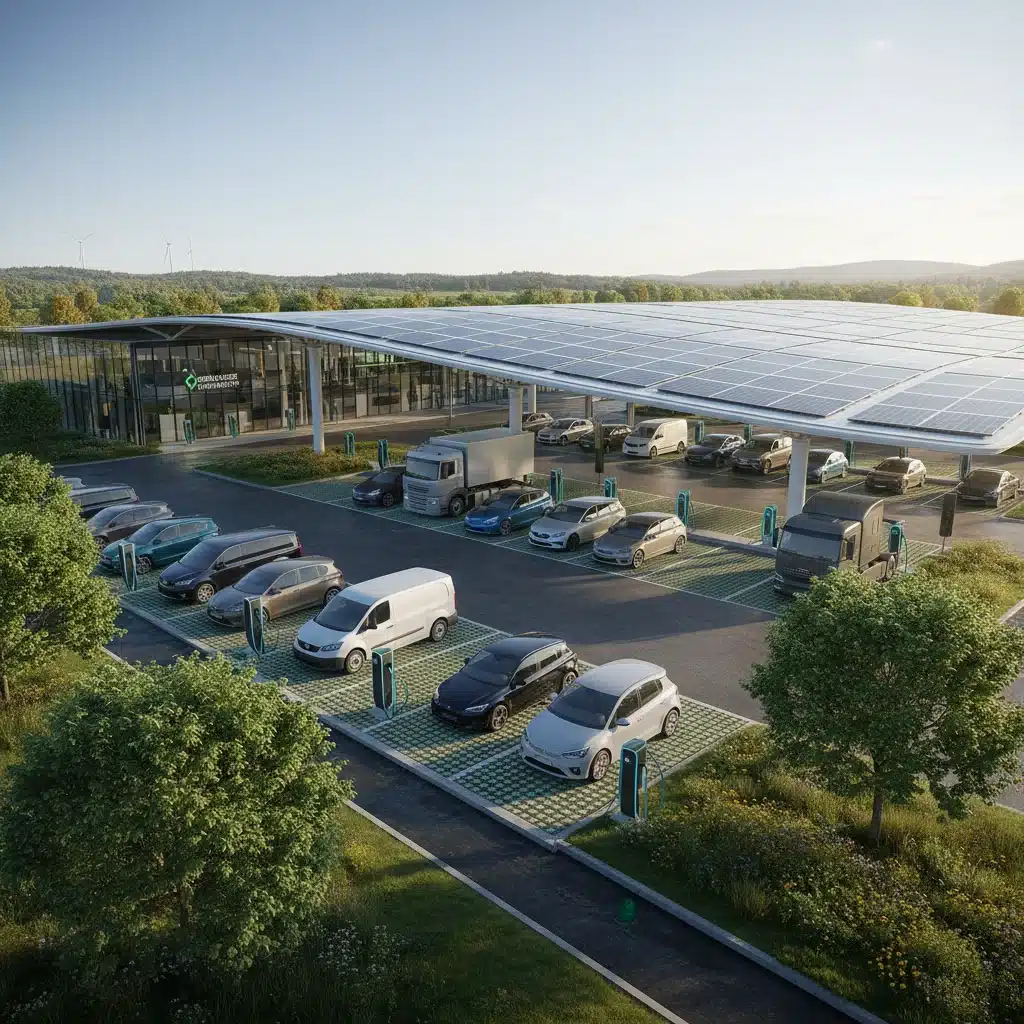
One of the primary challenges is the planning and installation of adequate charging infrastructure. This involves assessing current and future charging needs, determining the right type and number of chargers (Level 2 vs. DC Fast Chargers), and managing electrical grid upgrades. Early planning and consultation with utility providers and charging solution experts are crucial to avoid bottlenecks and costly delays. Smart charging management systems are also essential to optimize energy consumption and minimize demand charges, impacting the overall effectiveness of EV Fleet Financing.
Vehicle Availability and Lead Times
The demand for commercial EVs is rapidly increasing, which can sometimes lead to longer lead times for vehicle delivery. Businesses need to plan their procurement well in advance and consider diversifying their vehicle choices to ensure timely access to electric models. Staying updated on manufacturer production schedules and engaging with multiple suppliers can help mitigate this challenge in EV Fleet Financing.
Driver Training and Acceptance
Transitioning drivers from ICE vehicles to EVs requires proper training. Drivers need to understand the differences in range, charging procedures, regenerative braking, and overall vehicle handling. Addressing any concerns or anxieties about range anxiety or charging availability through comprehensive training programs is vital for successful adoption and to maximize the operational benefits derived from EV Fleet Financing.
Data Management and Telematics
Effective management of an EV fleet relies heavily on data. Telematics systems can provide crucial insights into vehicle performance, charging patterns, energy consumption, and driver behavior. This data is invaluable for optimizing operations, identifying areas for improvement, and demonstrating the ROI of the EV Fleet Financing investment. Investing in robust fleet management software is therefore a critical component of the transition.
Regulatory Compliance and Reporting
As regulations around emissions and sustainability evolve, businesses need to ensure their EV fleet operations comply with all relevant standards. This might include reporting on emissions reductions, energy consumption, and the utilization of incentives. Staying informed about these requirements and having systems in place for accurate data collection and reporting is important for long-term sustainability and to fully leverage EV Fleet Financing opportunities.
The Future of EV Fleet Financing
The trajectory for EV Fleet Financing is one of continued innovation and growth. Looking beyond 2026, several trends are likely to shape the future of fleet electrification.
Advanced Battery Technologies
Improvements in battery technology will continue to enhance range, reduce charging times, and potentially lower vehicle costs. Solid-state batteries and other next-generation technologies promise even greater efficiencies, making EVs more practical for a wider range of fleet applications. These advancements will further strengthen the economic case for EV Fleet Financing as the performance-to-cost ratio improves.
Smart Grid Integration and V2G Expansion
The integration of EV fleets with smart grids will become more sophisticated. Vehicle-to-grid (V2G) capabilities, which allow EVs to feed power back to the grid, will likely expand, creating new revenue streams and opportunities for energy arbitrage. This will transform EVs from mere transportation assets into active participants in the energy ecosystem, providing additional financial incentives for EV Fleet Financing.
Standardization and Interoperability
As the EV ecosystem matures, there will be a greater push for standardization in charging infrastructure, communication protocols, and data formats. This will reduce complexity, improve efficiency, and make it easier for businesses to integrate different EV models and charging solutions into their fleets, streamlining the decision-making process for EV Fleet Financing.
Circular Economy Principles
The focus on sustainability will extend to the entire lifecycle of EVs, including battery recycling and repurposing. Businesses involved in EV fleets may find opportunities in second-life battery applications or participate in closed-loop recycling programs, further enhancing the environmental and economic benefits of their electric investments. This holistic approach will be increasingly important in future EV Fleet Financing considerations.
Policy Stability and Long-Term Vision
Governments are likely to establish more stable and long-term policies to support EV adoption, providing greater certainty for businesses making significant investments. This long-term vision will help de-risk EV Fleet Financing and encourage more widespread electrification across all fleet segments.
Conclusion
The transition to an electric vehicle fleet represents a significant opportunity for businesses to enhance their sustainability credentials, reduce operational costs, and future-proof their transportation operations. With new and expanded incentives anticipated for 2026, the financial landscape for EV Fleet Financing is becoming increasingly favorable. By understanding the available incentives, conducting a thorough cost-benefit analysis, exploring various financing models, and proactively addressing potential challenges, businesses can confidently navigate the path to electrification.
Embracing electric vehicles is not just about adopting a new technology; it’s about investing in a more sustainable, efficient, and economically sound future. The strategic decisions made today regarding EV Fleet Financing will determine a company’s competitive edge and environmental impact for years to come. The time to act is now, leveraging the robust support systems and clear economic advantages to drive your business forward into the electric era.
As the world continues its journey towards a greener future, electric vehicle fleets will play a pivotal role. Businesses that strategically plan their EV Fleet Financing and implementation will not only contribute to a healthier planet but also unlock substantial economic benefits, ensuring long-term success and resilience in an ever-evolving market.