Renewable Project Financing: Key Terms & 2026 Lender Expectations
Securing Renewable Project Financing: Key Terms and 2026 Lender Expectations
The global transition to a sustainable energy future hinges significantly on the successful financing of large-scale renewable energy projects. As the world pushes towards decarbonization, the demand for capital to develop wind farms, solar parks, hydropower facilities, and other green infrastructure continues to surge. However, securing renewable project financing is a complex endeavor, requiring a deep understanding of financial structures, contractual agreements, and the evolving expectations of lenders. This article delves into the critical terms, market trends, and the specific criteria that will shape lender decisions in 2026, providing an indispensable guide for developers, investors, and stakeholders in the renewable energy sector.
The landscape of renewable project financing is dynamic, influenced by technological advancements, regulatory frameworks, geopolitical shifts, and macroeconomic conditions. With increasing pressure to meet ambitious climate targets, financial institutions are channeling unprecedented levels of capital into green initiatives. Yet, this influx of funds comes with heightened scrutiny and a refined set of requirements, making it imperative for project proponents to be meticulously prepared.
Understanding the Fundamentals of Renewable Project Financing
At its core, renewable project financing typically involves non-recourse or limited-recourse debt, where the repayment of the debt is primarily dependent on the cash flow generated by the project itself. This structure isolates the project’s financial risk from the sponsors’ balance sheets, making it an attractive option for large-scale, capital-intensive developments.
Key Stakeholders in Project Financing
A typical renewable project financing deal involves several key players, each with distinct roles and interests:
- Sponsors/Developers: The entities initiating and developing the project, often providing equity.
- Lenders: Financial institutions (banks, institutional investors, multilateral agencies) providing debt financing.
- Offtakers: Entities (e.g., utilities, corporations) that purchase the electricity generated by the project under long-term contracts.
- Contractors: Engineering, Procurement, and Construction (EPC) contractors responsible for building the project, and Operations and Maintenance (O&M) contractors for its ongoing operation.
- Legal and Financial Advisors: Experts guiding the project through complex legal and financial negotiations.
Essential Financial Instruments and Structures
The financing structure for renewable projects can be intricate, often combining various financial instruments:
- Senior Debt: The largest portion of the financing, typically provided by commercial banks or institutional lenders, with the highest claim on the project’s assets and cash flow.
- Mezzanine Debt: A hybrid of debt and equity, ranking below senior debt but above equity, offering higher returns to lenders for increased risk.
- Equity: Capital invested by the project sponsors, typically ranging from 10% to 30% of the total project cost.
- Export Credit Agency (ECA) Financing: Government-backed financial institutions that provide loans, guarantees, and insurance to promote exports, often crucial for projects involving equipment from specific countries.
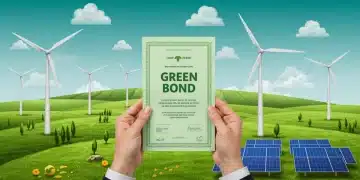
- Green Bonds: Fixed-income instruments specifically earmarked to raise money for climate and environmental projects.
Navigating Key Terms and Concepts in Renewable Project Financing
A successful renewable project financing deal hinges on a clear understanding of the contractual terms and financial metrics involved. Misinterpreting these can lead to significant delays or even project failure.
Power Purchase Agreements (PPAs)
PPAs are arguably the cornerstone of renewable project financing. These long-term contracts (often 10-25 years) define the terms under which an offtaker will purchase electricity from the project. Key elements include:
- Pricing Structure: Fixed price, escalating price, or market-indexed. Fixed-price PPAs offer greater revenue certainty, which lenders prefer.
- Volume Commitment: Specifies the amount of electricity to be purchased.
- Force Majeure Clauses: Define events beyond the control of either party that may excuse performance.
- Termination Clauses: Conditions under which the PPA can be terminated.
Lenders meticulously scrutinize PPAs for their robustness, creditworthiness of the offtaker, and the certainty of revenue streams. A strong PPA mitigates market risk, making the project more bankable.
Engineering, Procurement, and Construction (EPC) Contracts
The EPC contract governs the design, procurement, and construction of the project. Lenders look for:
- Fixed Price: Minimizes cost overrun risk.
- Completion Guarantees: Assurances from the contractor that the project will be completed on time and within budget.
- Performance Guarantees: Guarantees that the project will meet specified operational performance levels (e.g., capacity factor).
- Liquidated Damages: Penalties for delays or underperformance, providing recourse for the project company.
Operations and Maintenance (O&M) Contracts
These contracts outline how the project will be operated and maintained post-construction. Key considerations for lenders include:
- Experienced Operator: A reputable O&M provider with a proven track record.
- Performance Standards: Clearly defined metrics for operational efficiency and availability.
- Warranty Periods: Coverage for equipment and services.
Debt Service Coverage Ratio (DSCR)
DSCR is a crucial metric for lenders, indicating the project’s ability to cover its debt obligations. It is calculated as Net Operating Income / Total Debt Service. Lenders typically require a minimum DSCR, often in the range of 1.2x to 1.5x, reflecting a comfortable buffer for repayment. A higher DSCR signifies lower risk to lenders.
Loan Life Coverage Ratio (LLCR) and Project Life Coverage Ratio (PLCR)
These ratios provide a broader view of the project’s ability to repay debt over the entire loan or project life, respectively. They compare the present value of the project’s cash flows available for debt service to the outstanding debt balance. Lenders use these to assess the long-term viability and resilience of the project’s financial structure.
Covenants and Security Package
Loan agreements are replete with covenants – conditions that the borrower must adhere to. These can be financial (e.g., maintaining certain DSCR levels) or operational (e.g., restrictions on additional debt). The security package typically includes pledges of project assets, accounts, and contractual rights, giving lenders recourse in case of default.
2026 Lender Expectations: What’s New and What’s Critical?
As the renewable energy market matures and expands, so do the expectations of financial institutions. For 2026, lenders will be even more discerning, focusing on a blend of traditional financial prudence and emerging sustainability criteria.
Enhanced Focus on ESG (Environmental, Social, and Governance) Factors
ESG considerations are no longer a niche concern but a mainstream determinant of project bankability. Lenders are increasingly integrating ESG performance into their credit assessments. For 2026, expect:
- Robust ESG Frameworks: Projects must demonstrate comprehensive ESG policies and measurable targets, not just general statements. This includes detailed environmental impact assessments, social engagement plans, and transparent governance structures.
- Climate Risk Assessment: Lenders will demand thorough analyses of physical climate risks (e.g., extreme weather events impacting solar or wind farms) and transition risks (e.g., policy changes, carbon pricing). Projects demonstrating resilience to these risks will be favored.
- Supply Chain Due Diligence: Scrutiny of the supply chain for ethical labor practices, responsible sourcing of materials, and carbon footprint will intensify. This is particularly relevant for components like solar panels and batteries, often sourced globally.
Technological Maturity and De-risking
While innovation is crucial, lenders favor proven technologies. For emerging technologies, robust pilot projects, strong performance guarantees from reputable manufacturers, and governmental support mechanisms will be essential. In 2026, expect:
- Proven Track Record: Lenders will continue to prefer technologies with a demonstrable operational history and performance data.
- Advanced Energy Storage Integration: As renewables penetrate grids more deeply, energy storage solutions (e.g., battery storage) are becoming integral. Projects that effectively integrate and finance storage will be more attractive, demonstrating enhanced grid stability and revenue predictability.
- Digitalization and AI in Operations: The use of advanced analytics, AI, and digital twins for optimizing plant performance, predictive maintenance, and reducing operational costs will be viewed favorably.
Inflationary Pressures and Supply Chain Resilience
Recent global events have highlighted the vulnerabilities of global supply chains and the impact of inflation. Lenders in 2026 will be hyper-aware of these risks:
- Fixed-Price EPC Contracts: While always preferred, the emphasis on truly fixed-price EPC contracts with minimal escalation clauses will be even stronger.
- Contingency Planning: Projects must demonstrate robust contingency plans for potential cost overruns, delays, and supply chain disruptions.
- Local Sourcing Strategies: Projects that incorporate local content or diversified supply chains to mitigate geopolitical and logistical risks may gain an advantage.
Market Design and Revenue Certainty
The evolution of electricity markets significantly impacts revenue certainty for renewable projects. Lenders will pay close attention to:
- Long-Term Offtake Agreements: The preference for long-term PPAs with creditworthy offtakers remains paramount. Corporate PPAs (CPPAs) continue to grow in importance.
- Ancillary Services and Grid Services: Projects that can provide additional grid services (e.g., frequency regulation, reactive power support) beyond just energy generation may unlock additional revenue streams, enhancing bankability.
- Merchant Risk Mitigation: For projects exposed to merchant power prices, robust hedging strategies or alternative revenue stacking mechanisms will be crucial.
Interest Rate Volatility and Hedging Strategies
With a potentially more volatile interest rate environment, lenders will demand robust hedging strategies to mitigate interest rate risk. This could include:
- Interest Rate Swaps: Converting floating-rate debt to fixed-rate debt.
- Interest Rate Caps: Limiting the maximum interest rate payable.
- Conservative Debt Structuring: Projects with a lower debt-to-equity ratio may be seen as more resilient to interest rate fluctuations.
Regulatory and Policy Stability
A stable and supportive regulatory environment is critical for attracting renewable project financing. Lenders will assess:
- Government Support Schemes: The presence and reliability of feed-in tariffs, tax credits, or other subsidy mechanisms.
- Permitting and Licensing: The clarity and predictability of the permitting process, minimizing development risk.
- Political Risk Insurance: For projects in emerging markets, political risk insurance may be a mandatory requirement.
Preparing Your Project for 2026 Lender Scrutiny
To successfully secure renewable project financing in the evolving 2026 landscape, developers must adopt a proactive and comprehensive approach.
Due Diligence and Documentation Excellence
The importance of meticulous due diligence cannot be overstated. Lenders will expect a complete and well-organized data room containing:
- Feasibility Studies: Comprehensive technical, economic, and environmental assessments.
- Financial Models: Robust, flexible, and transparent financial models demonstrating project viability under various scenarios.
- Legal Documentation: All contracts (PPA, EPC, O&M, land agreements, permits) reviewed and vetted for bankability.
- Environmental and Social Impact Assessments (ESIAs): Detailed reports addressing all ESG aspects.
Any gaps or inconsistencies in documentation can lead to significant delays or even rejection.
Risk Allocation and Mitigation
Project finance is fundamentally about identifying, allocating, and mitigating risks. Developers must demonstrate a clear understanding of all project risks (construction, operational, market, regulatory, environmental) and present credible strategies for their mitigation. This includes:
- Insurance Programs: Comprehensive insurance coverage (construction, operational, business interruption).
- Guarantees and Warranties: From reputable contractors and equipment suppliers.
- Contingency Reserves: Adequate financial buffers for unforeseen events.
Building Strong Relationships with Lenders
Engaging with potential lenders early in the development process can be highly beneficial. Understanding their specific requirements, risk appetite, and sector focus can help tailor the project’s structure and presentation. Establishing trust and transparency is key.
Innovation in Financing Structures
While traditional project finance remains dominant, developers should explore innovative financing structures to enhance bankability and attract a wider pool of investors. This could include:
- Blended Finance: Combining public and private capital, often involving development finance institutions (DFIs) or multilateral banks to de-risk projects in challenging markets.
- Tokenization and Blockchain: While still nascent, the potential for using blockchain for securitization or fractional ownership of renewable assets could emerge.
- Green Bonds and Sustainability-Linked Loans: Aligning financing with sustainability performance targets can attract impact investors and potentially offer more favorable terms.
Challenges and Opportunities in 2026
The path to securing renewable project financing in 2026 will not be without its challenges. Increased competition for capital, rising interest rates, and persistent supply chain issues are likely to test developers. However, significant opportunities also abound.
Opportunities
- Growing Investor Appetite: The fundamental shift towards sustainable investing ensures a robust and expanding pool of capital for green projects.
- Technological Advancements: Continuous improvements in efficiency and cost reduction of renewable technologies make projects more economically viable.
- Supportive Policy Environment: Many governments worldwide are implementing ambitious renewable energy targets and supportive policies, creating a favorable investment climate.
- Emerging Markets: Significant untapped potential in developing economies offers high growth opportunities, albeit with higher perceived risks.
Challenges
- Interconnection and Grid Constraints: The ability to connect new renewable projects to an aging grid infrastructure remains a significant hurdle in many regions.
- Permitting Delays: Bureaucratic processes and local opposition can cause substantial delays in project development.
- Inflationary Pressures: Rising costs of raw materials, labor, and equipment can impact project economics and require careful financial planning.
- Talent Shortage: A growing demand for skilled professionals in renewable energy development and finance can create bottlenecks.
Conclusion
Securing renewable project financing for large-scale developments in 2026 will demand a sophisticated understanding of financial terms, a meticulous approach to risk management, and a keen awareness of evolving lender expectations. Projects that demonstrate robust ESG credentials, technological maturity, supply chain resilience, and strong revenue certainty will be best positioned to attract the necessary capital. By embracing comprehensive due diligence, fostering strong relationships with financial partners, and adapting to the dynamic market landscape, developers can successfully navigate the complexities of renewable energy finance and contribute significantly to a sustainable future.
The global energy transition is an urgent imperative, and effective project financing is its engine. As we approach 2026, the convergence of environmental urgency, technological innovation, and financial sophistication will continue to shape the contours of renewable project financing, driving forward the deployment of clean energy worldwide.